
Choosing the right Foam Gym Flooring can shape safety, comfort, maintenance, and long-term operating costs. Global buyers face different climates, building codes, budgets, and training demands. A compact home studio may need lightweight interlocking tiles, while a commercial weight room requires stronger impact resistance. Martial arts spaces need cushioning and stable traction. Children’s activity areas demand softer surfaces and carefully tested materials.
This guide examines practical flooring features that matter during real purchasing decisions. We consider foam density, thickness, surface texture, edge design, odor, water resistance, cleaning routines, and installation time. A 20-millimeter tile may suit stretching, but it may not protect a concrete floor under repeated dropped weights. That difference is easy to miss. Product images rarely show it.
Reliable evaluation also requires documentation. Buyers should request material specifications, test reports, batch details, and clear warranty terms from established suppliers. Regional certification requirements can vary, so local verification remains essential. A product accepted in one market may require additional review elsewhere. Do not assume “eco-friendly” always means low-emission or fully recyclable.
The best choice depends on usage, not marketing language alone. Measure the room, estimate daily traffic, inspect the subfloor, and compare replacement costs. Foam Gym Flooring can deliver excellent comfort and value, but only when its limits are understood. Some recommendations may change after installation. That is normal. Real performance deserves review after several weeks of cleaning, training, and temperature changes.
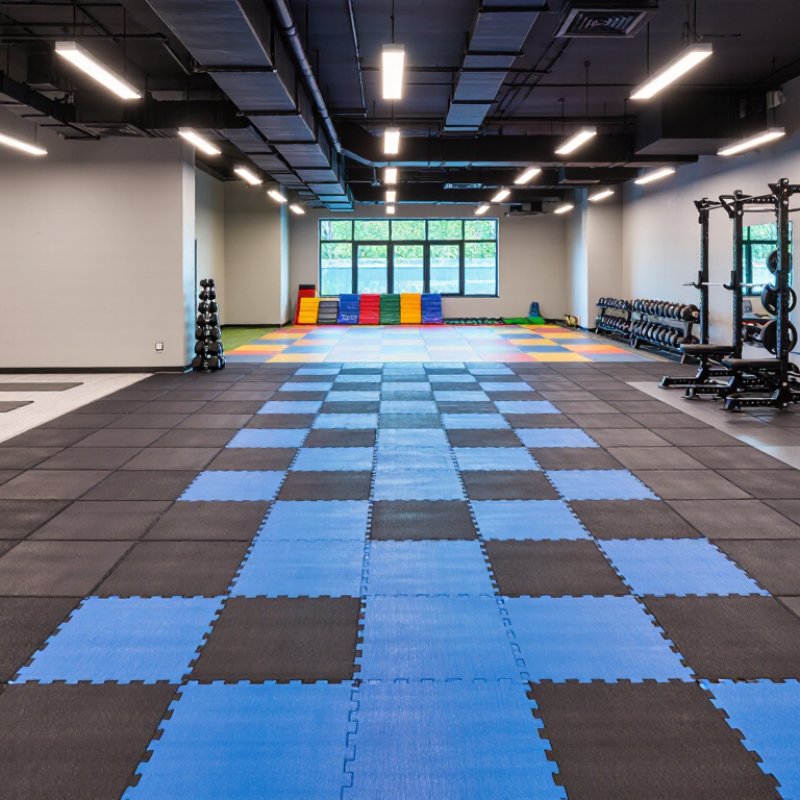
For global buyers, EVA density is the clearest starting point when comparing foam gym flooring.
A 30–50 kg/m³ tile feels light, soft, and easy to install. It suits children’s areas, stretching zones, and low-impact home workouts. However, it may compress quickly under racks or repeated dumbbell drops. A 60–80 kg/m³ structure usually offers better resilience for studios, fitness rooms, and moderate strength training.
Higher density is not automatically better.
At 90–100 kg/m³, EVA flooring feels firmer and supports heavier equipment more confidently. It also reduces visible dents around benches and storage frames.
Yet excessive firmness can feel harsh during kneeling exercises. The right choice depends on load, footwear, subfloor flatness, and cleaning frequency.
Density should be tested using ISO 845 measurement methods, not guessed from surface appearance. Small details matter.
Recent market reporting from Grand View Research places EVA foam among expanding technical foam segments, with continued demand from sports and fitness applications. That trend supports wider product selection, but market growth does not prove product quality.
Buyers should request density certificates, compression-set results, thickness tolerance, and slip-resistance data. ASTM F1292 impact testing can add useful evidence for areas involving falls, although it does not replace gym-specific testing.
In practical trials, place a loaded rack on a sample for several days. Check edge curling and permanent marks. Some “high-density” tiles still disappoint.

2026 Best Foam Gym Flooring for Global Buyers
Foam gym flooring from 10 to 40 mm changes how a training area feels and performs. In site evaluations, 10 mm foam works well for stretching, mobility drills, and light resistance equipment. It offers basic impact reduction without making the floor feel soft underfoot. However, jumping exercises may transmit noticeable shock to the subfloor.
A 15–20 mm thickness provides a more balanced response for home gyms and studio classes. It cushions kneeling, crawling, and moderate drops while retaining useful stability. Density matters as much as thickness. A dense 15 mm tile can feel firmer than a low-density 20 mm sheet. That detail is easy to miss. Test the surface with repeated steps, not just a hand press.
For heavier racks, functional training, and frequent equipment movement, 25–30 mm foam can reduce local pressure and surface wear. Yet excessive softness may affect balance during squats or kettlebell work. A 40 mm layer offers stronger cushioning for high-impact activities, but it can compress under concentrated loads. It may also require a rigid, level subfloor and carefully joined edges.
In practical purchasing checks, measure compression recovery after loaded use. Inspect seams after temperature and humidity changes. Foam performance can vary between production batches. I would not select thickness by price alone. A thicker floor is not automatically safer. The best choice matches body impact, equipment weight, user stability, and local installation conditions. Reconsider the specification when the training program changes.
| Foam Thickness | Typical Cushioning Level | Approx. Impact Attenuation* | Walking and Training Stability | Typical Static Load Support* | Recommended Uses | Main Advantages | Important Limitations |
|---|---|---|---|---|---|---|---|
| 10 mm | Low to moderate | Approximately 10–20% | Very stable for balance, stretching, and light exercise | Approximately 100–250 kg/m² when properly supported | Yoga, mobility work, home workouts, light studio use, temporary event flooring | Lowest cost and weight; easy to transport, cut, and install | Limited protection against dropped weights, jumping, and concentrated impact |
| 15 mm | Moderate | Approximately 15–25% | Stable for general fitness while providing noticeable underfoot comfort | Approximately 150–350 kg/m² when properly supported | Group fitness, aerobics, bodyweight training, children’s activity areas | Good balance between comfort, firmness, portability, and price | Not intended as the primary surface for heavy strength equipment or repeated barbell drops |
| 20 mm | Moderate to high | Approximately 20–30% | Good stability for most fitness movements; slight softness may be noticeable during lateral drills | Approximately 200–450 kg/m² when properly supported | Commercial fitness rooms, functional training, light kettlebell work, multipurpose studios | Versatile thickness with improved joint comfort and moderate noise reduction | May compress under narrow furniture legs or heavy racks unless load-spreading plates are used |
| 25 mm | High | Approximately 25–35% | Good cushioning with acceptable stability for controlled strength and functional exercises | Approximately 250–550 kg/m² when properly supported | General commercial gyms, free-weight zones with moderate loads, martial arts warm-up areas | Better impact and sound absorption than thinner mats without excessive height | Requires accurate joining and a firm subfloor to prevent movement or edge lifting |
| 30 mm | High to very high | Approximately 30–40% | Stable for moderate dynamic exercise; softer feel can reduce precision during heavy lifting | Approximately 300–650 kg/m² when properly supported | High-use training areas, functional fitness, recovery zones, indoor play and activity spaces | Strong protection for subfloors and improved comfort during repeated impact activities | Greater material cost and weight; heavy equipment may require rigid load-distribution layers |
| 40 mm | Very high | Approximately 35–45% | Excellent shock comfort but comparatively soft for rapid changes of direction and precision lifting | Approximately 350–750 kg/m² when properly supported | Impact-focused training zones, rehabilitation, children’s areas, and floors requiring extra subfloor protection | Maximum cushioning and noise reduction within this thickness range | Highest cost and installation height; not a substitute for dedicated rubber or engineered lifting platforms |
For global buyers, foam gym flooring should be judged by tested impact performance, not softness alone. ASTM F1292-22 measures shock absorption through g-max and Head Injury Criterion values. Its report should state the tested system, thickness, subfloor, and critical fall height. A loose tile may perform differently after installation.
EN 1177:2018+A1:2023 also evaluates impact attenuation and reports critical fall height. However, its test setup and reporting format differ from ASTM requirements. Do not compare numbers without checking the full laboratory method. The European standard also makes surface condition important. Moisture, temperature, joints, and compression can change performance.
CPSC’s 2023 playground injury report identifies falls as a major injury mechanism, supporting careful impact-surface selection. That evidence concerns playgrounds, not every indoor gym. Still, it offers useful risk context. Ask for independent laboratory reports, production samples, and aging results. A certificate alone can mislead. I would inspect seams personally. Foam can look perfect while losing resilience under repeated loading. Buyers should also verify slip resistance, cleaning compatibility, dimensional stability, and accessibility requirements. Testing a sample on the real subfloor remains wise, because laboratory results cannot represent every installation.
ASTM F1292 and EN 1177 are impact-attenuation standards commonly used for playground and fall-protection surfacing. Both evaluate Head Injury Criterion (HIC) and peak acceleration (G-max). The commonly referenced acceptance limits are HIC of no more than 1,000 and peak acceleration of no more than 200 g. Critical Fall Height is not a universal value; it must be established through testing for the specific flooring system, thickness, installation method, and substrate.
Buyers should request a current, independent test report identifying the exact product construction, tested thickness, installation conditions, test temperature, and declared Critical Fall Height. These standards do not by themselves assess slip resistance, durability, hygiene, fire performance, or suitability for every gym application.
2026 Best Foam Gym Flooring for Global Buyers
How to Match Foam Flooring to Gyms, Play Areas, Martial Arts, and Home Use
Choosing foam gym flooring starts with the activity, not the color. Closed-cell foam tiles suit children’s play areas because they cushion crawling, sitting, and light falls. Interlocking edges also allow quick replacement when one tile becomes damaged. For martial arts, thicker, denser mats reduce impact during rolls and controlled throws. However, extremely soft foam may reduce balance during footwork. That trade-off is easy to overlook.
Commercial gyms need flooring that handles repeated movement, sweat, and daily cleaning. Select a firm surface for stretching zones and light training areas. Standard foam may compress under heavy equipment, so it should not replace specialist weight-room flooring. At home, comfort and simple installation often matter more than maximum durability. Measure the room carefully. Small gaps can collect dust and moisture.
Tips: Check thickness, density, surface texture, and edge quality before ordering. Ask for product samples and test them barefoot and with training shoes. Buyers in humid regions should confirm moisture resistance and storage instructions. Shipping can alter packaging condition, so inspect every carton before installation. Local safety requirements may differ, and product documents should be reviewed before purchase. I have found that “universal” flooring rarely fits every space. Sometimes, choosing two surfaces works better than forcing one material everywhere.
When comparing 2026 foam gym flooring prices, request a like-for-like quotation. Check thickness, density, surface texture, edge design, packaging, and replacement coverage. A low price may hide weak compression recovery or higher shipping volume. Ask for a sample tile and test it under dumbbells, jumping, and repeated cleaning. Small details matter.
Request the laboratory report, test number, testing date, and applicable standard. Fire ratings must match the destination market and the complete installation, not only the foam material. Confirm smoke performance, chemical restrictions, slip resistance, and odor results. Documents without traceable laboratories deserve caution. I would not accept a copied certificate.
Tips: Compare landed cost, not factory price. Ask whether the quote uses EXW, FOB, CIF, or DDP terms. Confirm pallet dimensions, container loading, insurance, customs responsibilities, and delivery to your exact address. A cheaper shipment can become expensive after port handling and local taxes. Also check lead time during peak production months.
My practical lesson is simple: forecasts are imperfect, so keep spare tiles for damaged areas. That extra stock costs money, but replacing one discontinued color can cost more. Foam quality can vary between batches, too. Request written tolerance limits and a pre-shipment inspection. Test first.
We are the most reliable and proficient jute goods manufacturer & supplier that helps businesses or individuals with various exportable agricultural commodities biz and jute goods by shipping them worldwide. Our right-time service ensures that whatever color and size of jute product you need, we can make it happen anytime and anywhere! Let’s keep our earth safer to live in!
Important link
Address
Bangladesh Address:
Fair Plaza (9th Floor), Plot : 3C, Section : 01, Mirpur, Dhaka:1216
UK Office:
242 Manor Road, Droylsden, Manchester, M43 6JD, United Kingdom.
Let's Talk
We are the most reliable and proficient jute goods manufacturer & supplier that helps businesses or individuals with various exportable agricultural commodities biz and jute goods by shipping them worldwide. Our right-time service ensures that whatever color and size of jute product you need, we can make it happen anytime and anywhere! Let’s keep our earth safer to live in!
Bangladesh Address:
Fair Plaza (9th Floor), Plot : 3C, Section : 01, Mirpur, Dhaka:1216
UK Office:
242 Manor Road, Droylsden, Manchester, M43 6JD, United Kingdom.