
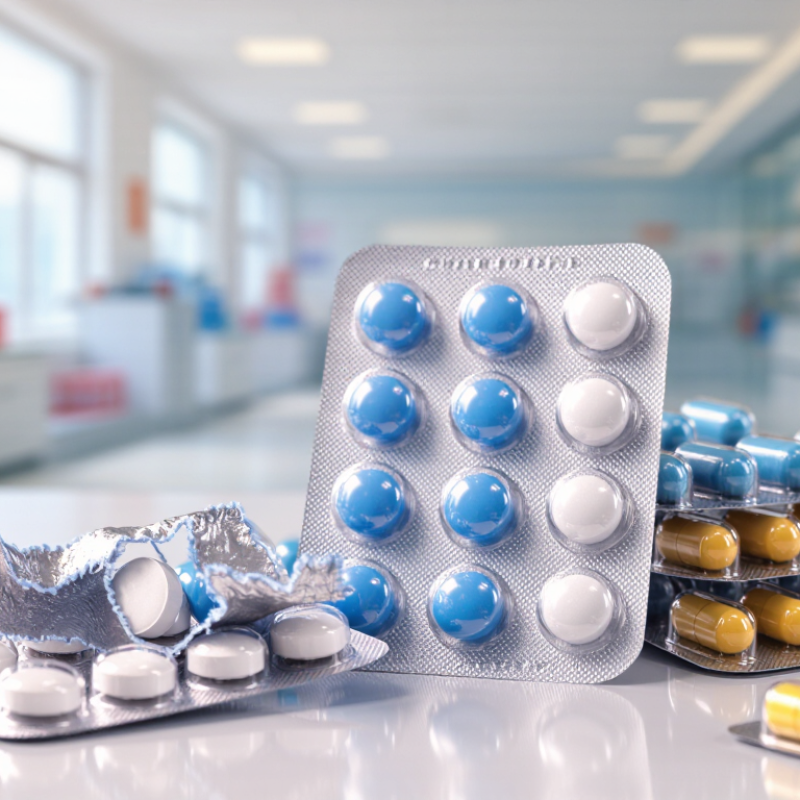
What Is Aluminium Blister Foil Used For?
Aluminium blister foil protects tablets and capsules from moisture, oxygen, light, and outside contamination. Its use is common in unit-dose pharmaceutical packaging, where each pocket separates one dose from the next. The foil also supports clear batch printing, controlled opening, and visible tamper evidence. In daily handling, it feels thin but surprisingly resistant to tearing. That practical strength matters during transport and storage.
The main benefit is its barrier performance.
Properly sealed aluminium foil can help preserve medicine quality in humid environments. It also reduces direct contact between users and the product, which supports cleaner handling. According to the International Aluminium Institute, recycling aluminium requires about 95% less energy than producing primary aluminium. This gives the material a valuable circularity advantage, when collection systems actually accept it. That condition is often overlooked.
The limitations deserve equal attention.
Forming and sealing can create pinholes, wrinkles, or tiny cracks that weaken protection. Poor machine settings may cause leaks. Aluminium blister packs are also less convenient to recycle when foil remains attached to plastic or paper layers. They can cost more than simpler packaging options, especially for small production runs. The foil hides the medicine, too, so users cannot visually check every tablet. It is not perfect. Packaging engineers must match foil thickness, coating, seal strength, and product sensitivity through stability testing, rather than relying on appearance alone.