Top 10 Bakery Paper Bags for Wholesale Buyers
Bakery Paper Bags do more than carry bread from counter to customer. They help protect crisp crusts, keep pastries easy to handle, and put a bakery’s name in view. For wholesale buyers, the right choice balances product presentation, reliable supply, and cost per unit. Small details matter. A bag that fits a warm baguette may not suit a frosted pastry or a box of cookies.
This guide to the Top 10 Bakery Paper Bags for Wholesale Buyers compares common styles by size, paper weight, closure, print options, and typical use. It also considers practical questions, such as whether a window helps customers see the product and whether grease resistance suits buttery items. Features can vary between suppliers, so buyers should confirm specifications and request samples before placing a large order. A product listing alone may not show how a bag feels or performs at a busy counter.
Buyers may also want to check case quantities, lead times, and how easily bags stack in limited storage space. These details affect daily operations, not just purchasing costs. There is no single best bag. A lower unit price can be less attractive if the size creates waste, while custom printing may require a larger minimum order. Sustainability claims also deserve a careful look; ask suppliers what materials and certifications their products actually use. The comparisons ahead can help bakeries match packaging to their products, brand, and purchasing volume. Some trade-offs remain. That is worth checking.
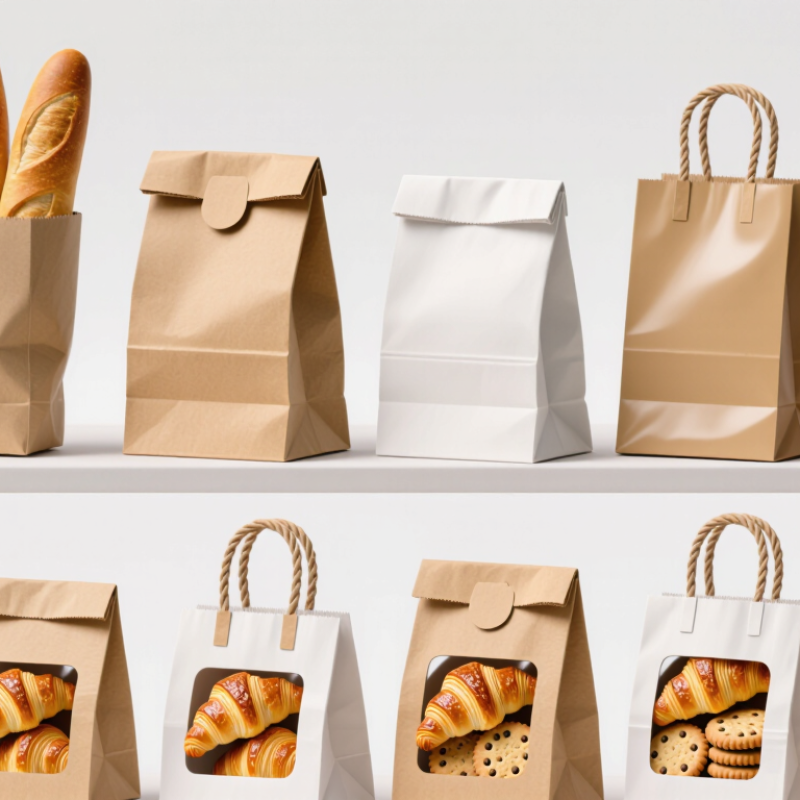
How Bakery Paper Bags Are Classified for Wholesale Buyers
For wholesale buyers, bakery paper bags are best classified by use, dimensions, paper weight, and construction. A narrow, gusseted bag suits baguettes; a wider, flat-bottom style holds pastries in a paper tray. Record bag width, height, and gusset depth separately. A few millimeters can affect packing speed and fit.
Material is another useful category. Buyers can compare kraft and white paper, then check basis weight, handle style, window material, and any grease-resistant treatment. The U.S. EPA’s Advancing Sustainable Materials Management: 2018 Fact Sheet reported a 68.2% recycling rate for paper and paperboard overall. That figure covers many products, not bakery bags alone. Food residue, windows, and coatings can change disposal options. Small details matter.
I would group wholesale listings by product first, then by size and barrier features. It is easy to overbuy a heavy bag when a lighter one works for dry rolls. That mistake happens. Request samples and test them with warm pastries; condensation can soften paper faster than a specification sheet suggests. Note whether the bag stays upright, resists grease, and opens quickly during service. A neat category system helps buyers compare like with like, though real bakery handling still exposes flaws.
Materials, Sizes, and Features That Shape Bag Performance
Paper choice affects more than appearance. Kraft paper handles everyday rolls and cookies well, while grease-resistant grades suit buttery pastries. Recycled paper can support sustainability goals, but its shade and texture may vary between batches. Check food-contact suitability and ask for samples before committing to a large order. Small differences matter.
Bag size should match the product, not just the shelf. A narrow bag keeps baguettes upright; a wider, gusseted design gives muffins room without crushing their tops. Measure products after wrapping, since liners add bulk. Then test a few filled bags for tearing, folding, and easy closure. Do this by hand.
Features shape handling during busy service. Flat handles work for light purchases, while twisted-paper handles may feel more secure with several items. A window helps customers see the pastry, but it can reduce printable space and may affect recyclability. There is no perfect specification.
I would compare bag strength when dry and after contact with warm, oily food; that second check is easy to overlook. Suppliers’ load estimates are useful, but real products and packing habits can change performance. Ask for consistent dimensions and clear material details, then keep a small test batch for staff feedback.
Top 10 Bakery Paper Bags for Wholesale Purchasing
For wholesale purchasing, a bakery’s best paper bag depends on what it must carry, not just its unit price. Flat-bottom SOS bags suit rolls and cookies, while windowed bags display pastries without opening the package. Grease-resistant bags help with buttery croissants. Twisted-handle kraft bags work for larger takeaway orders. Baguette sleeves keep long loaves easy to hold. Small details matter.
Gusseted bags offer extra room for mixed bread orders. Paper sandwich bags are useful for filled rolls and lunch items.
Narrow pastry bags fit single treats, such as a turnover or éclair. Handled cake bags can accommodate boxed cakes, but measure the box before ordering.
Printed paper sacks add shelf identity; still, simple unprinted stock may be easier to replenish consistently.
Compare bag dimensions, paper weight, closure style, and case quantity across suppliers. Ask for samples, then test them with your actual products. A bag that holds dry buns may soften under warm, oily pastries.
Check how quickly staff can pack each size during a busy morning. The awkward part is forecasting demand: a low case price means little if half the bags sit unused. Track weekly usage, storage space, and seasonal peaks before committing to a large order.
Comparing Bag Types by Product, Cost, and Branding Needs
For wholesale buyers, the right bakery bag depends on what goes inside, how it travels, and what customers notice.
Flat paper bags suit cookies and rolls; SOS bags stand upright for muffins. Gusseted bags hold larger loaves, while grease-resistant paper helps contain buttery pastries. Window bags show off a golden crust. Useful, but not always needed.
Baguette sleeves protect long loaves with little extra material. Small pastry bags fit individual treats, and handled kraft bags make larger orders easier to carry. White paper bags offer a clean surface for labels, while plain kraft often keeps costs down. Custom-printed bags build recognition, but larger print runs can tie up cash and leave excess stock if a design changes. The cheapest unit price is not the whole story.
Compare paper weight, bag dimensions, and minimum order quantities before choosing. A thick bag may feel reassuring, yet it can raise shipping costs without helping a light cookie. Check whether grease resistance affects recyclability in your local waste stream, rather than assuming every paper bag is handled the same way. Test a few sizes with actual products. I’d test them. A loaf that fits on a sample table may press against the seam during a busy morning delivery.
What to Check Before Placing a Wholesale Order
Before placing a wholesale order, check how each bag fits the products you actually sell. A baguette needs a different length and opening from a pastry box or two warm croissants. Measure the product, then allow room for easy packing without excess paper. Check the gusset, too; a narrow base can tip or crease when filled. Small details matter.
Ask for the paper weight, dimensions, and any coating or window specifications in writing. Greasy pastries may leave marks on unsuitable paper, while a bag that traps steam can soften crisp crusts. Request samples and test them with real items, not just empty bags. Let them sit for a while. It is easy to overlook how warmth and oil change the feel of a package. If the bags touch food directly, confirm the supplier can provide relevant food-contact documentation for the material and intended use.
Before approving a large quantity, review the print proof, color, and placement at actual size. A logo that looks centered on screen may sit too low on a folded bag. Confirm minimum order quantity, production time, delivery schedule, and how damaged or off-spec stock is handled. Ask about carton counts and storage needs as well. These questions can feel fussy, but a small trial order may reveal a problem that a pallet cannot hide. Don’t rely on assumptions.