
• Home
  • About
    • jute Bag

      Eco-Chic and Durable – Perfect for Sustainable Living.

      Cashew Nut Bag

      Sustainable jute bag for lasting cashew nut freshness

      Cocoa Bag

      Eco-friendly jute bag for rich cocoa flavor preservation

      Coffee Bag

      Elegant, durable jute bag to keep coffee beans fresh and eco-friendly

      Hazel Nut Bag

      Eco-conscious jute bag for hazelnut freshness and quality

      Shea Nut Bag

      Durable jute bag for fresh, organic shea nuts

      Tote Bag

      Stylish, eco-friendly jute tote for daily essentials

      Wheat Bag

      Sustainable jute bag for optimal wheat freshness

    • Jute Yarn

      Eco-Chic and Durable – Perfect for Sustainable Living.

      Jute Rope

      Sustainable jute bag for lasting cashew nut freshness

      Jute Fabrics

      Eco-friendly jute bag for rich cocoa flavor preservation

      Hessian cloth

      Sustainable Hessian cloth suppliers

  • Products
  • Export Country
  • Blog

10 Best Bulk Sacks for Global Buyers

Choosing the right Bulk Sack can protect products, reduce handling costs, and simplify international shipping. This guide examines 10 Best Bulk Sacks for Global Buyers through practical purchasing criteria. These include load capacity, fabric strength, safety factors, filling methods, discharge designs, and storage conditions.

The selected sacks suit different industries, including agriculture, construction, food processing, minerals, and recyclable materials. A buyer handling dry grain may need a ventilated fabric design, while powdered products often require a finer inner coating. UV protection matters when sacks remain outdoors. Moisture resistance matters during port transfers and warehouse storage. Small details can prevent large losses.

Real purchasing decisions also depend on supplier experience and documentation. Reliable manufacturers should provide test reports, material specifications, production samples, and clear inspection procedures. Buyers should check stitching quality, lifting loops, seam consistency, and the sack’s safe working load. Ask for evidence, not promises.

No ranking is absolute. A strong sack may still perform poorly when filled incorrectly or stored on a wet floor. Some affordable options look attractive, but their weaker seams can create expensive problems. That lesson is easy to overlook. We compare each Bulk Sack with honest attention to strengths, limitations, and suitable applications. The goal is not to promote one universal solution. It is to help global buyers choose more confidently, communicate accurately with suppliers, and avoid preventable packaging failures. Practical fit matters most.

10 Best Bulk Sacks for Global Buyers

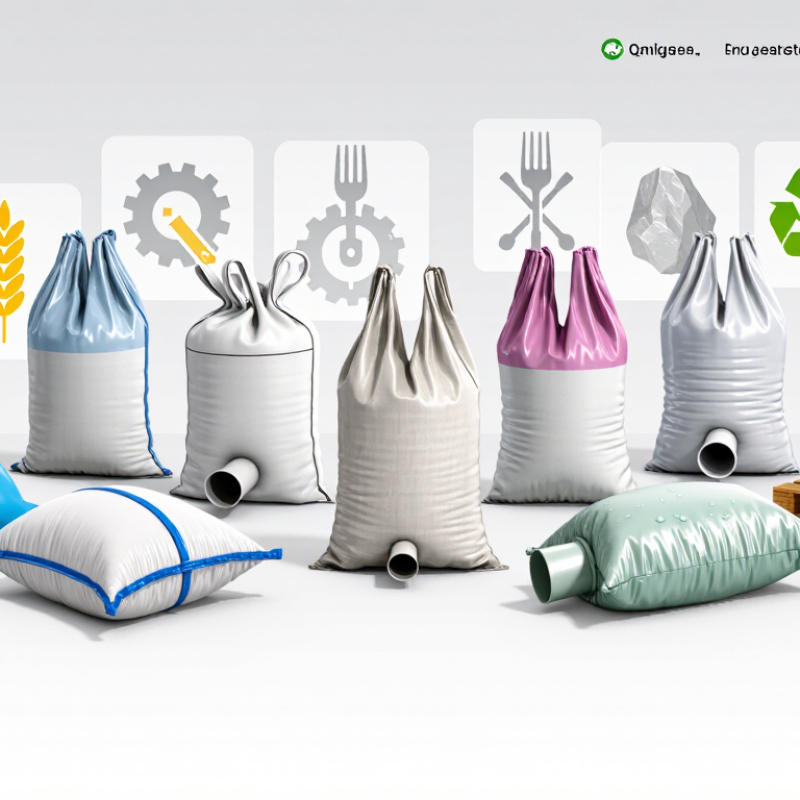
Bulk Sack Types and Their Global Packaging Applications

10 Best Bulk Sacks for Global Buyers

Bulk Sack Types and Their Global Packaging Applications

Bulk sacks differ by structure, fabric, lining, and discharge design. Choosing the right type protects products and reduces handling problems across international supply chains.

Standard U-panel sacks suit grains, seeds, powders, and many dry construction materials. Circular sacks provide efficient filling and stable storage in warehouses. Baffle sacks use internal panels to keep their shape, saving space on pallets and in containers.

Food-grade sacks support cleaner handling when paired with approved liners and controlled production areas. Conductive or antistatic options help manage static during suitable industrial applications. Ventilated sacks allow airflow for products that may retain heat or moisture, such as agricultural materials.

Some projects need a coated fabric for moisture resistance. Others require an inner liner for fine powders. A bottom discharge spout can shorten unloading time, but poor fit may cause residue or blockages. Always check safe working load, lifting-loop design, seam strength, and stacking limits. These details matter more than appearance.

Global buyers should request test reports, material specifications, and batch traceability. Confirm dimensions against filling equipment before placing a large order. Local climate also matters; humid ports can expose weak packaging choices quickly.

In practice, I have seen teams select a sack by price, then pay more for damaged corners and slow discharge. That mistake is avoidable, though no specification removes every handling risk. Trial loading remains useful. Small tests reveal real behavior.

Key Criteria for Comparing Bulk Sack Quality and Performance

For global buyers, the best bulk sacks are judged by measurable performance, not appearance. A clean white fabric can still conceal weak seams or unstable lifting loops. ISO 21898 recommends evaluating FIBCs through tests covering lifting, dropping, stacking, and seam strength. Ask suppliers for recent test reports, not generic certificates. Check the production batch, test date, and laboratory identity.

Capacity is only one comparison point. Inspect the safe working load, safety factor, filling method, discharge design, and liner compatibility. A 1,000-kilogram sack may perform poorly if its base outlet snags during unloading. The European Commission’s 2023 report on the circular economy also highlights the importance of traceability and material efficiency in packaging systems. That makes batch codes and documented resin specifications practical buying evidence.

Transport conditions matter as much as factory quality. UNCTAD’s Review of Maritime Transport 2024 states that more than 80% of global merchandise trade by volume moves by sea. Bulk sacks may face humidity, compression, vibration, and long storage periods. Look for UV treatment when outdoor exposure is possible, plus moisture-resistant construction for hygroscopic powders. Small details matter.

Do not trust samples alone.

A sample can pass inspection while production consistency slips later. Buyers should compare retained samples, random tensile results, and loading records across several batches. Some specifications also ignore operator handling, which is a weakness worth admitting. A well-designed sack still needs correct filling, lifting, and storage procedures.

10 Best Bulk Sacks for Global Buyers - Key Criteria for Comparing Bulk Sack Quality and Performance

Comparison of common industrial bulk sack configurations using practical purchasing criteria, including safe working load, safety factor, fabric weight, moisture protection, discharge design, liner compatibility, and typical application.

Rank Bulk Sack Configuration Typical Dimensions
(cm)
Safe Working Load
(kg)
Safety Factor Fabric Weight
(g/m²)
Top Construction Bottom Construction Moisture Protection Food-Grade Option Typical Empty Weight
(kg)
Best-Fit Application Indicative Performance Rating
1 Coated 4-Loop FIBC with PE Liner 90 × 90 × 110 1,000 5:1 180 Filling spout with tie closure Discharge spout with tie closure High; coated fabric plus liner Available 2.30 Powders and moisture-sensitive minerals ★★★★★
2 Uncoated 4-Loop FIBC with Form-Fit Liner 95 × 95 × 120 1,250 5:1 170 Open top or filling spout Discharge spout High when liner is sealed correctly Available 2.45 Food ingredients and fine powders ★★★★★
3 Ventilated 4-Loop FIBC 90 × 90 × 120 1,000 5:1 160 Open top with dust flap Plain bottom or discharge spout Moderate; optimized for airflow Application dependent 2.05 Wood pellets, agricultural products, and breathable materials ★★★★☆
4 Heavy-Duty Baffle FIBC 95 × 95 × 125 1,500 5:1 190 Filling spout with tie closure Discharge spout High with internal liner Available 2.80 High-density powders and space-efficient export loads ★★★★★
5 Standard 4-Loop U-Panel FIBC 90 × 90 × 100 1,000 5:1 150 Open top Plain bottom Low to moderate Available 1.85 General-purpose grains, resins, and granules ★★★★☆
6 Conductive Type C FIBC 90 × 90 × 120 1,000 5:1 170 Filling spout Discharge spout Moderate; liner specification is critical Not normally selected for food use 2.40 Combustible powders in controlled grounding environments ★★★★☆
7 UN-Certified Hazardous-Goods FIBC 90 × 90 × 110 1,000 6:1 180 Filling spout with secure closure Discharge spout or sealed bottom High with coated fabric or liner Usually application specific 2.55 Regulated powders and selected dangerous goods ★★★★★
8 Circular-Woven FIBC with PE Liner 85 × 85 × 105 750 5:1 145 Open top or duffle top Plain bottom or sift-proof seam High with liner Available 1.70 Retail ingredients and medium-density powders ★★★★☆
9 UV-Stabilized Outdoor FIBC 90 × 90 × 110 1,000 5:1 165 Filling spout with tie closure Plain bottom Moderate to high; UV additive improves outdoor resistance Available 2.10 Temporary outdoor storage and agricultural materials ★★★★☆
10 Economy 2-Loop FIBC 90 × 90 × 100 500 5:1 130 Open top Plain bottom Low; requires dry storage Available by specification 1.35 Lightweight, non-hazardous granules and short-distance handling ★★★☆☆

Note: Specifications are representative purchasing benchmarks for comparable FIBC designs. Actual load capacity, certification, liner suitability, UV resistance, and food-contact compliance must be verified against the supplier’s technical data sheet and applicable destination-market requirements.

Top Bulk Sack Options for Different Materials and Industries

Bulk sacks vary by material, weight, filling method, and unloading conditions. A standard woven polypropylene sack suits grains, seeds, and dry agricultural products. Its reinforced lifting loops support forklift handling and repeated warehouse movement.

Fit matters. Select a rated capacity above the normal load, not just the average one.

Fine powders need tighter construction. Sift-proof seams and an internal liner can reduce leakage from cement, mineral powder, or resin pellets. Coated fabric helps resist moisture during short outdoor storage.

Food-contact applications require documented materials, clean production, and traceable inspection records. Those details matter more than appearance. A clean-looking sack may still lack suitable testing.

Breathable sacks can support airflow around crops, while heavy-duty designs serve construction and recycling operations. Conductive or static-control options may be appropriate where dust creates an ignition concern, but qualified safety teams should confirm the specification.

From practical handling trials, discharge spout design often affects labor more than expected. A sack that empties slowly can delay an entire loading line.

That assumption can fail. Check filling height, pallet dimensions, storage duration, and lifting equipment before ordering.

Suppliers should provide seam strength data, safe working load information, and batch traceability. Photos are useful, but physical samples reveal stiffness, liner fit, and real handling problems.

Safety, Certification, and International Shipping Requirements

10 Best Bulk Sacks for Global Buyers

Selecting bulk sacks for international trade requires more than comparing price and capacity. The strongest options have clear safe working load ratings, tested lifting loops, and reinforced seams. Their fabric should resist abrasion during forklift handling and container movement. Some designs include inner liners for moisture-sensitive goods. Others use breathable fabric to reduce condensation. A practical buyer checks the actual product weight, filling method, and discharge style before ordering.

Certification must match the intended cargo and destination. Ask for recent test reports, material specifications, production-batch traceability, and inspection records. Food-contact materials may require additional documentation. Recycled fabric can reduce waste, but its consistency needs careful review. A certificate alone is not enough. Verify whether it covers the complete sack, not only the raw fabric. I would not trust a copied document with unclear dates or missing laboratory details.

International shipping adds small details that often cause delays. Confirm sack dimensions against container loading plans, pallet requirements, and port handling equipment. Use moisture protection when sea routes cross humid climates. Check destination rules for labeling, recycled content, and import documentation. Photograph sealed pallets before loading, and keep lot numbers with shipping records. A perfect checklist still cannot replace inspection. In practice, one overlooked seam or inaccurate weight rating can damage both cargo and trust.

10 Best Bulk Sacks for Global Buyers: Safety, Certification, and International Shipping

Typical Safe Working Load (SWL) ranges for widely used FIBC configurations. Actual capacity depends on fabric strength, dimensions, filling density, lifting design, and supplier test certificates. For regulated cargo, verify ISO 21898 compliance and the applicable UN packaging approval before shipment.

Note: The ranges shown are representative commercial specifications, not universal legal limits. Type C and Type D bags require appropriate electrostatic controls, while UN-certified bags must match the relevant dangerous-goods packing group and transport regulations.

How Global Buyers Can Select the Right Bulk Sack Supplier

Selecting among the 10 best bulk sacks starts with the supplier, not the catalogue photograph. In my purchasing experience, a reliable supplier asks about material density, filling equipment, discharge height, humidity, and transport routes. A sack for dry minerals needs different fabric strength than one for agricultural powders. Grand View Research estimated the global FIBC market at about USD 5.8 billion in 2023, with continued growth expected through 2030. That growth increases choice, but not necessarily quality.

Check whether the supplier provides traceable test records for safe working load, seam strength, lifting loops, and drop performance. ISO 21898 offers a useful technical reference for flexible intermediate bulk containers. Ask for production samples, not only certificates. Inspect the stitching near the corners. Pull the loops by hand. Look inside for loose fibers or damaged liners. The International Safe Transit Association also recommends performance testing that reflects real distribution conditions, including vibration and compression. Small details matter.

Supplier audits should cover resin consistency, recycled-content claims, moisture control, and corrective-action records. Request batch identification printed on the sack. It can save hours during a quality investigation. I would also compare lead times against port congestion and seasonal demand. The cheapest quotation is often incomplete. One supplier once looked excellent on paper, yet its sample dimensions varied noticeably. That experience was inconvenient, but useful. Buyers should leave room for mistakes and repeat critical tests before approving a large order.

Article Source:

Shopping Basket