
• Home
  • About
    • jute Bag

      Eco-Chic and Durable – Perfect for Sustainable Living.

      Cashew Nut Bag

      Sustainable jute bag for lasting cashew nut freshness

      Cocoa Bag

      Eco-friendly jute bag for rich cocoa flavor preservation

      Coffee Bag

      Elegant, durable jute bag to keep coffee beans fresh and eco-friendly

      Hazel Nut Bag

      Eco-conscious jute bag for hazelnut freshness and quality

      Shea Nut Bag

      Durable jute bag for fresh, organic shea nuts

      Tote Bag

      Stylish, eco-friendly jute tote for daily essentials

      Wheat Bag

      Sustainable jute bag for optimal wheat freshness

    • Jute Yarn

      Eco-Chic and Durable – Perfect for Sustainable Living.

      Jute Rope

      Sustainable jute bag for lasting cashew nut freshness

      Jute Fabrics

      Eco-friendly jute bag for rich cocoa flavor preservation

      Hessian cloth

      Sustainable Hessian cloth suppliers

  • Products
  • Export Country
  • Blog

10 Best Car Emblems Suppliers for Global Buyers

car emblems may be small, but buyers notice their edges, finish, and fit before they read a product sheet. Global sourcing now serves a vast vehicle market. The International Organization of Motor Vehicle Manufacturers (OICA) reported 93.5 million vehicles produced worldwide in 2023. That figure measures vehicle production, not emblem sales; it still shows the scale of the supply chain these parts must support. Meanwhile, the International Energy Agency’s Global EV Outlook 2024 projected electric car sales would reach about 17 million that year. As vehicle designs change, emblems must work across new body shapes, materials, and brand identities.

Branding expert Marty Neumeier writes, “A brand is a person’s gut feeling about a product, service, or organization.” That idea helps explain why an emblem is more than decoration. Its surface, color, and placement can shape a buyer’s first impression. For global buyers, though, a polished sample is only the start. Suppliers also need to demonstrate consistent production, dependable lead times, clear material specifications, and reliable quality checks. The details matter. A slight color shift across a batch can stand out on a dealership floor.

This guide compares 10 Car Emblems suppliers for buyers weighing design flexibility, manufacturing capability, customization, and communication. It treats published company claims as starting points, not proof. Buyers should still request samples and confirm specifications. Even a strong supplier profile has limits: the best match depends on the vehicle, order volume, and market requirements. A useful shortlist, not a guarantee.
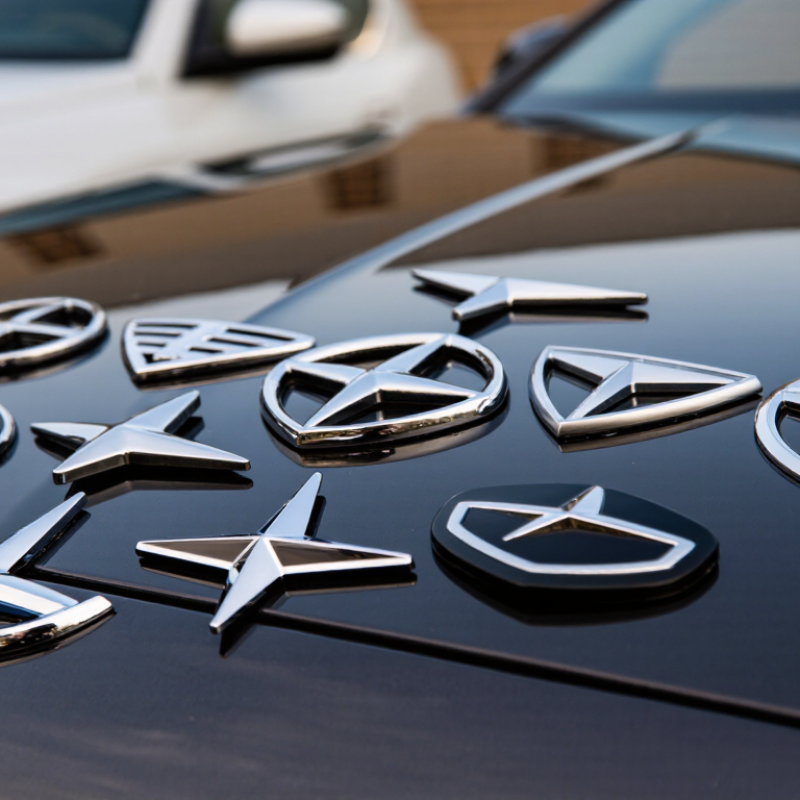
10 Best Car Emblems Suppliers for Global Buyers

What Car Emblems Suppliers Provide to Global Buyers

Car emblem suppliers provide more than a finished badge. They help buyers select materials, shapes, finishes, and attachment methods for different vehicle surfaces. Common options include molded plastics, plated metals, and adhesive-backed designs. A supplier should explain how each choice may respond to heat, moisture, handling, and regular washing. Small details matter.

Many suppliers also prepare drawings, digital proofs, and physical samples before production. Buyers can check the emblem’s dimensions, color, edge quality, and fit against a real panel. This step can reveal problems that a screen image misses. Not every finish ages alike. A sample may look excellent indoors but appear too glossy under direct sunlight, so review it in realistic conditions.

Production support often includes inspection plans, protective packaging, and shipping coordination. Ask how dimensions and surface defects are checked, and whether inspection records can accompany an order. Clear answers make supplier comparisons more reliable. Packaging matters, too: loose emblems can rub together and arrive scratched. Buyers should confirm quantities, labeling, lead times, and replacement procedures in writing. Some suppliers communicate these details unevenly; that deserves a closer look.

Common Car Emblem Materials: Typical Density

Suppliers may offer metal and plastic emblem options. Density is shown in g/cm³; values are approximate and vary by alloy or grade.

Material choice affects emblem weight and can help buyers compare options for different vehicle and mounting requirements.

How to Evaluate Suppliers for Quality, Cost, and Compliance

Choosing a car emblem supplier takes more than comparing catalog photos. Ask for material specifications, finish samples, and inspection records. Check whether the supplier can hold consistent color, dimensions, and adhesive strength across repeat orders. A chrome-look finish may appear even under office lighting, then reveal dull patches in direct sun. Test samples under realistic conditions. Looks matter.

Cost should include tooling, packaging, shipping, and the cost of rejected parts. Request a clear quotation with order quantities, lead times, and charges listed separately. For compliance, ask for relevant test reports and material declarations for the destination market. Confirm that documents match the exact emblem material and production site. Ask for evidence. A polished certificate alone may not answer every question, so verify details with your own technical or compliance team. No checklist catches everything.

Tips: Order a small pilot batch before committing to volume. Measure several pieces, inspect edges for burrs, and test adhesion after exposure to heat and moisture. Keep dated photos and written acceptance criteria. A supplier that responds clearly to a defect report can be more dependable than one offering the lowest price. I have seen evaluations miss small finish differences when samples were checked too quickly; allow time for a second review.

Profiles of 10 Car Emblems Suppliers Serving Global Markets

Global car-emblem sourcing spans metal stamping, molded plastics, coatings, lighting, and export logistics. OICA’s 2023 production report counted about 93.5 million motor vehicles worldwide, indicating the scale and variety of markets suppliers may need to serve. The profiles here compare supplier capabilities, not named companies. A metal stamper suits crisp, shallow relief; a die-casting specialist handles heavier dimensional forms; an injection molder supports lightweight shapes; a plating shop adds reflective finishes; and a paint-and-coating supplier offers controlled color matching.

Other profiles include an illuminated-emblem integrator, which must manage wiring and sealing; an adhesive-backed badge converter, focused on liner release and surface bonding; a flexible-film producer for curved panels; a low-volume custom shop for prototypes and regional variations; and a full-service exporter coordinating design, tooling, inspection, and packing. Small details matter. Ask for samples and test records, not only finish photographs.

S&P Global Mobility’s 2024 outlook projected 88.3 million global light-vehicle sales, another signal of broad sourcing demand. For comparisons, buyers can request dimensional checks, UV exposure results, temperature-cycle testing, and corrosion-test records where relevant. The reports describe vehicle production and sales, not emblem demand directly. That distinction is easy to overlook. Supplier claims also need checking: a polished sample cannot prove that every production batch will match it.

How to Compare Suppliers by Materials, Customization, and Capacity

When comparing car emblem suppliers, look beyond the finish shown in a product photo. Ask whether the part uses ABS, zinc alloy, stainless steel, or another specified material. Each option behaves differently under heat, moisture, and handling. Request relevant test records, such as coating adhesion or weathering results, rather than relying on broad claims. Details matter. A polished sample may look convincing, but one sample cannot reveal how every production batch will look.

Customization should cover more than shape and color. Confirm whether the supplier can work from dimensioned drawings, adjust raised lettering, and match a physical color reference. Ask how backing methods, such as adhesive or mounting studs, affect installation. Request a prototype before approving tooling or a large order. Small color shifts can appear under different lighting. That is easy to overlook.

Capacity is about dependable repeat production, not just a large factory. Compare minimum order quantities, tooling charges, sample timelines, monthly output, and stated lead times. Ask how dimensions and finish are checked across batches, and what happens when a defect is found. A supplier may promise flexibility, yet still need longer for a custom mold. Build that possibility into your schedule. One useful question remains: can the supplier explain its process clearly, with records you can review?

10 Best Car Emblems Suppliers for Global Buyers - How to Compare Suppliers by Materials, Customization, and Capacity Anonymous supplier profiles for comparison. Capability ranges below are indicative industry benchmarks, not verified quotations or rankings of named companies. Confirm specifications, certifications, capacity, and lead times directly with each supplier.
Supplier Profile Common Materials Customization Options Typical Production Capacity Indicative MOQ Typical Sample Lead Time Typical Production Lead Time Best Fit Key Checks for Buyers
01 — Die-Cast Metal Specialist Zinc alloy, aluminum alloy, stainless steel Raised or recessed lettering, plating, brushed finishes, color fill, custom tooling Medium to high; suited to repeat production runs Often 500–2,000 pieces, depending on tooling and finish About 2–4 weeks About 4–8 weeks after sample approval Durable exterior badges and dimensional logos Check corrosion testing, plating thickness, sharp-edge control, and tooling ownership terms.
02 — Stamped Metal Emblem Producer Stainless steel, aluminum, brass Stamping, etching, polishing, brushing, laser marking, adhesive backing Medium to high; efficient for stable designs Often 1,000–5,000 pieces About 1–3 weeks About 3–6 weeks after approval Flat or low-profile badges with consistent geometry Confirm metal grade, dimensional tolerances, burr removal, and adhesive performance.
03 — Injection-Molded Plastic Specialist ABS, PC, PMMA, engineering plastics Custom shapes, molded lettering, paint, vacuum metallization, backlit features High once the mold is approved Often 1,000–5,000 pieces; tooling may be separate About 2–4 weeks for appearance samples About 4–8 weeks, depending on tooling and decoration Lightweight emblems and complex molded forms Ask about UV and weathering resistance, material grade, color matching, and mold maintenance.
04 — Chrome-Finish Plastic Badge Supplier ABS or PC with decorative metallic coating Bright chrome appearance, satin metallic finishes, multi-color paint, custom contours Medium to high for established designs Often 1,000–3,000 pieces About 2–4 weeks About 4–7 weeks after sample approval Automotive-style bright trim at lower weight than solid metal Verify coating adhesion, chemical resistance, outdoor durability, and restrictions on process chemicals.
05 — Domed Resin Emblem Producer Printed film or metal base with polyurethane or epoxy dome Full-color graphics, gloss or matte dome, custom outline, pressure-sensitive adhesive Low to medium; suitable for varied designs Often 100–500 pieces About 5–10 business days About 2–4 weeks Small batches, accessory badges, and decorative labels Check resin yellowing resistance, temperature range, print durability, and outdoor adhesive rating.
06 — Laser-Cut and Engraved Metal Supplier Stainless steel, aluminum, anodized aluminum Laser cutting, engraving, selective color fill, brushed or bead-blasted finish Low to medium; flexible for short runs Often 50–500 pieces About 3–10 business days About 1–3 weeks Prototype programs, replacement parts, and limited editions Confirm edge quality, engraving contrast, finish consistency, and batch-to-batch color control.
07 — Soft PVC Emblem Manufacturer PVC or similar flexible molded polymers Raised and recessed details, multiple colors, flexible shapes, adhesive or sew-on backing Medium; depends on mold cavities and color complexity Often 500–2,000 pieces About 2–3 weeks About 3–6 weeks after approval Flexible badges for merchandise, interiors, or non-metal applications Check polymer composition, heat resistance, odor requirements, and suitability for the intended vehicle location.
08 — Printed and Laminated Badge Supplier Polyester film, polycarbonate, aluminum, adhesive laminates Screen or digital printing, clear overlays, custom colors, die-cut shapes Medium to high for flat graphic designs Often 250–1,000 pieces About 5–10 business days About 2–4 weeks Flat, lightweight graphics and interior identification badges Ask for abrasion, UV, and chemical-resistance data, plus adhesive compatibility with the mounting surface.
09 — Multi-Process Emblem Manufacturer Metal, molded plastic, printed film, mixed-material assemblies Combines casting, molding, plating, printing, and assembly Medium to high; varies by process mix and product complexity Often 500–3,000 pieces About 3–5 weeks About 5–9 weeks after approval Projects requiring several materials or coordinated finishing steps Identify which processes are in-house, who controls subcontractors, and how final inspection is documented.
10 — Automotive Program Supplier Metal, engineered plastic, or approved combinations Production tooling, controlled color and finish, traceability, documented change control High, subject to program approval and scheduling Program-specific; often higher for production launch About 4–8 weeks, including engineering review About 8–16 weeks or more for validated programs Long-term vehicle programs with formal quality requirements Review applicable quality-system certification, audit results, traceability, validation plans, and capacity commitments.

Key Steps for Sourcing Car Emblems Across Borders

Cross-border sourcing of car emblems starts with a precise specification, not a price request. Share a dimensioned drawing, base material, finish, attachment method, and acceptable color range. Ask suppliers for production samples and test them on the intended surface. Check adhesion after heat, moisture, and salt-spray exposure; a bright showroom sample proves little about long-term durability. Confirm packaging with photos: thin protective film and separated compartments can prevent scratches during transit. One uncomfortable lesson: the lowest quote may omit tooling, inspection, or export packing.

Plan the route as carefully as the part. The World Bank’s 2023 Logistics Performance Index assessed 139 countries across areas including customs, infrastructure, and shipment timeliness. Use it as a starting point when comparing transport routes, then request realistic production and transit estimates from the supplier and forwarder. Agree on inspection points, payment milestones, shipping terms, and required commercial documents in writing. Build in time for sample approval and port delays; a perfect schedule on paper is still only a schedule.

Tips: Request a pre-shipment photo set showing emblem dimensions, finish, and carton labels. Keep one approved sample as the reference for future orders. If a supplier cannot explain how rejected pieces are handled, ask before placing the order. Small details matter.

Article Source:

Shopping Basket