
• Home
  • About
    • jute Bag

      Eco-Chic and Durable – Perfect for Sustainable Living.

      Cashew Nut Bag

      Sustainable jute bag for lasting cashew nut freshness

      Cocoa Bag

      Eco-friendly jute bag for rich cocoa flavor preservation

      Coffee Bag

      Elegant, durable jute bag to keep coffee beans fresh and eco-friendly

      Hazel Nut Bag

      Eco-conscious jute bag for hazelnut freshness and quality

      Shea Nut Bag

      Durable jute bag for fresh, organic shea nuts

      Tote Bag

      Stylish, eco-friendly jute tote for daily essentials

      Wheat Bag

      Sustainable jute bag for optimal wheat freshness

    • Jute Yarn

      Eco-Chic and Durable – Perfect for Sustainable Living.

      Jute Rope

      Sustainable jute bag for lasting cashew nut freshness

      Jute Fabrics

      Eco-friendly jute bag for rich cocoa flavor preservation

      Hessian cloth

      Sustainable Hessian cloth suppliers

  • Products
  • Export Country
  • Blog

How to Choose the Best Nail Varnish Wraps for Your Business

Choosing the right Nail Varnish Wraps is a practical business decision, not just a matter of color. Grand View Research valued the global nail polish market at approximately $13.3 billion in 2023 and projected continued growth through 2030. That figure covers nail polish, not wraps alone, so it should be treated as market context rather than proof of wrap demand. Still, it signals a sizable category where shoppers expect attractive finishes and reliable performance.

For a salon, retailer, or online brand, product choice affects more than the display. A wrap that lifts at the edges can mean disappointed customers; one that tears during application can turn a simple service into wasted time. Compare fit across nail sizes, material flexibility, finish consistency, wear claims, and removal instructions. Ask suppliers for sample packs and test them on different nail shapes under ordinary conditions. Small details matter. Packaging matters, too: clear sizing guides and readable instructions can reduce confusion at checkout and during application.

Price deserves a closer look. A low unit cost may seem appealing, but returns, damaged stock, or repeated customer support can erode the margin. Check minimum order quantities, lead times, and whether colors remain consistent between batches. Industry figures do not tell you which supplier will perform best for your customers. That part takes testing. And some results may surprise you. This guide outlines how to assess quality, compare suppliers, and choose Nail Varnish Wraps that fit your business, while leaving room to reconsider assumptions when customer feedback says otherwise.
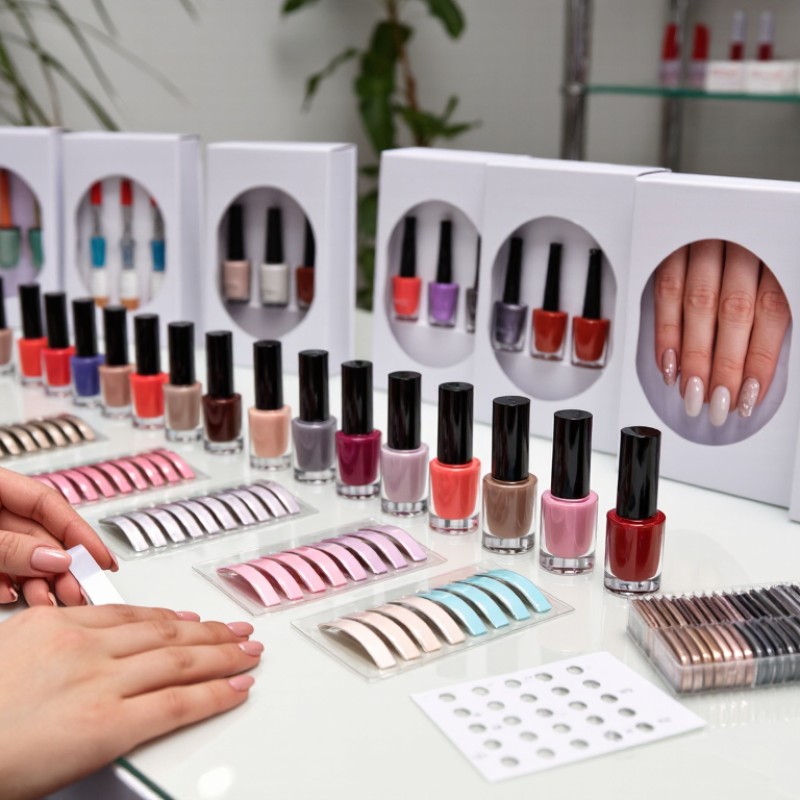
How to Choose the Best Nail Varnish Wraps for Your Business

Define Your Business Needs and Target Customers

Before choosing nail varnish wraps, define who will buy them and what problem they need solved. Salon clients may value fast application, reliable sizing, and removal that fits appointment times. Online shoppers may prefer lightweight packaging, clear application photos, and designs they can browse easily. Ask customers about nail length, finish, wear time, and comfortable pricing. Check answers against repeat purchases, not likes alone.

Grand View Research’s Nail Polish Market report estimates the global market reached US$9.3 billion in 2023, with projected annual growth of 5.2% from 2024 to 2030. This covers nail polish broadly, not wraps specifically, so treat it as market context rather than proof of wrap demand. Possible customer groups include busy professionals seeking a quick manicure, gift buyers looking for seasonal patterns, and salons needing consistent stock. Test which group actually converts.

Tips: Start small. Order samples in several sizes and finishes. Track application time, edge lifting, feedback, and reorders. Ask testers to apply wraps in ordinary lighting; glossy product photos can hide fit problems.

Compare Nail Varnish Wrap Types and Materials

When comparing nail varnish wraps, separate polish-based strips from gel wraps and printed adhesive films. Polish-based strips are thin and flexible, often giving a natural profile over the nail. Gel wraps tend to feel thicker and can offer a glassier finish, but may need curing equipment. Printed films provide crisp patterns and color consistency; check whether their backing and adhesive conform well to curved nail surfaces. Small details matter.

Material affects more than appearance. Ask suppliers for composition, thickness, shelf-life, and adhesion test data, then test wraps on different nail shapes. Check edge lift after handwashing and whether removal leaves residue. A sample that looks perfect under studio lights may show wrinkles or dull color in daylight. That is easy to overlook. Grand View Research estimated the global nail polish market at USD 13.57 billion in 2023, with growth projected through 2030. This covers polish broadly, not wraps alone, so treat it as market context rather than proof of wrap demand. For a business, compare sample performance, packaging protection, and repeat-order consistency before choosing a material. Trade-offs remain: a thinner film may look more natural, yet can be harder to apply without stretching.

Assess Quality, Wear, Application, and Design Options

For a business, nail varnish wraps should look polished on display and perform consistently during appointments. Inspect each sample under bright light. The color should look even, the edges should feel flexible, and removal should not leave heavy adhesive residue. Request material details and sample sheets, then test different sizes on varied nail shapes. A neat package can still hide uneven cuts.

Wear depends on preparation and daily routines. Handwashing, typing, and cleaning may affect how long wraps stay smooth. Test samples for several days. Note lifting near the cuticle, cracks at the nail tip, and color changes after sanitizer exposure. Avoid promising a fixed wear time unless your own trials support it. Short, curved nails may produce less impressive results. That is useful feedback, not a detail to ignore. Application should be easy to teach: align the wrap, press from the center outward, then file excess gently.

Tips: Keep a small test log with nail shape, preparation steps, and wear notes. Compare glossy, matte, and patterned designs in natural light. Ask customers which prints feel wearable, not merely eye-catching. Check the edges. One sample is not enough.

How to Choose the Best Nail Varnish Wraps for Your Business - Assess Quality, Wear, Application, and Design Options
Wrap Type Quality Checks Typical Wear Application and Removal Design Options Business Considerations
Dry nail polish wraps Look for flexible strips with even color, clean edges, and consistent adhesive. Check that the material conforms to the nail without excessive wrinkling. Often several days; actual wear depends on nail preparation, application, daily activities, and top coat use. Usually applied to clean, dry nails, then trimmed and filed to fit. Many can be removed with nail polish remover, but follow the supplier’s instructions. Solid colors, prints, gradients, glitter effects, and accent designs are commonly available. A practical option for quick services and retail add-ons. Check packaging instructions and test application time with staff before choosing a range.
Semi-cured gel wraps Assess strip flexibility, adhesive coverage, sizing range, and resistance to lifting. Confirm that curing instructions and compatible lamp requirements are clearly stated. May last around one to two weeks under suitable conditions, but wear varies by product, nail condition, and application technique. Typically fitted to the nail, trimmed, and cured under a specified UV or LED lamp. Removal methods vary; avoid peeling, which can damage the natural nail. Often offered in glossy, sheer, French-style, glitter, and patterned designs. Can support longer-wear services, but requires lamp access, staff training, and clear customer guidance on safe application and removal.
Flexible adhesive nail wraps Check that the wrap stretches evenly, stays flat at the sidewalls, and has adhesive that holds without leaving excessive residue. Generally suited to short-term wear; lifting may occur sooner if the nail is oily, damp, or exposed to frequent water. Usually pressed onto a clean nail and smoothed from the center outward. Trimming and filing help create a close fit; removal instructions differ by product. Common choices include simple solids, seasonal prints, metallic looks, and mix-and-match patterns. Useful for quick changes and entry-level offerings. Review sizing variety and application consistency to reduce fitting issues across customers.
Custom-printed wraps Review print sharpness, color consistency, edge quality, and how the design aligns with the available nail sizes. Request samples before ordering in volume. Wear depends mainly on the wrap material and adhesive construction, rather than the printed design alone. Application follows the instructions for the underlying wrap type. Accurate sizing and careful trimming are especially important for detailed patterns. May include bespoke artwork, event themes, seasonal collections, or coordinated sets, subject to supplier capabilities. Can help differentiate a service or retail selection. Check minimum order quantities, proofing processes, lead times, and rights to use submitted artwork.
Wear estimates are general guidance, not guarantees. Test samples under your own service conditions, follow product-specific instructions, and assess removal as well as application before purchasing in bulk.

Evaluate Suppliers, Pricing, and Regulatory Requirements

For a nail-wrap business, compare suppliers using physical samples, not catalog photos alone. Check whether the wraps fit narrow and wide nails, and whether edges lift after handwashing. Ask for samples from at least two production lots. Test them yourself. Record application time, finish, and removal experience. A supplier should explain material composition, adhesive specifications, shelf life, and how it handles defects. Vague answers are a warning sign, even when the sample looks polished.

Compare the full landed cost, not just the price per sheet. Include minimum order quantities, packaging, print setup, shipping, duties, and likely waste from damaged units. Request tiered quotes and written lead times. A low unit price can tie up cash in slow-moving designs. One detail is easy to overlook: custom packaging may add cost and delay without improving repeat purchases. Forecast conservatively, then check your assumptions against actual sales.

Regulatory requirements depend on where you sell and how the product is classified. Ask suppliers for current ingredient or material disclosures, safety documentation, and traceability details. Confirm that labels, warnings, and product claims meet the rules in each target market; do not assume one label works everywhere. Have a qualified compliance professional review uncertain points before printing thousands of packages. Paperwork can feel tedious. It is still part of choosing a reliable supplier.

How to Choose Nail Varnish Wraps for Your Business

U.S. cosmetic compliance update intervals under MoCRA

What this means for supplier evaluation: Ask suppliers for current facility-registration and product-listing details when the wraps or their components qualify as cosmetics under U.S. law. Classification depends on the product and its intended use, so confirm requirements for your specific product before purchasing.

Source: U.S. Food and Drug Administration, Modernization of Cosmetics Regulation Act (MoCRA). Facility registration is renewed every two years; cosmetic product listings are updated annually.

Test Samples Before Choosing a Product Range

Before committing to a nail varnish wrap range, order samples in several finishes and sizes. A glossy sample may look striking under bright studio lights, yet appear dull beside a shop window. Check each design in natural and indoor light. Small details matter.

Apply the wraps to different nail shapes, not just one ideal-sized nail. Look for lifting around the edges, creases near the cuticle, and gaps on wider nail beds. Wear a sample through ordinary tasks, such as washing dishes or typing, and note when the finish starts to chip or peel. Test removal, too. A wrap that is difficult to remove may frustrate customers, even if it photographs well.

Keep notes on application time, fit, finish, and packaging. Ask a few customers with different nail lengths to try the samples, then collect specific feedback rather than a simple “like” or “dislike.” Not every sample wins. Sometimes a color sells well in photos but feels too bright in person. That can happen. Recheck samples from more than one production batch if consistency matters to your business. One small test cannot predict every customer’s experience, so treat early results as useful evidence, not a guarantee.

Shopping Basket