
Choosing a Private Label lipstick supplier in China can shape your product quality, launch schedule, and customer experience. The “best” partner is not simply the factory with the lowest quote or the broadest shade chart. Look for evidence of consistent production, clear communication, and experience with the kind of lipstick you plan to sell. A matte formula, for example, may feel dry on one person and comfortable on another. Samples matter.
This guide explains how to compare suppliers using practical checks, not promises alone. Consider formula options, color consistency, packaging compatibility, minimum order quantities, lead times, and the supplier’s process for handling quality concerns. Ask for relevant product documentation, ingredient information, and batch-level quality records. When possible, compare samples under consistent lighting and test them in the intended packaging. Small details count. A cap that loosens in transit can undermine an otherwise good product.
No supplier is perfect. What matters is whether the company answers questions clearly and supports realistic expectations. Requirements for cosmetic products vary by destination market, so confirm applicable rules and documentation with qualified specialists before placing an order. A polished catalog is useful, but it is not proof of manufacturing quality. This overview offers a grounded starting point for identifying Chinese suppliers worth evaluating—and for asking better questions before committing to a partnership.
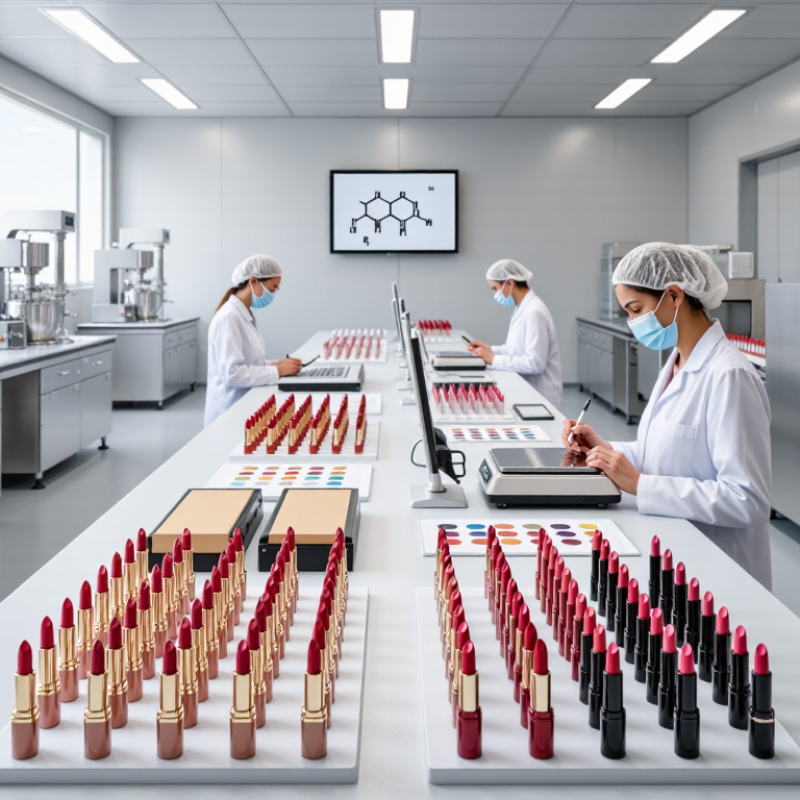
Private label lipstick manufacturing in China usually brings formula development, shade matching, packaging, and filling together. A clear product brief should specify finish, coverage, texture, tube size, and target cost. The manufacturer may prepare lab samples and adjust pigments, waxes, or oils after wear and stability checks. Ask how many sample rounds are included. A shade can look different in a finished tube, so approve a packed sample, not just a color swatch.
Tips: Request a written specification for each shade, including finish and fill weight. Check whether packaging samples are tested with the formula. Keep approved samples and production details for comparison later.
Before placing a bulk order, ask how the supplier checks incoming materials, filling consistency, and finished units. Clarify minimum order quantities, lead times, and which quality records are available. These details help you compare suppliers beyond the quoted price. Small differences in texture or color may still appear between batches; agree on acceptable variation in writing. It is easy to overlook this step. A polished sample is useful, but it cannot answer every question about full-scale production.

Choosing a private label lipstick supplier in China requires more than comparing unit prices. Grand View Research estimated the global lipstick market at USD 17.49 billion in 2023 and projected 5.1% annual growth through 2030. That growth makes reliable production and consistent quality especially important. Ask suppliers for documented quality systems, such as ISO 22716-based cosmetic good manufacturing practices, and check whether their records cover raw-material checks, batch coding, and corrective actions. Ask for proof.
Review the formula and the finished product together. Request samples in the intended packaging, then assess color consistency, odor, payoff, and wear after repeated use. Stability and compatibility tests can reveal whether a lipstick changes texture or leaks in its case. Small details matter. Confirm how the supplier handles production capacity, minimum order quantities, lead times, and rejected batches. Request recent test reports and clarify which tests apply to your specific formula; a generic certificate is not enough. If possible, visit the factory or arrange an independent audit. A supplier may communicate well during sampling yet struggle with larger orders—that gap deserves scrutiny. Price still matters, but low quotes can hide limited testing or inconsistent components. Compare written specifications, not promises.
| Evaluation dimension | What to assess | Useful evidence to request | Strong indicator |
|---|---|---|---|
| Manufacturing capability | Whether the supplier manufactures lipstick in-house or outsources key production steps, and whether its equipment suits the required product and order volume. | A factory profile, production-process overview, and a live or recorded facility tour. | Clear disclosure of production locations, subcontracted processes, and quality-control responsibilities. |
| Product development and formulation | Ability to offer suitable lipstick formats, finishes, shades, and formula adjustments, with a defined sampling and approval process. | Sample formulas, ingredient information, shade references, and documented sample revisions. | Samples can be evaluated against agreed specifications before bulk production begins. |
| Ingredient and product documentation | Whether ingredient and product information is complete and appropriate for the intended destination market. | Full ingredient list using applicable INCI names, product specifications, and available safety or test documents. | The supplier can provide consistent, traceable documentation and explain what is and is not included. |
| Quality management and GMP | How the supplier manages hygiene, production records, inspection, nonconformities, and batch consistency. ISO 22716 is a cosmetics GMP guideline; certification claims should be checked for scope and validity. | Relevant certificates, audit reports where available, quality procedures, and sample batch records. | Quality processes are documented, and certificate details can be independently verified. |
| Safety and product testing | Whether testing is suitable for the formula, packaging, and intended market. Requirements vary by product and destination. | Available stability, compatibility, microbiological, or other relevant test reports, with test scope and sample details. | Reports identify the tested product or formula and are relevant to the final commercial specification. |
| Destination-market compliance | Ability to support the buyer’s compliance work for the intended market, including ingredient review and labeling information. Regulatory duties may rest with the brand owner or responsible person. | Market-specific document lists, ingredient declarations, and written clarification of the supplier’s support versus the buyer’s responsibilities. | The supplier avoids unsupported claims that a product is automatically approved for every market. |
| Packaging and customization | Available component options, decoration methods, artwork requirements, and packaging compatibility with the lipstick formula. | Packaging specifications, artwork templates, component samples, and confirmation of compatibility checks. | Packaging details, color approvals, and responsibilities for custom tooling are agreed in writing. |
| MOQ, pricing, and payment terms | Minimum order quantities, price breaks, sample and tooling charges, payment schedule, and costs that may change with customization. | A written quotation specifying formula, shade, packaging, order quantity, Incoterms, and validity period. | All recurring and one-time costs are itemized; MOQ and lead-time terms are product-specific rather than assumed. |
| Production lead time and capacity | Estimated timing for sampling, artwork approval, production, and dispatch, including factors that may affect the schedule. | A milestone-based timeline and written confirmation of the start point for each lead-time estimate. | The supplier distinguishes sample-development time from bulk-production time and communicates delays promptly. |
| Batch traceability and after-sales support | Ability to identify production batches and handle complaints, defects, or corrective actions after delivery. | Example batch coding, complaint-handling procedure, and written defect or replacement terms. | A clear process links finished goods to production records and sets out how issues will be investigated. |
| Communication and contract clarity | Responsiveness, clarity of technical answers, and agreement on specifications, approvals, ownership, and delivery terms. | Written product specifications, approved samples, purchase terms, and a named contact for project coordination. | Important commitments are documented, and changes require written approval from both parties. |
Note: Supplier capabilities and regulatory obligations vary by product and destination market. Verify documents, claims, and commercial terms independently before placing an order.
China’s private-label lipstick suppliers generally fall into three groups. OEM factories manufacture to a buyer’s formula and packaging brief. ODM suppliers offer ready-developed shades and formulas for adaptation. Integrated suppliers may also support shade matching, component sourcing, stability testing, and production planning. Their capabilities vary: a supplier with a wide color library may not excel at custom molding or small trial runs.
Grand View Research estimated the global lipstick market at about US$9.5 billion in 2023 and forecast growth through 2030. This signals opportunity, not guaranteed demand for any one product. Ask suppliers for current production samples, batch records, ingredient specifications, and test protocols. Check how they control pigment dispersion and fill weight; uneven color or lipstick that breaks during application can reveal process weaknesses. No supplier does everything equally well. That deserves a closer look.
Tips: Request samples from the same production line intended for your order, then compare shade consistency, glide, scent, and cap fit. Confirm minimum order quantities, lead times, and who handles packaging changes in writing. A polished sample is useful, but it does not prove every bulk batch will match.
Choosing a private-label lipstick supplier in China means comparing more than the quoted unit price. Grand View Research estimated the global lipstick market at USD 9.3 billion in 2023 and projected 5.2% annual growth through 2030. That growth makes flexibility valuable, but the report does not establish factory minimums. Request separate MOQs for formula, shade, and packaging; a supplier may accept a small first run only when you use stock tubes or existing bases.
Customization affects both cost and schedule. A new shade can require pigment adjustments, repeated drawdowns, and stability checks, while custom molds or printed components add supplier coordination. Ask for written sample and production milestones, including approval deadlines and quality inspections. Timelines vary. A supplier’s estimate should specify whether it starts after deposit, final artwork, or sample sign-off. That detail matters.
A low MOQ is not automatically a bargain. Compare the full landed cost, sample fees, packaging charges, and any tooling costs. Request evidence of batch controls and documented test procedures, then review samples under daylight and indoor lighting. Small differences show. I would also ask what happens if a shade or component misses the approved specification; many buyers overlook this until production is underway. Estimates are useful, but confirmed schedules and acceptance criteria are more reliable.
A lipstick supplier’s quality file should connect each batch to its formula, raw-material records, and test results. Request a current ISO 22716 audit or equivalent evidence of good manufacturing practices, then check that the certificate covers the actual production site. Cosmetics Europe’s 2024 Market Performance Report estimates Europe’s 2023 cosmetics and personal-care retail market at €96 billion, a reminder of the scale and scrutiny behind everyday products. Paperwork matters. Still, a polished audit file is only a starting point; I would verify dates, scope, and corrective actions.
Ask for ingredient lists using INCI names, raw-material certificates of analysis, safety data sheets, and batch-level finished-product results. For lipstick, review microbiological quality and test for relevant contaminants, including lead, arsenic, and cadmium, against the destination market’s requirements. Use an independent laboratory with suitable accreditation, and confirm that sample labels and batch numbers match production records. Check stability and packaging compatibility too: a formula can change when exposed to heat or light. Keep one sealed production sample. It is easy to overlook, but useful when a later complaint raises questions. Verify the supplier’s traceability process by asking them to retrieve a specific batch record, not just describe the process.
How to Verify Supplier Quality, Safety, and Compliance
Use these evidence checks to compare suppliers: review quality-system records and product testing, then confirm the regulatory requirements for your target market. Checklist counts reflect the evidence points listed for each area—not supplier ratings or a compliance verdict. Requirements vary by product and destination.
We are the most reliable and proficient jute goods manufacturer & supplier that helps businesses or individuals with various exportable agricultural commodities biz and jute goods by shipping them worldwide. Our right-time service ensures that whatever color and size of jute product you need, we can make it happen anytime and anywhere! Let’s keep our earth safer to live in!
Important link
Address
Bangladesh Address:
Fair Plaza (9th Floor), Plot : 3C, Section : 01, Mirpur, Dhaka:1216
UK Office:
242 Manor Road, Droylsden, Manchester, M43 6JD, United Kingdom.
Let's Talk
We are the most reliable and proficient jute goods manufacturer & supplier that helps businesses or individuals with various exportable agricultural commodities biz and jute goods by shipping them worldwide. Our right-time service ensures that whatever color and size of jute product you need, we can make it happen anytime and anywhere! Let’s keep our earth safer to live in!
Bangladesh Address:
Fair Plaza (9th Floor), Plot : 3C, Section : 01, Mirpur, Dhaka:1216
UK Office:
242 Manor Road, Droylsden, Manchester, M43 6JD, United Kingdom.