• Home
  • About
    • jute Bag

      Eco-Chic and Durable – Perfect for Sustainable Living.

      Cashew Nut Bag

      Sustainable jute bag for lasting cashew nut freshness

      Cocoa Bag

      Eco-friendly jute bag for rich cocoa flavor preservation

      Coffee Bag

      Elegant, durable jute bag to keep coffee beans fresh and eco-friendly

      Hazel Nut Bag

      Eco-conscious jute bag for hazelnut freshness and quality

      Shea Nut Bag

      Durable jute bag for fresh, organic shea nuts

      Tote Bag

      Stylish, eco-friendly jute tote for daily essentials

      Wheat Bag

      Sustainable jute bag for optimal wheat freshness

    • Jute Yarn

      Eco-Chic and Durable – Perfect for Sustainable Living.

      Jute Rope

      Sustainable jute bag for lasting cashew nut freshness

      Jute Fabrics

      Eco-friendly jute bag for rich cocoa flavor preservation

      Hessian cloth

      Sustainable Hessian cloth suppliers

  • Products
  • Export Country
  • Blog

China Top Burlap Tote Bags for Global Wholesale Buyers

China has become a significant sourcing base for burlap tote bags, serving retailers, event planners, and promotional distributors worldwide. This guide explores how global wholesale buyers can evaluate Chinese suppliers with greater confidence. It focuses on material quality, production consistency, customization, packaging, and responsible export preparation.

A reliable burlap tote should feel firm, not brittle, with evenly woven fibers and reinforced handles. Buyers should request fabric specifications, stitching photos, sample measurements, and clear production timelines. In practical sourcing, small details matter. A rough seam can weaken under repeated use. Natural jute may also carry a noticeable plant-like odor, especially after sealed shipping. That point is easy to overlook.

Experienced importers usually compare several factories before placing a bulk order. They review sample quality, communication speed, factory capacity, and inspection procedures. Certifications may support trust, but documents should be checked against the actual product and supplier identity. Custom printing requires careful approval of artwork, ink coverage, color expectations, and placement tolerances. Even simple logos can appear uneven on textured burlap.

This overview does not present every Chinese manufacturer as equally capable. That would be misleading. Some suppliers excel at large runs, while others perform better with detailed finishing or smaller customized orders. Buyers should confirm applicable packaging, labeling, product safety, and import requirements in their destination markets. Thoughtful evaluation can reduce surprises and support a more dependable burlap tote supply program.
China Top Burlap Tote Bags for Global Wholesale Buyers

What Are Burlap Tote Bags and Why Do Global Buyers Choose Them?

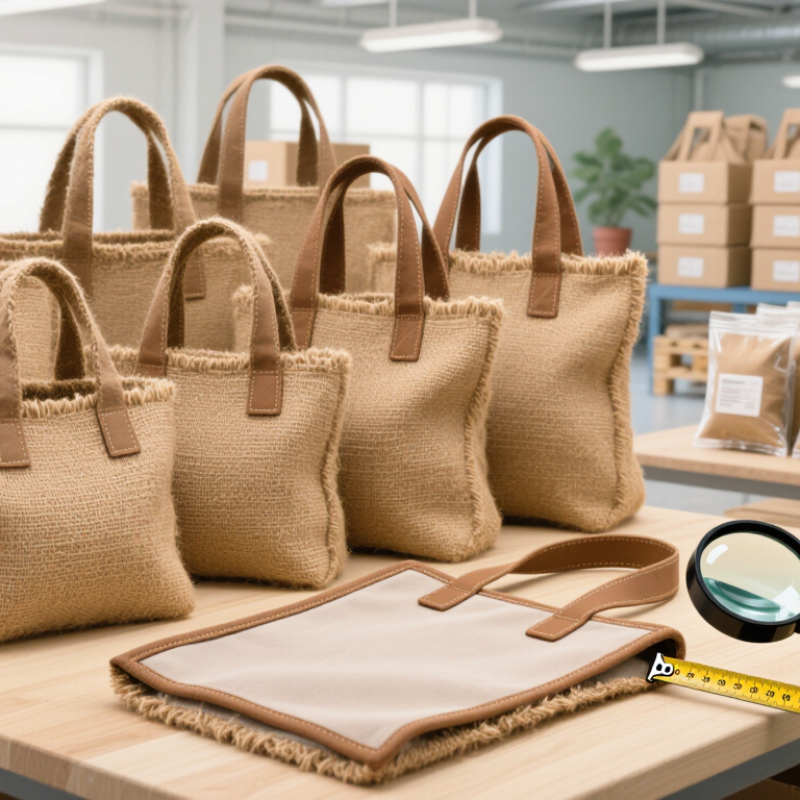
Burlap tote bags are carry bags made from coarse, woven natural fibers, usually jute. Their visible weave gives each bag a warm, practical character. Unlike smooth synthetic fabric, burlap has a dry texture and slight natural variation. That variation is normal, not necessarily a defect. In wholesale production, buyers should still check fiber quality, stitching, handle strength, and odor before confirming large quantities.

Global buyers often choose burlap totes for retail packaging, agricultural events, conferences, and everyday shopping. The material is lightweight but can feel sturdy when properly laminated or reinforced. A well-sewn bag may carry books, folded clothing, or packaged goods with ease. Many buyers also value its natural appearance because it supports simple, environmentally conscious messaging. However, burlap is not waterproof. Prolonged moisture can cause staining, shrinking, or an unpleasant smell.

Practical sourcing requires more than attractive product photos. Ask for fabric weight, measured dimensions, handle length, inner finishing, and sample testing results. Load a sample with the intended product, then inspect the seams after repeated lifting. Small details matter. A softer lining may improve comfort, while a wider handle reduces pressure on the hand. Some buyers expect every bag to look identical, but natural fibers rarely behave perfectly. That expectation may need reconsideration. Clear specifications and realistic tolerances create more reliable wholesale orders.

How China’s Burlap Tote Bag Industry Supports Wholesale Sourcing

China Top Burlap Tote Bags for Global Wholesale Buyers

China’s burlap tote bag industry supports wholesale sourcing through flexible production and detailed factory communication. Manufacturers commonly offer different fabric weights, handle lengths, gusset sizes, and printing methods. Buyers can request samples before confirming large orders. A useful sample should show stitching strength, handle attachment, fabric texture, and actual dimensions. Small differences matter.

Many workshops coordinate spinning, weaving, cutting, sewing, printing, and packing through established supply networks. This structure helps buyers compare material options and control production costs. Natural burlap may contain uneven fibers, loose threads, or a noticeable earthy smell. These features are not always defects, but they should be discussed clearly before production. Inspection teams can check random cartons, seam density, label placement, and packing moisture.

Reliable sourcing also depends on documentation and realistic communication. Export suppliers should provide clear product specifications, packing details, lead times, and applicable test records. Buyers should verify those documents independently when required. The process is not flawless. A pre-production sample may look better than later batches if inspection standards remain vague. Written tolerances reduce disputes, although they cannot remove every risk. During sourcing, I would record measurements with photographs and keep approval samples on file. One missed detail can affect thousands of bags.

China Top Burlap Tote Bags for Global Wholesale Buyers - How China’s Burlap Tote Bag Industry Supports Wholesale Sourcing

Sourcing Dimension Typical Wholesale Data Why It Matters to Global Buyers Recommended Verification
Primary Material Woven jute fabric is the standard burlap material. Common constructions include 100% jute, jute-cotton blends, and jute fabric with a cotton or synthetic lining. Material composition affects texture, strength, odor, price, recyclability, and the final product claim. Request a material specification sheet and, when required, laboratory fiber-composition testing.
Fabric Weight Approximately 200–350 g/m² is commonly used for lightweight and medium tote bags; approximately 350–500 g/m² is suitable for a more structured or heavy-duty design. Higher fabric weight generally improves structure and abrasion resistance but increases material usage, shipping weight, and cost. Approve a pre-production sample and check actual fabric weight against the agreed tolerance.
Common Finished Sizes Typical retail and promotional formats include approximately 30 × 35 × 12 cm, 35 × 40 × 15 cm, and 40 × 45 × 18 cm. Custom dimensions are widely available. Dimensions determine usable capacity, carton quantity, freight volume, and suitability for retail, events, groceries, or gifting. Define external dimensions, gusset size, handle drop, and dimensional tolerances in the purchase specification.
Handle Options Common options include cotton webbing, jute rope, twisted paper rope, and stitched fabric handles. Handle lengths are usually customized for hand-carry or shoulder use. Handle construction influences comfort, carrying capacity, appearance, and failure risk at the attachment points. Conduct handle pull and seam-strength checks on samples before mass production.
Printing and Decoration Screen printing, heat transfer, embroidery, woven labels, and paper hangtags are commonly used. One- or two-color printing is generally simpler than multi-color artwork. Artwork complexity affects setup charges, production speed, color consistency, and minimum order quantities. Approve a physical color sample, artwork proof, print position, and wash or rub-resistance requirement.
Indicative Wholesale MOQ Stock or standard designs may start at approximately 100–500 pieces. Custom sizes, colors, labels, or printed designs commonly require approximately 500–3,000 pieces or more. MOQ affects unit pricing, inventory exposure, packaging efficiency, and the feasibility of testing a new market. Obtain a written quotation showing MOQ by size, color, artwork, and packaging configuration.
Sample and Production Timing A basic sample may take approximately 3–10 working days. Custom production commonly requires approximately 15–30 working days after sample approval; complex orders may take longer. Lead time supports launch planning and helps buyers coordinate ocean, air, rail, or courier transportation. Confirm whether the quoted lead time begins after deposit, artwork approval, or sample approval.
Quality-Control Priorities Key checks include fabric weight, dimensions, stitching, handle attachment, print position, color consistency, odor, stains, loose fibers, and moisture damage. Natural jute has inherent fiber variation, so clear acceptance limits reduce disputes and inconsistent deliveries. Use an approved golden sample, inspection checklist, and agreed defect classification such as critical, major, and minor defects.
Packaging for Export Bags are commonly folded or nested, packed in moisture-protective inner packaging, and placed in corrugated export cartons. Carton quantities vary by bag size and compression. Proper packaging helps limit mold, odor transfer, crushing, and dimensional deformation during international transit. Specify carton dimensions, gross and net weight, moisture protection, carton markings, and pallet requirements.
Sustainability Considerations Jute is a plant-based natural fiber and can biodegrade under suitable conditions. Laminations, synthetic coatings, metal accessories, and mixed-material components can reduce recyclability or biodegradability. Accurate material claims help buyers meet retailer requirements and avoid unsupported environmental marketing statements. Verify all components, coatings, inks, and packaging separately before using terms such as “biodegradable” or “compostable.”
International Compliance Requirements depend on the destination market and end use. Buyers may need chemical, colorfastness, packaging, labeling, or general product-safety documentation. Compliance planning reduces customs delays, retailer rejection, recalls, and relabeling costs. Confirm destination-country rules and request applicable third-party test reports or declarations before shipment.
Commercial Terms for Wholesale Sourcing Common quotation elements include product price, tooling or setup fees, sample charges, packaging, inspection, freight, payment terms, and Incoterms such as EXW, FOB, or CIF. Comparing the complete landed-cost structure is more reliable than comparing unit prices alone. Request a pro forma invoice with product specifications, production schedule, payment milestones, shipping terms, and validity period.

Note: MOQ, pricing, dimensions, and lead-time figures are indicative wholesale-planning ranges rather than fixed industry standards. Actual values vary according to material grade, customization, order volume, season, packaging, destination, and inspection requirements.

Key Materials, Styles, Sizes, and Customization Options

China Top Burlap Tote Bags for Global Wholesale Buyers

Burlap totes usually combine jute fabric with cotton, canvas, or recycled polyester handles. Jute gives a coarse texture, visible fibers, and a natural retail appearance. The Food and Agriculture Organization identifies jute as a major natural fibre crop, especially across South Asia. However, fiber quality varies between harvests. Buyers should request GSM, weave density, moisture limits, and odor checks before approval.

Natural texture sells. Common styles include open-market totes, gusseted shopping bags, drawstring pouches, and laminated gift bags. A 2023 Grand View Research report estimated the global reusable bags market at roughly USD 9 billion, with continued growth through 2030. This supports demand, but burlap is not suitable for every product. Sharp packaging can snag the weave. Internal lining helps.

Standard wholesale sizes range from 25 × 30 cm for small gifts to 45 × 40 cm for groceries. Custom options include screen printing, woven labels, inner pockets, dyed panels, rope handles, and waterproof coatings. Printing on rough burlap may look intentionally imperfect. That can be attractive, but artwork needs thicker lines and stronger contrast. Ask for pre-production samples, seam-strength testing, colorfastness results, and carton drop checks. Details matter. Suppliers should also confirm recycled-content claims with verifiable documentation, not vague certificates.

China Top Burlap Tote Bags for Global Wholesale Buyers

Key materials, styles, sizes, and customization reference specifications

Material: Jute burlap is a plant-based bast fiber commonly used for reusable tote bags. Typical wholesale fabric weights range from 250 to 350 GSM, with heavier fabric generally providing a firmer structure.

Styles and sizes: Flat shoppers, gusset totes, and drawstring bags are commonly specified by width, height, and side or bottom gusset depth. The chart uses representative wholesale sample dimensions in centimeters.

Customization: Common options include cotton or jute handles, laminated or coated interiors, inner pockets, zipper or drawstring closures, screen printing, woven labels, hang tags, and custom packaging.

How to Evaluate Chinese Burlap Tote Bag Suppliers and Product Quality

China Top Burlap Tote Bags for Global Wholesale Buyers

How to Evaluate Chinese Burlap Tote Bag Suppliers and Product Quality

Burlap quality starts with verified fiber content. Do not assume every “jute” bag contains pure jute. Request a composition declaration, production photos, and a recent test report. FAOSTAT production data consistently identifies South Asia as the main jute-producing region. Chinese factories may therefore process imported jute rather than grow it locally. Ask where the yarn originated.

Check measurable details, not attractive samples alone. Record fabric weight, weave density, handle length, stitching count, and bag dimensions. A useful inspection sample should show the bag filled with its planned load. Test seam strength, abrasion, shrinkage, and colorfastness through an independent laboratory. ISO 13934-1 supports tensile-strength testing, while ISO 105-C06 applies to textile colorfastness. These standards improve comparison between suppliers.

Sustainability claims also need evidence. Textile Exchange’s Materials Market Report 2024 states that global fiber production reached about 124 million tonnes in 2023. Natural fibers remain a small but important part of that market. Request recycled-content evidence, chemical information, and packaging details. Verify whether the inner coating changes recyclability. It often does. An on-site audit can reveal dusty storage, uneven cutting, or weak thread tension. Still, one audit is not enough. Production can vary between batches. Approve a pre-shipment sample, retain a reference piece, and inspect random cartons before payment. Low prices can look efficient. Sometimes, they simply move quality control to the buyer.

Ordering, Pricing, Shipping, and Import Considerations for Wholesale Buyers

China-made burlap tote bags can suit retail, events, and sustainable gift programs. Wholesale ordering starts with a precise product brief. Specify bag dimensions, fabric weight, handle length, lining, closure, printing, and stitching. Ask for a physical sample before approving bulk production. Keep it written. Confirm minimum order quantity, carton count, and packaging details. A pre-production sample can reveal loose threads or uneven handles. These small defects become expensive at scale. Experienced buyers also request inspection photos before shipment, although photos cannot replace independent checking.

Pricing should separate the bag, printing, packing, tooling, and inland delivery. Request tiered prices for several quantities. This makes volume decisions easier. Confirm whether the quote uses FOB, CIF, or another agreed term. Clarify the currency, payment schedule, quote validity, and costs for artwork changes. Very low prices deserve questions. They may reflect lighter fabric, fewer stitches, or incomplete shipping costs. I would avoid comparing totals until every specification matches. My estimate is never perfect, especially when cotton, freight, or exchange rates move.

Shipping plans need realistic production and transit buffers. Ask for carton dimensions, gross weight, loading quantity, port options, and tracking procedures. Import documents commonly include a commercial invoice, packing list, transport document, and origin information. Check the correct tariff classification and local duty requirements with a customs professional before ordering. Do not assume natural materials receive automatic duty relief. Country rules differ, and packaging labels may require specific details. Prepaying freight can simplify budgeting, but it may reduce control over carrier selection. Allow buffer. Delays happen.

Shopping Basket