
Finding dependable Vapes Elettrico suppliers takes more than comparing product photos and quoted prices. Global buyers need clear specifications, consistent communication, and evidence that a supplier can support quality checks. Details matter. A sample device, a plain product sheet, and a realistic delivery estimate can reveal more than a polished sales pitch.
This guide introduces ten suppliers for buyers assessing product range, manufacturing or distribution experience, customization options, and export support. It also outlines practical questions to ask before placing an order, such as how defects are handled, what documentation is available, and whether packaging can be adapted for the destination market. Supplier claims should be verified independently. A confident answer is not proof.
Requirements differ by country and can change. Buyers should confirm applicable rules with qualified local advisers and review product documentation before committing. This is not always straightforward. Public information may be incomplete, and a supplier’s strengths in one market may not transfer neatly to another. The profiles are starting points for due diligence, not endorsements or guarantees. Use them to compare options, request written details, and judge whether each supplier fits your business needs and compliance responsibilities.
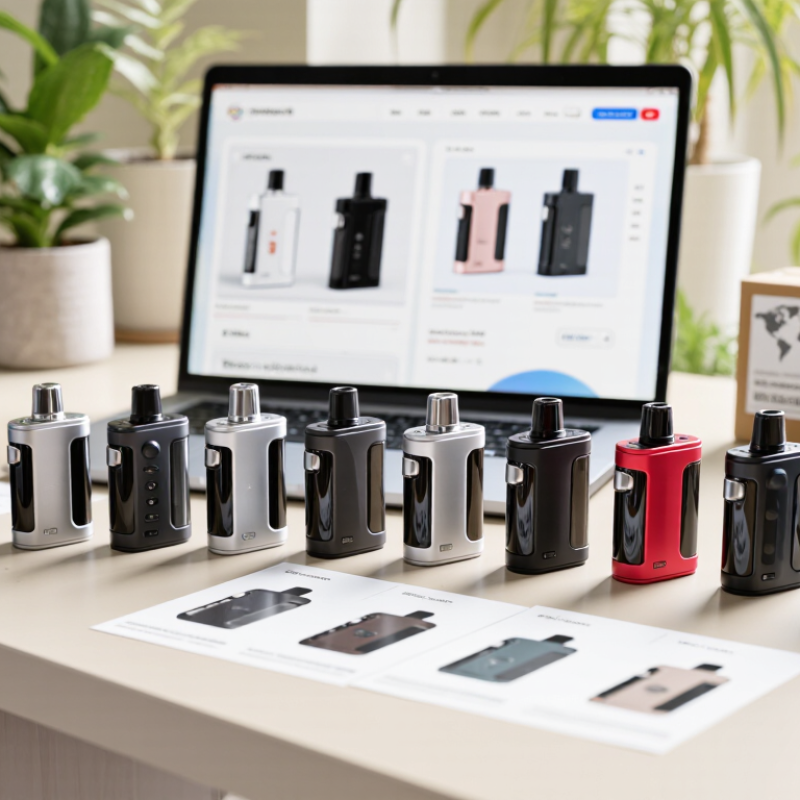
China’s vape supplier landscape is easier to assess by product type, production capability, and documentation than by factory count alone. Grand View Research valued the global e-cigarette and vape market at US$28.17 billion in 2023. Its report projected a 30.6% compound annual growth rate from 2024 to 2030. This is a market forecast, not a guarantee of supplier quality. Manufacturing clusters around Shenzhen and Dongguan offer device assembly, component sourcing, and packaging services. Some suppliers handle complete devices; others specialize in batteries, heating elements, or cartridges. Buyers should compare factory records, quality-control procedures, and the scope of each supplier’s production. Small details matter.
Common categories include closed-pod devices, refillable pod systems, and larger adjustable devices. Closed-pod designs use replaceable, prefilled cartridges, while refillable systems allow users to fill a compatible tank. Larger devices may offer adjustable output and replaceable parts. These differences affect component needs, packaging, and quality checks. Request clear specifications for battery capacity, charging protection, materials, and product testing. Ask for dated inspection records, not just a polished sample. A sample can look convincing while mass production varies; that assumption is easy to make, and costly. Verify product classification and market-specific requirements with qualified compliance professionals before placing an order.

When selecting a vape supplier in China, look beyond a polished catalog. Ask for a current factory profile, product specifications, and batch-level quality records. Check that sample units match the documented materials, dimensions, and packaging. A reliable supplier should explain how incoming components are inspected and how defects are recorded. Details matter.
Tips: Request recent, product-specific test documents and confirm they identify the tested model. Ask how production batches are traced. Keep samples and written specifications for comparison. Clear answers are useful; vague promises deserve follow-up.
Communication and consistency matter as much as price. Compare written quotations for unit costs, minimum order quantities, lead times, and packaging details. Ask who handles quality concerns and how quickly they respond. Review documentation needed for the destination market, and verify it with qualified local advisers when necessary. No checklist is perfect. A small trial order can reveal delays, uneven finishing, or missing records before a larger commitment. Keep notes after each supplier call; even a good impression can miss a practical gap.
A useful profile of ten Chinese vape suppliers should compare verified capabilities, not glossy catalogs. The group may include OEM and ODM manufacturers, pod-system assemblers, heating-component specialists, battery integrators, materials suppliers, quality-control teams, packaging firms, export-documentation providers, and audit-ready contract manufacturers. Ask each supplier for its factory address, dated audit records, batch traceability, and recent test reports. A sample inspection should check seals, labels, and component consistency. A polished catalog proves little.
Supplier selection also requires careful safeguards. WHO’s 2024 e-cigarette fact sheet estimates that more than 100 million people use e-cigarettes worldwide, including at least 15 million adolescents aged 13–15. That public-health context makes age-related controls and destination-market requirements essential screening points. Request documented quality procedures, battery-safety evidence, material specifications, and a clear process for handling defects. Compare lead times against actual production records, not sales promises. Some suppliers may have strong assembly lines but limited testing capacity; buyers should verify this independently. These profiles are a starting point, not an endorsement.
EU TPD capacity benchmarks buyers can use when checking product specifications.
Under the EU Tobacco Products Directive, tanks and cartridges are limited to 2 ml, while refill containers are limited to 10 ml. The directive also caps nicotine concentration at 20 mg/ml. These are regulatory benchmarks, not supplier rankings or company-specific data.
Source: EU Directive 2014/40/EU, Article 20.
When comparing China-based vape suppliers, product quality should be checked beyond photos and catalog descriptions. Request samples from the production range you plan to order. Inspect the casing, mouthpiece fit, airflow, and packaging for visible defects. Ask how incoming materials and finished batches are checked, and whether records can be matched to batch numbers. Small inconsistencies matter. A polished sample may not reflect routine production, so confirm how repeat orders are controlled.
Compliance depends on the destination market and product configuration. Request current, product-specific test reports and supporting technical documents, then verify their scope and validity with qualified local advisers. Do not treat a certificate as a universal approval. Export capability also deserves practical checks: ask about lead times, carton specifications, labeling languages, shipping documents, and how delays are communicated. Clear answers are useful. Vague promises are not. A supplier may have strong production capacity yet limited experience with your destination’s paperwork. That gap is easy to overlook, and worth discussing before confirming an order.
Choosing a vape supplier in China starts with evidence, not a polished catalogue. Check the company’s registration details and confirm that its stated factory address matches the production site. Ask who handles quality checks, and request recent inspection records. A certificate alone proves little. Verify its scope, issuing body, and expiry date.
Request test reports for the exact product model and production batch you are considering. Confirm the laboratory can validate the report, and check that materials and component specifications match. If lawful in your market, inspect a sample for packaging quality, clear labeling, and consistent assembly. A video tour can help, but it cannot replace an independent factory audit. Small details matter.
Discuss destination-market requirements before signing, since product rules and documentation vary by country. Put specifications, defect handling, delivery dates, and payment terms in the contract. Check that the receiving bank account belongs to the contracted company. Start with a manageable order and review the results before scaling up. Even careful checks leave uncertainty; a good supplier should answer specific questions without pressure or vague promises.
| Step | Evaluation Dimension | Evidence to Request | How to Verify | Warning Signs |
|---|---|---|---|---|
| 1 | Business identity and registration | A current Chinese business licence, registered legal entity name, business address, and the name of the contracting party. | Check the entity through China’s National Enterprise Credit Information Publicity System. Confirm that the name on the licence matches the quotation, contract, and payment beneficiary. | Different entities appear on the licence, contract, and bank account without a documented explanation. |
| 2 | Factory role and production capability | A clear declaration of whether the supplier is a manufacturer, trading company, or both; production-site details; and an outline of in-house and subcontracted processes. | Arrange a live video walkthrough or an independent factory audit. Compare the address and production scope with the supplier’s claims. | The supplier refuses to identify the production site or cannot explain which processes are outsourced. |
| 3 | Product and market compliance | The exact product model, bill of materials, destination markets, applicable test reports, declarations, and any required market notifications or registrations. | Check requirements for each destination market and product category. Verify reports with the issuing laboratory and confirm that the tested model matches the quoted product. | A generic certificate is presented as approval for every country or for models it does not identify. |
| 4 | Battery safety and transport documents | Battery specifications, relevant safety test evidence, and a UN 38.3 test summary for lithium batteries when applicable to the shipment. | Match battery type and model numbers across the product specification, test documents, and shipping paperwork. Confirm transport requirements with the carrier or freight forwarder. | Battery documents are missing, appear to cover a different cell or product, or cannot be authenticated. |
| 5 | Quality management and production controls | Quality procedures, incoming-material checks, in-process inspection records, final inspection criteria, and any quality-management-system certificate. | Verify certificates with the issuing body and check their scope and validity. Note that ISO 9001 concerns a quality management system; it is not, by itself, product approval. | Only a certificate image is supplied, with no verifiable issuer, scope, or evidence of routine inspections. |
| 6 | Samples and product consistency | Production-representative samples, written specifications, packaging details, and a documented process for approving changes. | Test samples against agreed specifications before placing a bulk order. Keep an approved reference sample and require written approval for material or component substitutions. | The supplier will not confirm specifications in writing or reserves broad rights to change components without notice. |
| 7 | Traceability and defect handling | Lot or batch identification, production records, complaint-handling steps, corrective-action procedures, and warranty terms. | Ask the supplier to explain how a finished unit can be traced to its production batch and how defects, returns, and safety complaints are investigated. | No batch identification, unclear warranty responsibilities, or no defined process for serious product complaints. |
| 8 | Order terms and capacity | A written quotation covering specifications, minimum order quantity, lead time, payment milestones, inspection rights, packaging, and delivery terms. | Compare the quotation with the pro forma invoice and purchase contract. Confirm production capacity and delivery dates against the order quantity. | Key terms remain verbal, lead times are guaranteed without capacity evidence, or product specifications are absent from the contract. |
| 9 | Payment and export documentation | A company-named invoice, clearly stated payment account, agreed Incoterm, and a list of export and shipping documents to be provided. | Have your bank or payment provider confirm beneficiary details independently. Ask a freight professional to review the proposed shipping documents and trade terms. | A last-minute request to pay an unrelated personal account or an unexplained offshore beneficiary. |
| 10 | Independent inspection and ongoing monitoring | Agreement to pre-shipment inspection, access for an independent auditor, corrective-action commitments, and a process for reporting product changes. | Use a qualified third-party inspection service where appropriate. Recheck compliance and product specifications when components, factories, or target markets change. | The supplier blocks reasonable inspections or makes material product changes without updated documents and approval. |
We are the most reliable and proficient jute goods manufacturer & supplier that helps businesses or individuals with various exportable agricultural commodities biz and jute goods by shipping them worldwide. Our right-time service ensures that whatever color and size of jute product you need, we can make it happen anytime and anywhere! Let’s keep our earth safer to live in!
Important link
Address
Bangladesh Address:
Fair Plaza (9th Floor), Plot : 3C, Section : 01, Mirpur, Dhaka:1216
UK Office:
242 Manor Road, Droylsden, Manchester, M43 6JD, United Kingdom.
Let's Talk
We are the most reliable and proficient jute goods manufacturer & supplier that helps businesses or individuals with various exportable agricultural commodities biz and jute goods by shipping them worldwide. Our right-time service ensures that whatever color and size of jute product you need, we can make it happen anytime and anywhere! Let’s keep our earth safer to live in!
Bangladesh Address:
Fair Plaza (9th Floor), Plot : 3C, Section : 01, Mirpur, Dhaka:1216
UK Office:
242 Manor Road, Droylsden, Manchester, M43 6JD, United Kingdom.