Why Choose Cloth Bags Over Plastic for a Sustainable Future?
As the world grapples with the pressing issue of plastic pollution, the shift towards sustainable alternatives has never been more critical. According to a recent report by the International Journal of Environmental Research and Public Health, single-use plastics contribute significantly to the overwhelming waste crisis, with an estimated 300 million tons produced annually. In contrast, cloth bags present a viable solution, offering numerous environmental benefits while catering to the growing demand for eco-friendly products.
Dr. Emily Green, a renowned expert in sustainable materials, emphasizes the importance of this transition: "Choosing cloth bags over plastic is not just a personal preference; it’s a necessary step towards a more sustainable future for our planet." Cloth bags, made from natural or recycled fibers, can substantially reduce the carbon footprint associated with production and disposal. Moreover, their durability allows for repeated use, which directly minimizes the environmental impact that single-use plastic bags create. By adopting cloth bags, consumers not only contribute to the reduction of plastic waste but also promote a more sustainable lifestyle.
In the pursuit of a greener future, understanding the advantages of cloth bags over plastic is essential. With increasing awareness and advocacy for sustainability, making the switch to cloth bags becomes not just a choice but a responsibility that can lead to significant positive change in our environment.

The Environmental Impact of Plastic Bags vs. Cloth Bags
The environmental impact of plastic bags versus cloth bags has become an essential topic in the discussion surrounding sustainability. According to the United Nations, approximately 1 million plastic bags are used every minute worldwide, leading to an estimated 5 trillion plastic bags consumed annually. These plastic bags take hundreds of years to decompose, and even then, they break down into microplastics that contaminate soil and waterways, adversely affecting wildlife and ecosystems. A study published by the Ellen MacArthur Foundation highlights that if current trends continue, there will be more plastic than fish in the oceans by 2050, illustrating the severe consequences of plastic bag usage.
In contrast, cloth bags present a significantly lower environmental footprint. Research by the Climate Conservancy indicates that reusable cloth bags, when used at least 50 times, have a much lower carbon footprint than single-use plastic bags. Cloth bags' durability enables repeated use, substantially reducing the number of bags produced, and subsequently, the resources required for their manufacturing, like petroleum and chemicals. Furthermore, the production of cloth bags often utilizes more sustainable materials and practices, making them an overall more environmentally friendly option. Transitioning to cloth bags is not just a personal choice but a collective responsibility that can lead to a noteworthy reduction in plastic pollution and foster a healthier planet.
Why Choose Cloth Bags Over Plastic for a Sustainable Future?
This chart compares the environmental impact of cloth bags against plastic bags across several dimensions such as durability, biodegradability, reusability, and carbon footprint. The ratings are based on a scale of 1 to 10, where 10 represents the most positive impact.
Statistics on Plastic Waste and Ocean Pollution
Plastic waste has become one of the most pressing environmental challenges of our time, particularly due to its devastating impact on our oceans. Approximately 8 million tons of plastic end up in the oceans each year, threatening marine life and ecosystems. This staggering statistic highlights the urgent need for a change in consumer habits, as plastic debris contributes to the deaths of millions of marine animals and the degradation of crucial habitats like coral reefs.
Moreover, it is estimated that by 2040, the amount of plastic waste in the ocean could triple if current trends continue. This alarming projection underscores the importance of adopting sustainable practices, such as switching from plastic bags to cloth bags. Unlike plastic, cloth bags are reusable and environmentally friendly, significantly reducing the volume of waste generated. Transitioning to cloth not only lessens ocean pollution but also encourages a broader cultural shift towards sustainability, reinforcing the importance of protecting our planet for future generations.
Lifecycle Analysis: Cloth Bag Production vs. Plastic Bag Production
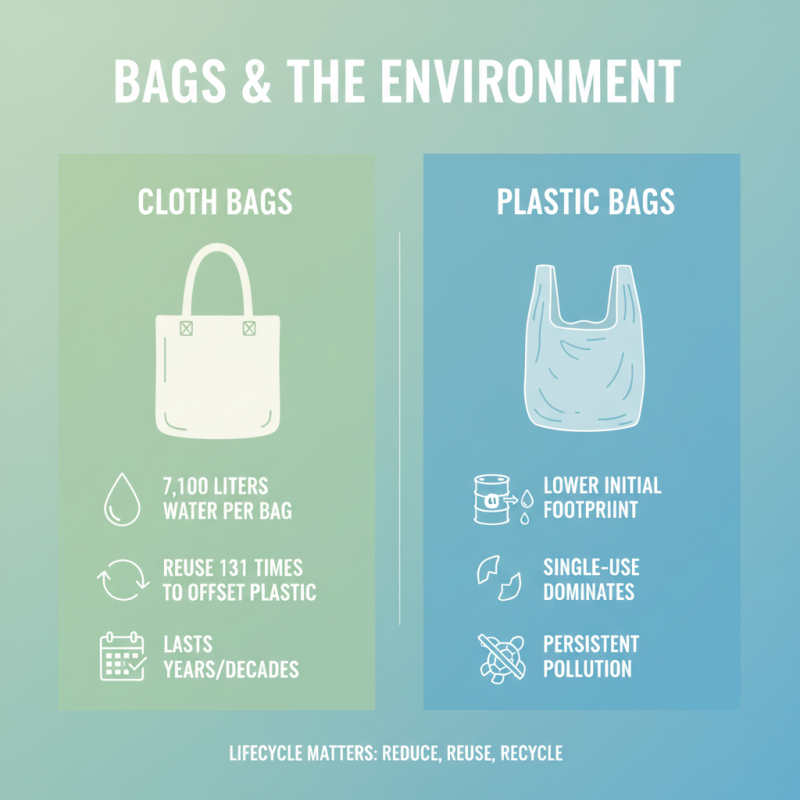
The production of bags, whether cloth or plastic, presents distinct environmental challenges that merit careful consideration under a lifecycle analysis framework. According to a study conducted by the Environmental Agency, the production of a single cotton cloth bag requires approximately 7,100 liters of water, due to the water-intensive nature of cotton farming. However, the durability of cloth bags, which can last for years or even decades with proper care, means that their environmental impact diminishes significantly over time with repeated use. In fact, studies suggest that a cloth bag needs to be used at least 131 times to offset its higher initial carbon footprint compared to a plastic bag.
On the other hand, plastic bags, which are typically made from petroleum-based materials, have a considerably lower production energy requirement. However, they contribute significantly to long-term environmental pollution, as they can take hundreds of years to decompose. The National Academy of Sciences reports that only 9% of plastic is recycled, leading to vast amounts of plastic waste in landfills and oceans. This pollution threatens marine life and ecosystems. In contrast, the renewable resources used in cloth bag production, coupled with their potential for recycling or biodegradability, present a more sustainable option when evaluated over a longer lifecycle. Thus, while both options have pros and cons, cloth bags emerge as the superior choice for a sustainable future when their longevity and reduced pollution potential are taken into account.
Economic Benefits of Switching to Cloth Bags for Consumers
The shift from plastic to cloth bags not only contributes to environmental sustainability but also offers considerable economic benefits for consumers. According to a study conducted by the National Retail Federation, switching to reusable bags can lead to significant savings over time. Consumers who regularly use cloth bags can save up to $200 annually by reducing the need for single-use plastic bags, which often come with additional purchase fees in many regions. This not only helps households save money but also encourages a transition toward more environmentally-conscious consumer behaviors.
Moreover, the investment in cloth bags can yield long-term financial advantages. Research from the Environmental Protection Agency highlights that cloth bags, if used regularly, can last for years—saving consumers the recurring costs associated with buying disposable bags. Additionally, as more retailers incentivize customers to bring their own bags through discounts or rewards programs, consumers can further maximize their savings. In essence, making the switch to cloth bags not only aligns with sustainable practices but also empowers consumers financially, reinforcing the value of choosing eco-friendly alternatives in everyday shopping.
Health and Safety Considerations of Using Cloth vs. Plastic Bags
When it comes to health and safety, the choice between cloth bags and plastic bags becomes increasingly significant. Cloth bags, typically made from natural fibers or recycled materials, pose minimal risks when used properly. They are generally washable, which helps eliminate harmful bacteria or pathogens that might accumulate from carrying groceries or other items. This feature becomes crucial in an era when hygiene is top of mind, as a simple machine wash can result in a cleaner and safer carrying option.
On the other hand, plastic bags can harbor bacteria and other germs, particularly if reused multiple times without proper cleaning. Moreover, some studies have raised concerns regarding the chemical additives used in plastic production, which can leach into food items. While single-use plastic bags are convenient, they can contribute to longer-term health risks through environmental degradation, as they break down into microplastics that can enter the food chain. Thus, choosing cloth bags not only aligns with sustainable practices but also prioritizes health and safety, making them a more responsible choice for consumers.
Why Choose Cloth Bags Over Plastic for a Sustainable Future? - Health and Safety Considerations of Using Cloth vs. Plastic Bags
| Dimension |
Cloth Bags |
Plastic Bags |
| Environmental Impact |
Biodegradable and recyclable |
Non-biodegradable, contributes to landfill |
| Durability |
Long-lasting, reusable for years |
Single-use or limited reuse |
| Health Safety |
Less risk of chemical leaching |
Potential for chemical leaching |
| Storage Space |
Foldable, can be stored compactly |
Bulky when not in use |
| Cost |
Higher initial investment, long-term savings |
Low cost, frequent replacement needed |