
A Light Down Sleeping Bag can feel almost weightless in your pack, yet still make a cold night uncomfortable if its warmth, fit, or fill quality misses the mark. The Outdoor Industry Association’s 2024 Outdoor Participation Trends Report estimated that 175.8 million Americans took part in outdoor recreation in 2023. More people heading outside means more choices—and more reason to compare gear carefully. Small details matter. Think of a damp tent floor, a chilly shoulder, or a bag that barely compresses beside your stove.
Temperature ratings deserve particular care. ISO 23537-1 provides a standardized method for testing sleeping-bag thermal performance, but a rating cannot predict every camper’s comfort. Sleepwear, moisture, shelter, and personal cold sensitivity all affect the night. Down fill power, construction, hood design, and packed size also shape how a bag performs on the trail. These are practical trade-offs, not just numbers on a product page.
This guide offers seven tips for weighing those details before you buy. One source limitation matters: no articles or verifiable, topic-specific expert quotation were supplied with the request. Rather than invent an expert’s words or attach a false quote to a real name, this introduction leaves that quotation out. Trust matters. Share a source, and an attributable expert quote can be added accurately.
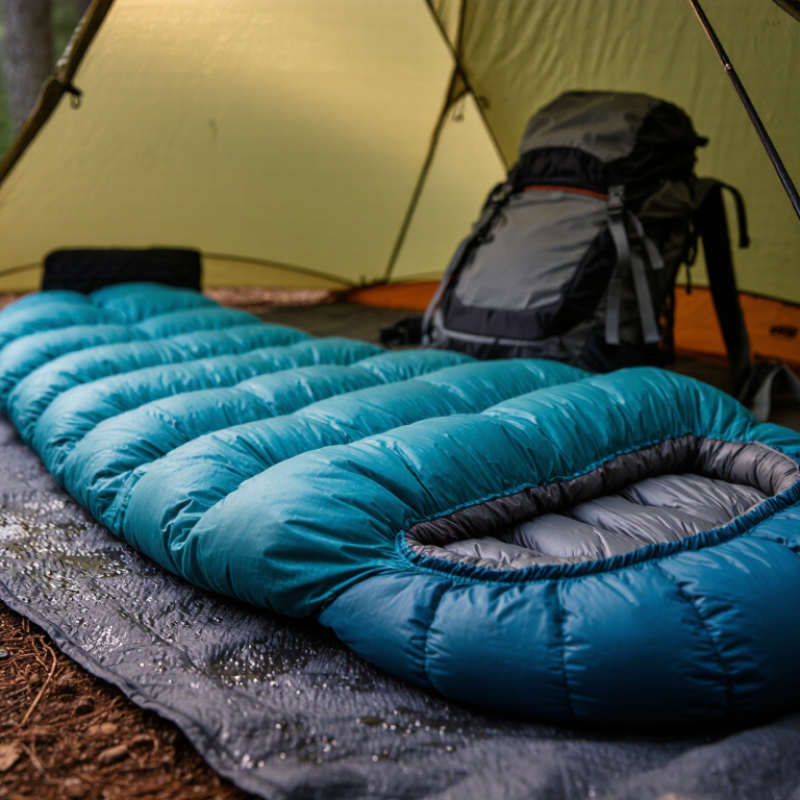
Start with the coldest overnight temperature you realistically expect, not the afternoon forecast. Check typical lows for your route and season, then allow for unexpected cold snaps. A clear mountain night can feel much colder than a sheltered campsite. That matters.
Compare the bag’s comfort rating with your expected low. If it lists both comfort and lower-limit ratings, use the comfort figure as the more helpful guide for many sleepers; the lower limit is not a promise of cozy sleep. Test standards improve comparisons, but your warmth also depends on your sleeping pad, clothing, fatigue, and how easily you get cold. A thin pad can make a suitable bag feel inadequate. Small detail.
I’d leave a modest temperature buffer when forecasts are uncertain, especially on exposed trips. There is no perfect number for everyone. It is easy to over-trust a tidy rating; I still catch myself doing that. Think about where you will sleep, too: damp air, wind, and a cold tent floor can change the experience. Choose a rating for the nights you may face, not just the best-case forecast.

These examples use a 5°C buffer below the forecast overnight low as a simple planning guide, not an official rating standard. Sleeping bag comfort ratings are measured under standardized test conditions; your warmth needs can vary with clothing, sleeping pad insulation, fatigue, and personal comfort. For trips with changing conditions, plan for the coldest night you expect.
Fill power describes how much space a fixed weight of down occupies, usually in cubic inches per ounce. The International Down and Feather Bureau’s Testing Regulations outline standardized methods for measuring this loft. Higher fill power can provide more loft with less down, which may help reduce packed size. It does not guarantee a warmer sleeping bag. Not by itself.
Check fill weight too: it is the actual mass of down inside the bag. A bag with lower fill power may still feel warmer if it contains more down, though it may pack larger. Compare both figures, then look at the bag’s shape, baffle design, hood, and draft collar. These details affect how well warmth stays around your body. Temperature ratings offer another useful check. ISO 23537-1:2022 uses thermal-manikin testing to assess sleeping-bag thermal performance under specified conditions. Ratings still cannot capture every sleeper’s comfort. That comparison is imperfect; I would also consider whether you sleep cold and what clothing you’ll wear. A small gap between your shoulders and the bag can matter more than a headline number.
| Tip | What to Compare | How to Use the Information | Useful Data Point |
|---|---|---|---|
| 1. Check the fill power | Down fill power, usually stated in cubic inches per ounce (in³/oz). | Higher fill power means more loft for the same weight of down. It does not, by itself, tell you how warm the complete bag will be. | By the rating’s stated test method, one ounce at 800 fill power occupies about 800 in³, compared with about 600 in³ at 600 fill power. |
| 2. Compare fill weight | The stated weight of the down inside the bag, not the total bag weight. | Compare bags with similar temperature ratings, size, and construction. More down can add warmth, but fill power and design also matter. | Check that fill weight is listed in grams or ounces; 1 oz is approximately 28.35 g. |
| 3. Read the temperature rating carefully | Comfort and limit ratings, plus whether testing follows ISO 23537 or another stated method. | Use the comfort rating as a practical starting point if you tend to feel cold. Treat the limit rating as a colder-use figure, not a comfort guarantee. | Temperature ratings are estimates from specified test conditions; clothing, sleeping pad, shelter, and personal comfort affect real-world warmth. |
| 4. Compare warmth and total weight together | Temperature rating, total bag weight, and down fill weight as separate specifications. | A low total weight is useful only if the bag still suits the coldest conditions you expect. Compare like-for-like sizes and ratings rather than relying on one number. | Total bag weight includes materials such as shell fabric, zipper, hood, and draft collar; fill weight counts only the down. |
| 5. Look at baffle construction | Baffle layout, down distribution, and whether the bag uses box-wall or sewn-through construction. | Baffles help keep down in place. Sewn-through seams can create areas with less insulation, while box-wall designs separate the inner and outer fabric layers. | Construction affects warmth and weight; compare design details alongside the temperature rating. |
| 6. Choose a suitable shape and size | Bag length, shoulder and hip dimensions, and shape such as mummy or roomier cut. | A close fit reduces excess space to warm, but should still allow comfortable movement and room for sleep clothing. | Check the maker’s listed user-height range and interior dimensions before comparing weights across sizes. |
| 7. Consider moisture and care | Shell fabric, any stated water-resistant treatment, storage instructions, and cleaning guidance. | Down can lose loft when wet. Keep the bag protected from condensation and follow care instructions to help preserve loft over time. | Store a down bag loosely in a large storage sack rather than compressed for long periods, unless its care instructions say otherwise. |
Compare specifications for the same size and test method whenever possible. No single fill-power or fill-weight figure can predict warmth on its own.
Tip 1: Compare like with like. A sleeping bag’s trail weight can look impressively low, but check what that figure includes. Some listings separate the stuff sack, storage sack, or repair kit. Compare bags with similar temperature ratings and sizes, and note each item’s weight. A small difference matters on a long climb, but warmth matters more when camp gets cold.
Tip 2: Check packed dimensions against your actual pack. A bag that weighs less may still take up more room, leaving less space for food or a dry jacket. Measure your pack’s sleeping-bag compartment, then compare it with the bag’s stated packed size. Those numbers can vary with compression and packing technique. Test it at home if possible.
Tip 3: Balance the two numbers, not just one. Higher-quality down and lighter fabrics can reduce both weight and packed volume, though construction and fit also matter. Avoid squeezing a down bag tightly for long-term storage; repeated, prolonged compression can affect loft. On the trail, use a suitable stuff sack and keep the bag dry. I once focused too much on saving grams and regretted the bulky fit inside my pack. Small details add up.
A sleeping bag should fit your body, not just your height on a product chart. Check the listed shoulder and hip girths, then compare them with your own measurements over base layers. Fit matters. Too much empty space can be harder to warm; a tight bag can compress down and feel clammy. If you sleep on your side, test that position before buying.
Shape changes comfort and pack weight. A tapered mummy design usually trims excess fabric, while a rectangular cut gives restless sleepers more room. Neither is automatically better. The Outdoor Industry Association’s 2024 Outdoor Participation Trends Report counted 175.8 million U.S. outdoor participants in 2023, a reminder that gear must work across varied trips and users. Match the cut to your sleep habits, not an idealized trail image.
Inspect practical details in person. A draft collar should sit comfortably around your shoulders, and the hood should tighten without pressing your face. Run the zipper several times; check for snag protection and easy access for ventilation. Small details matter. For temperature comparisons, look for testing under ISO 23537-1, which standardizes sleeping-bag thermal ratings. Still, a lab rating cannot predict your metabolism, damp clothing, or a chilly campsite. I would leave room for those uncertainties, and avoid choosing a bag by its lowest advertised number alone.
Materials shape warmth, weight, and performance on damp nights. Compare fill power with total down weight; a high rating alone cannot tell you how much insulation surrounds your body. Look for a shell that feels quiet and tightly woven, but not so fragile that careful tent use becomes stressful. A water-resistant finish can slow moisture, though it will not make down waterproof. Small distinction.
Ask how down is traced from farms to the finished product, and whether animal-welfare claims are independently audited. Clear documentation matters more than reassuring language on a hangtag. Responsible sourcing can be hard to verify from a product page alone. Missing details invite questions, not instant conclusions. Look for stated traceability and third-party checks, while remembering that standards differ in scope.
Care keeps loft usable. Follow the care label, wash only when needed with down-specific cleaner, and use a gentle cycle in a large front-loading washer. Rinse thoroughly and dry on low heat with dryer balls, checking for clumps and cool, damp spots between cycles. It takes patience. Never store the bag damp; keep it loose in a roomy sack to protect its loft. The outer fabric may feel dry while the baffles remain damp, an easy detail to miss after a long trip.
We are the most reliable and proficient jute goods manufacturer & supplier that helps businesses or individuals with various exportable agricultural commodities biz and jute goods by shipping them worldwide. Our right-time service ensures that whatever color and size of jute product you need, we can make it happen anytime and anywhere! Let’s keep our earth safer to live in!
Important link
Address
Bangladesh Address:
Fair Plaza (9th Floor), Plot : 3C, Section : 01, Mirpur, Dhaka:1216
UK Office:
242 Manor Road, Droylsden, Manchester, M43 6JD, United Kingdom.
Let's Talk
We are the most reliable and proficient jute goods manufacturer & supplier that helps businesses or individuals with various exportable agricultural commodities biz and jute goods by shipping them worldwide. Our right-time service ensures that whatever color and size of jute product you need, we can make it happen anytime and anywhere! Let’s keep our earth safer to live in!
Bangladesh Address:
Fair Plaza (9th Floor), Plot : 3C, Section : 01, Mirpur, Dhaka:1216
UK Office:
242 Manor Road, Droylsden, Manchester, M43 6JD, United Kingdom.