
Choosing Cosmetic Grade Beta Arbutin Powder starts with evidence, not a polished product sheet. Buyers should confirm the ingredient’s identity, assay, batch traceability, and storage requirements. A certificate of analysis should match the lot being offered, not merely show a generic sample. Check whether the supplier can explain its testing methods and provide relevant impurity, microbial, and heavy-metal results. Ask how the powder is protected from moisture and light during packing and shipping. Small details matter: a sealed, clearly labeled sample tells you more than a bold purity claim.
Cosmetic chemist Perry Romanowski is a relevant voice on formulation and ingredient evaluation. However, I cannot verify a direct statement from him specifically about beta-arbutin, so I will not invent a quotation. A practical working rule for this guide is: “Verify the batch, not just the brochure.” It is a useful reminder, though not a substitute for independent testing. Compare suppliers on documentation, consistency, technical support, and how clearly they explain limitations. Also consider how the powder behaves in your intended formula; ingredient quality alone cannot guarantee finished-product stability or performance. A clear specification is reassuring. It is not the whole story. Use this guide to assess the evidence, ask sharper questions, and choose Cosmetic Grade Beta Arbutin Powder with care.
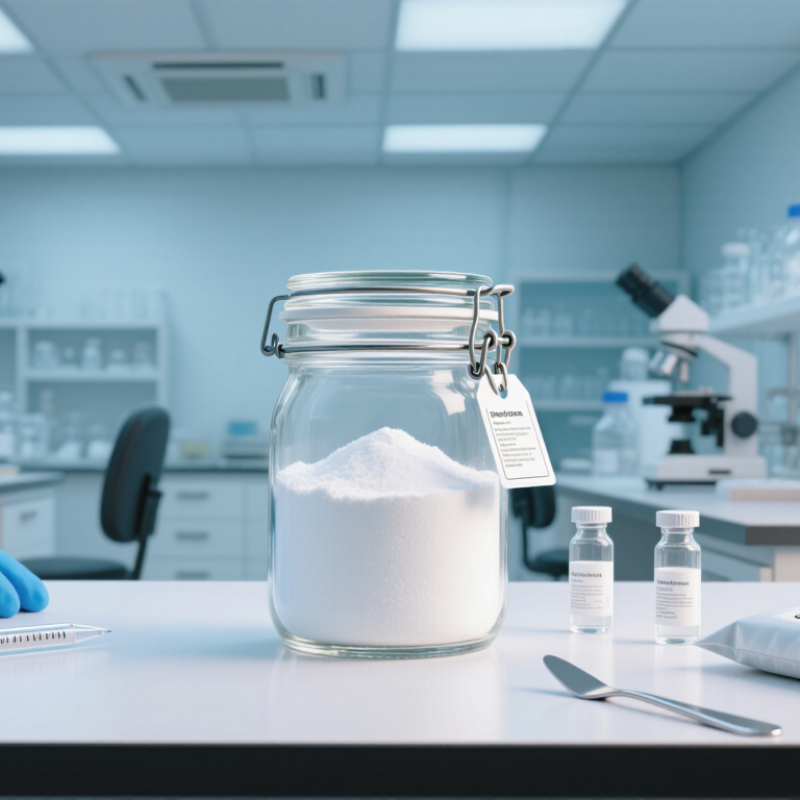
Cosmetic-grade beta-arbutin is a purified form of arbutin, a sugar-bound compound found in some plants. In cosmetic formulas, it is used to help improve the appearance of uneven pigmentation. “Cosmetic grade” describes intended quality and use; it does not, by itself, prove purity or performance. Check the documentation.
Beta-arbutin works mainly by moderating tyrosinase, an enzyme involved in melanin formation. With less enzyme activity, pigment production may ease over time, helping dark spots look less prominent. It does not bleach skin, and results vary with concentration, formula, skin type, and consistent use. It is not an overnight change. Sun exposure can also deepen discoloration, so daytime sun protection matters.
A useful powder specification should identify beta-arbutin and report assay, relevant impurities, moisture, and storage conditions. Ask for a batch-specific certificate of analysis, not just a general product sheet. Formulators should assess solubility, pH compatibility, packaging, and stability in the finished product; powder behavior can change after mixing. This point is easy to overlook. Evidence for an ingredient does not guarantee every formula will perform equally, and home mixing makes quality control harder. Patch testing is sensible, especially for reactive skin, and persistent or changing spots warrant professional assessment.

How to Choose Cosmetic Grade Beta Arbutin Powder?
Which Product Specifications to Check Before Buying
Ask for a batch-specific certificate of analysis, not a generic product sheet. Check the assay value, test method, and whether results are reported on a dry basis. Confirm identity using a suitable analytical method, such as HPLC, and review moisture content. “High purity” alone is vague. Details matter.
Check hydroquinone levels separately. The European Commission’s Scientific Committee on Consumer Safety, in its 2023 opinion SCCS/1642/22, assessed beta-arbutin as safe at up to 7% in face creams and 0.5% in body lotions. These are assessed use concentrations, not powder-purity specifications. The committee also calls for hydroquinone to be kept as low as technically achievable. Request actual test results and the supplier’s detection limit.
For manufacturing consistency, ask for particle-size data, appearance, solubility guidance, microbial limits, and limits for relevant heavy metals. Compare them with your formulation needs and written quality requirements. Check batch traceability, packaging integrity, storage conditions, and supporting documents such as a safety data sheet. A clean-looking certificate helps, but it does not prove every batch performs alike. I would still test a small sample in the intended formula.
A reliable check starts with the batch-specific certificate of analysis, not a product-page purity claim. Confirm that the lot number on the certificate matches the packaging. Review the assay result, test method, specification limits, and report date. Identity should be supported by a suitable method, such as infrared spectroscopy or chromatographic testing. Appearance can help flag unusual discoloration or clumping, but it cannot confirm identity. It’s a useful clue, not proof.
Tips: Ask for the full test report. Check whether an independent laboratory tested a representative sample. Compare the stated assay with the method used; percentages can be difficult to interpret without that detail. Review relevant impurity and moisture results, and check that storage instructions are clear. Keep a retained sample from each received lot when practical.
Purity alone does not tell the whole story. Packaging condition, traceable batch records, and consistent results across lots matter too. If documents are incomplete, ask specific questions before approving the material.
A neat certificate can still leave gaps. That part deserves a second look. For a high-stakes formulation, have a qualified laboratory verify the incoming powder rather than relying only on supplier paperwork.
A cosmetic-grade beta arbutin powder should be assessed through batch-specific records, not appearance alone. Ask for a certificate of analysis that confirms identity, assay, and relevant impurity results. Check that the tested batch number matches the material you receive. Review the specification for moisture and storage conditions, too. Small details matter. A white, fine powder can still have incomplete documentation, so appearance is only one clue. If a result or limit is unclear, ask the supplier for the test method and an explanation.
Safety also depends on the finished formula. Confirm that the ingredient is suitable for the intended product type and concentration, and check current cosmetic requirements for the markets where it will be sold. Review stability data in the actual formulation; heat, light, and unsuitable pH may affect product quality. Assess irritation and sensitization using appropriate safety testing, rather than assuming that a plant-related ingredient is automatically gentle. Patch testing can be informative, but it does not replace a qualified safety assessment. I would also inspect the final product’s packaging and storage instructions. This step is easy to overlook. A powder may meet its specification while the finished cream behaves differently on skin.
A cosmetic-grade beta arbutin supplier should provide a batch-specific certificate of analysis, assay method, impurity profile, and traceable lot number. Check that the stated purity comes from a validated test, not a generic product sheet. Request recent stability results and packaging specifications. A polished certificate is not proof by itself. Compare documents across several lots; unexplained variation deserves follow-up.
Packaging must limit light, moisture, and contamination. Ask whether the powder is sealed in a moisture-barrier inner bag inside a rigid, light-protective container. Check the seal, desiccant instructions, and recommended storage temperature on receipt. ICH Q1A(R2) uses 40°C and 75% relative humidity for accelerated pharmaceutical stability testing. This is a useful stress-test reference, not a universal cosmetic-ingredient requirement. Ask suppliers to explain their own test conditions and results.
Tips: Keep containers tightly closed in a cool, dry place, away from direct light. Record receipt dates and lot numbers, then inspect for clumping or damaged seals before use. Small details matter. If a supplier cannot explain a storage limit or test method clearly, pause and ask for written clarification.
We are the most reliable and proficient jute goods manufacturer & supplier that helps businesses or individuals with various exportable agricultural commodities biz and jute goods by shipping them worldwide. Our right-time service ensures that whatever color and size of jute product you need, we can make it happen anytime and anywhere! Let’s keep our earth safer to live in!
Important link
Address
Bangladesh Address:
Fair Plaza (9th Floor), Plot : 3C, Section : 01, Mirpur, Dhaka:1216
UK Office:
242 Manor Road, Droylsden, Manchester, M43 6JD, United Kingdom.
Let's Talk
We are the most reliable and proficient jute goods manufacturer & supplier that helps businesses or individuals with various exportable agricultural commodities biz and jute goods by shipping them worldwide. Our right-time service ensures that whatever color and size of jute product you need, we can make it happen anytime and anywhere! Let’s keep our earth safer to live in!
Bangladesh Address:
Fair Plaza (9th Floor), Plot : 3C, Section : 01, Mirpur, Dhaka:1216
UK Office:
242 Manor Road, Droylsden, Manchester, M43 6JD, United Kingdom.