How to Choose the Best Mist Sprayers for Your Business
Mist sprayers can look similar on a product page, yet their performance varies sharply in real working conditions. A greenhouse may need even coverage across delicate leaves, while a salon or cleaning team may value controlled output and quick refills. The right choice depends on the liquid, application area, daily volume, and operator comfort—not just the advertised droplet size. Small details matter.
Start by checking material compatibility, nozzle options, tank capacity, and whether the sprayer produces a consistent, adjustable mist. Ask suppliers for clear specifications, cleaning instructions, replacement-part availability, and guidance on suitable liquids. If possible, test a sample with the product and workflow you actually use. A unit that feels light when empty can become tiring after repeated refills. That can change.
This guide explains how to compare Mist Sprayers by intended use, build quality, maintenance needs, and total operating cost. It also considers practical questions that catalogs may overlook, such as clogging, leakage, and uneven coverage near corners. The best model is not automatically the most powerful or expensive. A mismatch can waste time and product. Weigh verified specifications against hands-on results, and keep notes from staff who use the equipment daily. Their observations may reveal a flaw that a polished brochure misses. No checklist catches everything. The aim is a dependable fit, not a perfect machine.
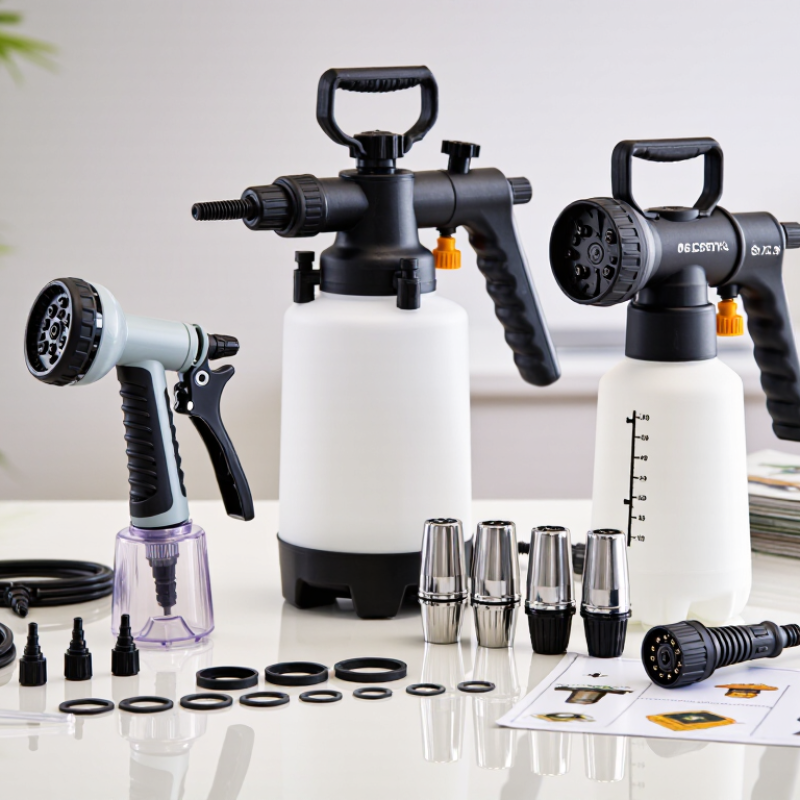
Define Your Business’s Mist Spraying Requirements
Before comparing mist sprayers, define the job: cooling people, humidifying produce, suppressing dust, or wetting a process surface. Each application needs different droplet sizes, output, and placement. Record the space dimensions, target coverage, operating hours, water quality, and who may be nearby. Get specific. For indoor humidity, the U.S. EPA’s “A Brief Guide to Mold, Moisture and Your Home” advises keeping relative humidity below 60%, ideally between 30% and 50%. Treat that as indoor moisture guidance, not a universal process target.
Turn those needs into measurable specifications: flow rate, droplet range, operating pressure, coverage, duty cycle, filtration, and cleanability. Check whether wetted components suit your water and cleaning routine. Ask suppliers for output measured at your intended pressure, rather than relying on a maximum-flow figure. Small details matter. A nozzle that performs well in an open test area may leave dry corners behind shelving or equipment.
Estimate daily water use, power access, noise limits, and maintenance time before setting a budget. A simple layout drawing can reveal dead zones and overspray risks. Still, estimates can mislead; test a unit in the actual space and observe coverage during normal operation. Note what needs adjustment. Keep the test conditions, readings, and maintenance assumptions with your purchasing notes so comparisons remain fair.
Compare Mist Sprayer Types and Operating Methods
Mist sprayers differ in how they create droplets and move them through a space. Hand-pump models suit small areas and brief tasks. They are simple, but repeated pumping can make coverage uneven. Battery-powered units maintain a steadier flow and reduce hand fatigue. Motorized sprayers can cover larger spaces, though their weight, noise, and airflow may be harder to manage indoors.
Operating method matters as much as sprayer type. A trigger sprayer directs liquid toward a specific surface, which helps with spot treatment. A powered unit releases a finer mist over a wider area, but airflow, room layout, and distance from surfaces affect where droplets land. Test the spray pattern on a small area first. Check the nozzle, droplet setting, and recommended solution compatibility before regular use. Fine mist can drift. Avoid assuming that visible fog means even coverage.
For a business, compare fill capacity, run time, cleaning needs, and operator comfort. A small shop may value precise control over speed; a warehouse may need longer runtime and wider reach. Keep a simple log of settings and output, then inspect hard-to-reach corners after a trial run. Real rooms are less tidy than product charts suggest. Recheck your choice when the layout or task changes.
How to Choose the Best Mist Sprayers for Your Business — Compare Mist Sprayer Types and Operating Methods
| Sprayer Type | Operating Method | Typical Use | Key Advantages | Limitations to Consider | A Good Fit When |
| Trigger sprayer | A hand-operated trigger drives a small pump that draws liquid from the container and sprays it through a nozzle. | Small-area cleaning, plant care, and applying compatible liquids in short bursts. | Simple to use, portable, and suitable for frequent spot applications. | Requires repeated hand operation; coverage and droplet pattern depend on the nozzle and liquid. | You need an inexpensive, portable option for small jobs or individual workstations. |
| Manual pump pressure sprayer | The operator pumps a handle to pressurize the tank, then releases liquid through a wand or nozzle. | Gardening, light-duty surface treatment, and other small-to-medium area applications. | Does not require a power source and can provide more continuous spraying than a trigger bottle. | Pressure must be maintained by pumping; tank capacity and carried weight can limit working time. | You need a portable sprayer for intermittent work and can accept manual pumping. |
| Battery-powered sprayer | A rechargeable battery runs a pump that sends liquid from the tank to the nozzle. | Repeated or extended spraying across work areas where manual pumping would be inconvenient. | Reduces manual pumping effort and can provide a more consistent spray while the battery is charged. | Requires charging and routine battery care; runtime and flow depend on the model and operating conditions. | Your team needs mobility and regularly sprays larger areas without a fixed power connection. |
| Compressed-air sprayer | Compressed air atomizes liquid at the nozzle; some setups use a separate air supply and liquid feed. | Controlled coating, finishing, or other applications that require a particular spray pattern. | Can support fine atomization and adjustable spray patterns when correctly set up. | Needs a compatible air supply and setup; overspray, ventilation, and operator protection may require attention. | You have suitable compressed-air equipment and need controlled application rather than simple portable spraying. |
| Fixed high-pressure misting system | A pump feeds water through tubing to fixed nozzles, which produce mist when the system is operating. | Installed outdoor cooling or other site-specific misting applications designed for a fixed layout. | Can cover a planned area without an operator carrying a sprayer around. | Requires installation and maintenance; performance depends on system design, water supply, nozzle selection, and local conditions. | You need recurring mist coverage in a defined location and can support a permanent installation. |
Selection note: Confirm that the sprayer’s tank, seals, hose, and nozzle are compatible with the liquid being applied. Spray output, droplet size, coverage, and runtime vary by equipment, nozzle, fluid properties, and operating conditions. Follow the equipment instructions and applicable safety guidance.
Assess Materials, Maintenance, and Safety Features
A reliable mist sprayer should match the liquid, workload, and cleaning routine—not just its advertised output. Check every wetted part, including the tank, nozzle, tubing, and seals, for compatibility with your solution. Plastic can be light and practical, while stainless steel may suit heavier daily use. Neither is automatically better; material grades and seal compounds matter. Ask for a compatibility chart, and test a small batch before regular operation.
Maintenance can determine whether a sprayer stays consistent. Choose a design with removable nozzles, accessible filters, and parts staff can inspect without special tools. After each shift, flush the system as its instructions specify, then check for clogs, leaks, and worn seals. A fine, uneven mist is often an early warning. Safety details deserve equal attention. Look for a stable base, guarded electrical connections where applicable, clear pressure limits, and secure hose fittings. Keep hoses out of walkways to reduce trip hazards.
Tips: Check replacement-part availability before purchase. Keep a simple maintenance log with dates, nozzle changes, and leak checks. It may feel fussy, but busy shifts make small checks easy to miss.
How to Choose the Best Mist Sprayers for Your Business
Compare materials, maintenance, and safety features using this suggested 1–5 evaluation rubric. These ratings are selection priorities, not laboratory test results; confirm chemical compatibility and operating limits with the sprayer manufacturer.
How to use it: Give extra attention to chemical compatibility, seal materials, and pressure controls. Favor designs that are easy to inspect and clean, and follow the manufacturer’s instructions for maintenance and safe operation.
Select a Sprayer That Fits Your Budget and Workflow
Choose a mist sprayer around your daily workload, not its advertised maximum. Estimate how many containers you fill per shift and how often the sprayer runs. A small hand unit may suit occasional, precise applications, while a higher-capacity model can reduce refills during steady production. Keep it practical.
Compare the purchase price with the cost of replacement nozzles, seals, and cleaning time. Check that the materials are compatible with the liquids you plan to use, and review the maker’s care instructions. A low-priced sprayer can become expensive if its parts wear quickly or its output varies. That difference is easy to overlook.
Workflow matters just as much as capacity. Measure the space at the filling station, check how the sprayer is held, and consider whether staff need to switch containers often. Before buying several units, test one through a typical work cycle. Look for an even mist, comfortable handling, and simple cleaning. Record refill time and any drips; small delays add up. A short trial will not reveal everything, and results may differ across shifts, but it can expose a poor fit before a larger purchase.