
• Home
  • About
    • jute Bag

      Eco-Chic and Durable – Perfect for Sustainable Living.

      Cashew Nut Bag

      Sustainable jute bag for lasting cashew nut freshness

      Cocoa Bag

      Eco-friendly jute bag for rich cocoa flavor preservation

      Coffee Bag

      Elegant, durable jute bag to keep coffee beans fresh and eco-friendly

      Hazel Nut Bag

      Eco-conscious jute bag for hazelnut freshness and quality

      Shea Nut Bag

      Durable jute bag for fresh, organic shea nuts

      Tote Bag

      Stylish, eco-friendly jute tote for daily essentials

      Wheat Bag

      Sustainable jute bag for optimal wheat freshness

    • Jute Yarn

      Eco-Chic and Durable – Perfect for Sustainable Living.

      Jute Rope

      Sustainable jute bag for lasting cashew nut freshness

      Jute Fabrics

      Eco-friendly jute bag for rich cocoa flavor preservation

      Hessian cloth

      Sustainable Hessian cloth suppliers

  • Products
  • Export Country
  • Blog

How to Choose Industrial Thermal Transfer Labels?

Choosing Industrial Thermal Transfer Labels is a practical decision, not a simple purchasing task. The right label must survive heat, abrasion, moisture, chemicals, and repeated handling. A warehouse barcode may face forklift dust and cold air. A pharmaceutical label may need clean edges, stable adhesion, and long-term readability. Small details matter.

Mike Fairley, a respected label-industry consultant and author, has stated, “The label is often the most important component of the product’s identity.” That observation applies strongly to industrial environments. A label can look excellent during application and still fail weeks later. That possibility deserves attention.

This guide explains how to evaluate Industrial Thermal Transfer Labels by considering the application surface, ribbon type, adhesive performance, print resolution, and expected service conditions. It also examines polypropylene, polyester, and specialty facestocks. Each material has strengths, but none is perfect. That is where careful testing becomes essential.

A production manager should inspect samples under real conditions. Test them on curved containers, textured cartons, metal parts, or exposed equipment. Check whether the text remains sharp after rubbing. Confirm that the barcode scans consistently. Review storage temperatures, printing speed, and ribbon compatibility before approving a large order.

The best choice is rarely the cheapest label. It is the label that remains readable, attached, and useful when conditions become difficult. Even experienced teams sometimes overlook humidity or surface contamination. That mistake can be expensive. This article offers a clear framework for avoiding it.
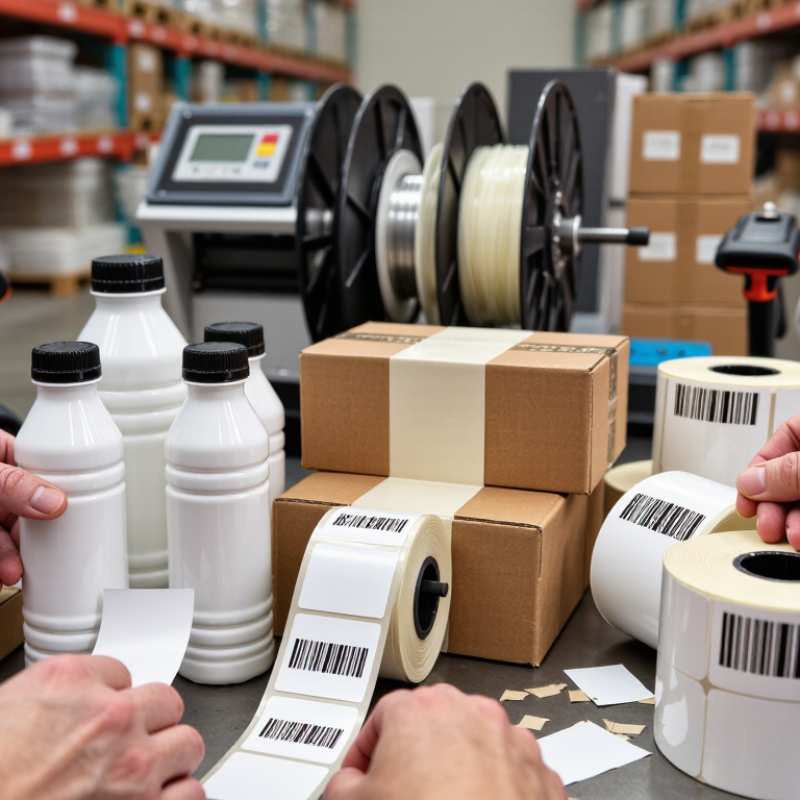
How to Choose Industrial Thermal Transfer Labels?

Define the Application and Labeling Requirements

Choosing an industrial thermal transfer label starts with the application, not the label catalog. Describe the surface, temperature range, moisture, chemicals, and expected service life. A label on a chilled metal drum faces different risks from one on a dusty cardboard carton. Record whether the label touches oil, cleaning fluid, sunlight, or rough gloves.

Consider how the label will be applied and read. Manual application may require a forgiving adhesive and a larger peel tab. High-speed equipment needs consistent release, accurate dimensions, and stable liner performance. Measure the smallest barcode, text size, and viewing distance before ordering. A printed sample should pass rubbing, bending, and condensation tests. Shortcuts often fail.

Thermal transfer printing also depends on ribbon, printer settings, and surface texture. Test several print speeds and darkness levels on the actual material. Excess heat can blur narrow bars or weaken the face stock. Insufficient heat may create pale characters that disappear after handling. I have seen a label look perfect on a bench, then fail after one week near a washdown area. That result deserves investigation, not excuses.

Define acceptable print contrast, adhesion, edge lift, and replacement frequency in writing. Include batch identification and storage conditions for unused labels. Keep test records with photographs and failure notes. Requirements can change after production begins. A careful review may reveal that the first specification was convenient, but not realistic.

Evaluate Surfaces, Materials, and Environmental Conditions

How to Choose Industrial Thermal Transfer Labels?

Evaluate the surface before choosing the label. Corrugated cartons need flexible facestock and strong initial tack. Powder-coated metal needs an adhesive that can wet a low-energy surface. Rough plastic may require a thicker adhesive layer. Clean a test area first. Dust changes results.

Material selection should follow exposure. Polyester usually resists abrasion, oils, and moisture better than paper. For outdoor equipment, check UV stability and temperature cycling. A 2024 Smithers market report estimates the global labels market will exceed 50 billion US dollars by 2028. That growth reflects stricter tracking needs, not a universal label solution. It is easy to over-specify materials, though. Sometimes, a durable paper label performs well in a dry warehouse.

Environmental testing should match the real process. Measure application temperature, storage humidity, solvent contact, and surface temperature. ASTM D1000 methods can help compare adhesion and resistance, but laboratory results may not predict every factory condition. Test printed samples for scuffing, barcode readability, and edge lifting after exposure. GS1 guidance emphasizes reliable barcode scanning across the supply chain, making contrast and print durability practical concerns. Small details matter. I once saw a label fail because condensation formed beneath it, not because the ribbon was wrong. Weak points deserve another test.

Select the Right Label Material, Adhesive, and Size

How to Choose Industrial Thermal Transfer Labels?

Material selection starts with the environment, not the printer. Paper labels suit dry warehouses and short-term shipping. Synthetic polyester or polypropylene handles moisture, abrasion, and temperature changes better. Smithers’ 2024 label market outlook forecasts roughly 4% annual global growth through 2028, increasing demand for durable identification. Thermal transfer printing remains useful because the ribbon protects printed information from rubbing and fading. However, no material is perfect. A glossy synthetic face may resist water, but it can expose poor ribbon compatibility.

Adhesive choice should follow the surface and service temperature. Permanent acrylic adhesives suit cartons, drums, and coated plastics. Removable adhesives help with reusable containers. Freezer applications need tested adhesion below 0°C, especially on condensation-covered surfaces. Size also matters. A 100 × 150 mm label can fit common logistics data, but leave quiet zones around barcodes and enough space for human-readable text. Oversized labels often wrinkle around corners.

Tips: Test a real label on the actual surface for 48 hours. Check rubbing, peeling, scanning, and temperature exposure. Select the ribbon for the face material. Verify the core, roll width, and maximum outside diameter before ordering. GS1 guidance emphasizes clear barcode contrast and quiet zones, while ISO/IEC 15416 evaluates printed barcode quality. Do not trust a sample on clean cardboard. That test is too easy.

How to Choose Industrial Thermal Transfer Labels? — Select the Right Label Material, Adhesive, and Size

Label Requirement Recommended Material Typical Adhesive Typical Temperature Range* Resistance and Service Characteristics Common Industrial Uses Recommended Size Guidance
General indoor identification Coated paper Permanent acrylic or rubber-based adhesive Approximately -20°C to 80°C Good print quality and low cost; suitable for dry indoor conditions. Limited resistance to water, abrasion, solvents, and prolonged sunlight. Cartons, shelves, bins, office equipment, temporary production identification 40 × 25 mm to 100 × 75 mm; choose a size that leaves at least 2 mm of clear space around the printed information.
Moisture and chemical exposure Polyester film Permanent acrylic adhesive Approximately -40°C to 120°C Strong resistance to moisture, oils, many cleaning chemicals, tearing, and abrasion. A suitable thermal-transfer ribbon is required for durable printing. Control panels, electrical equipment, chemical containers, machine identification, asset labels 50 × 25 mm to 150 × 100 mm; use wider labels when multiple lines of text or safety information are required.
Outdoor and ultraviolet exposure UV-stabilized polyester or other outdoor-grade synthetic film Outdoor permanent acrylic adhesive Approximately -40°C to 120°C Better resistance to sunlight, rain, temperature cycling, and weathering than standard paper or indoor films. Validate the complete label system for the intended exposure period. Outdoor assets, utility equipment, building services, machinery, storage yards 75 × 25 mm to 200 × 100 mm; use larger formats when the label must be read from several meters away.
High-temperature processing Polyimide film High-temperature silicone or acrylic adhesive Approximately -40°C to 260°C, depending on adhesive and label construction Designed for demanding thermal cycles and short-term exposure to elevated temperatures. Confirm maximum dwell time, surface temperature, and ribbon compatibility before production. Printed circuit boards, soldering processes, powder coating, high-temperature components 25 × 10 mm to 100 × 50 mm; use the smallest practical label to reduce lifting or wrinkling during thermal cycling.
Flexible cables and curved surfaces Flexible polyester or polyolefin film High-tack acrylic adhesive Approximately -40°C to 100°C Conforms better to small diameters and curved surfaces than rigid films. The label width should be limited to reduce edge lift and flagging. Wire and cable marking, hoses, tubing, small-diameter components 12 × 6 mm to 75 × 25 mm; select a length that wraps securely without excessive overlap unless the label is specifically designed for wraparound use.
Rough, textured, or powder-coated surfaces Durable polyester or synthetic film with a flexible face stock High-tack modified acrylic adhesive Approximately -30°C to 100°C Better wet-out and adhesion on textured surfaces than standard permanent adhesives. The surface must be clean, dry, and free of oil, dust, and loose coating. Powder-coated frames, painted machinery, plastic housings, industrial containers 50 × 25 mm to 150 × 75 mm; avoid very narrow labels if the surface texture is deep or uneven.
Removable identification Coated paper or polyester film Removable acrylic adhesive Approximately -20°C to 80°C Designed for clean removal from compatible smooth surfaces. Removability can decrease after long dwell times, high temperatures, pressure, or exposure to chemicals. Work-in-process tracking, temporary inspection status, rental equipment, reusable containers 40 × 25 mm to 100 × 75 mm; keep the label large enough for a visible removal tab when frequent handling is expected.
Freezer and cold-chain applications Polyester film or moisture-resistant synthetic material Low-temperature permanent acrylic adhesive Approximately -80°C to 80°C, depending on construction Maintains adhesion at low temperatures when applied under suitable conditions. Many cold adhesives require the surface and label to be above the minimum application temperature during application. Frozen goods, laboratory samples, cold rooms, refrigerated components 50 × 25 mm to 100 × 75 mm; use a larger format when condensation, gloves, or frost may reduce readability.
Barcode scanning and traceability White coated paper for indoor use; white polyester for demanding environments Permanent adhesive selected for the substrate Based on the selected face material and adhesive Use a high-contrast, smooth printable surface. Keep quiet zones clear, avoid placing barcodes over seams or edges, and verify readability after abrasion or chemical exposure. Serial numbers, lot tracking, inventory, work orders, finished goods Recommended barcode quiet zone: at least 10 times the narrowest bar width on each side where applicable; common label sizes are 50 × 25 mm, 75 × 50 mm, and 100 × 75 mm.
Small components and limited print area Polyester, polyimide, or thin synthetic film Permanent acrylic adhesive Based on the selected material and adhesive Thin face stocks fit compact parts more easily and reduce edge lift. Use clear, simple typography and avoid including information that is not necessary for identification. Electronic components, valves, fasteners, sensors, medical and laboratory equipment Minimum practical size is often 12 × 6 mm; select a larger label when a barcode, serial number, and human-readable text must all fit.

*Temperature ranges are typical selection guidelines rather than universal ratings. Actual performance depends on the label construction, adhesive, thermal-transfer ribbon, substrate energy, application temperature, dwell time, humidity, chemicals, abrasion, and exposure duration. Always test the complete label system on the final surface under real operating conditions.

Match the Label with a Compatible Ribbon and Printer

How to Choose Industrial Thermal Transfer Labels?

When choosing an industrial thermal transfer label, start with the ribbon, not the artwork. Paper, synthetic film, and textured stock absorb ink differently. Wax ribbons suit coated paper and short-term applications. Wax-resin blends improve resistance to moisture and handling. Resin ribbons perform better on films, chemicals, and outdoor surfaces. The printer must support the ribbon width, core size, and recommended temperature range. A mismatch can create faint edges, smearing, or premature printhead wear.

Fortune Business Insights’ 2024 market analysis estimated the global thermal transfer overprinting market at about US$1 billion in 2023. It also projected roughly 5% annual growth through 2032. That expansion reflects broader demand for durable identification in manufacturing and logistics. Still, market growth does not guarantee reliable labels. A clean first print proves very little. Real performance depends on abrasion, heat, condensation, and storage time.

In production trials, print a small batch at the planned line speed. Use the lowest temperature that produces solid, readable bars and text. Then rub, bend, and expose samples to the actual environment. Check contrast with a calibrated verifier, not only human vision. Test twice. One overlooked detail is ribbon coating direction. Loading it incorrectly may print nothing, yet the printer appears functional. I have seen teams blame the label before checking this simple mistake. Record the substrate, ribbon grade, speed, temperature, and results. That record makes future purchasing less subjective.

Test Performance, Compliance, Durability, and Total Cost

How to Choose Industrial Thermal Transfer Labels?

Industrial thermal transfer labels should be judged by evidence, not appearance. In plant trials, I test printed samples against abrasion, moisture, heat, oils, and cleaning chemicals. A sharp barcode means little if it fades after repeated handling. Test adhesion on the actual surface, including dusty cartons, coated metal, and textured plastic. Test under pressure.

Performance also includes printer compatibility, ribbon transfer, scan reliability, and readable text at different speeds. Record failures with photographs, test dates, surface types, and storage conditions. Compliance requires more than a printed statement. Request material declarations, safety information, and traceable production records. Verify that the label supports the regulations and documentation required in its destination market. Requirements can change. Check them before ordering.

Durability must match the real service life, not an ideal laboratory setting. Expose samples to temperature cycles, humidity, sunlight, vibration, and handling. No test predicts every failure. That limitation matters. A label may pass a short heat test but curl after weeks near a furnace. Total cost includes waste, reprinting, downtime, labor, and rejected shipments. Compare the cost per successful identification, not merely the roll price. A cheaper label becomes expensive when operators replace it twice. Still, over-specification can waste money. Choose the smallest performance margin that remains dependable. Recheck this decision after field feedback.

Shopping Basket