How to Choose the Right Rubber Roll in 2026?
Choosing the right Rubber Roll in 2026 requires more than comparing price, hardness, or appearance. A roll that performs well in a paper mill may fail quickly in printing, packaging, steel processing, or textile production. The decision depends on application pressure, operating speed, temperature, chemical exposure, and surface contact. Small details matter. Ink may collect near the edges. Heat can soften the cover. Cleaning agents may cause swelling or cracking. These problems often appear after installation, when replacement becomes expensive.
A reliable selection process begins with measurable operating conditions. Record the roll diameter, face length, rotational speed, nip pressure, and expected service temperature. Then compare rubber compounds, Shore A hardness, reinforcement options, and surface finishes through verified manufacturer data. Ask for test evidence, dimensional tolerances, and compatibility guidance. Experienced suppliers should explain their recommendations clearly, not simply promote one compound. Industry specifications and documented quality procedures can support this review, but they cannot replace application knowledge. A laboratory result is useful. Real production behavior matters more. Sometimes, the “best” Rubber Roll is not the hardest or most durable option. It may be the one that balances grip, flexibility, heat resistance, and maintenance needs. That balance is easy to underestimate. Even careful engineers can overlook cleaning chemicals or uneven loading. Reviewing those assumptions before ordering can prevent premature wear, poor traction, and costly downtime.
Rubber Roll Basics: Types, Materials, and Core Functions
How to Choose the Right Rubber Roll in 2026?
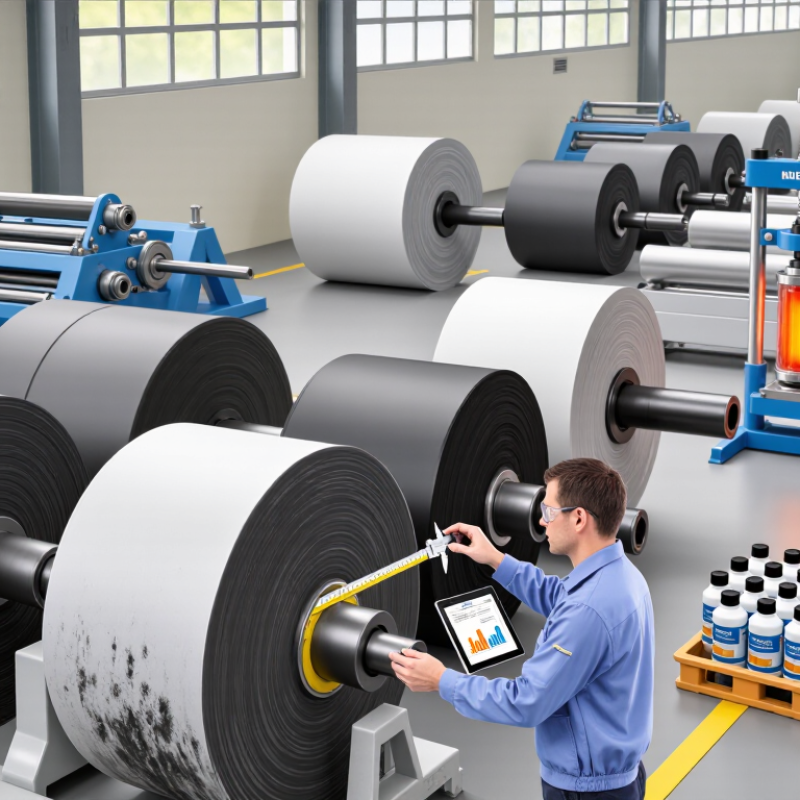
A rubber roll transfers pressure, controls web tension, or moves material across a production line. Its job defines the design. Nip rolls apply steady compression. Guide rolls correct tracking. Coating rolls spread liquid evenly. Embossing rolls create texture. The shape may look simple, but surface performance depends on hardness, friction, and runout.
Material selection starts with the working environment. Natural rubber offers strong elasticity and grip. Nitrile rubber handles oils better. EPDM resists heat, water, and weathering. Polyurethane often provides high abrasion resistance and accurate surface finishes. According to the International Rubber Study Group’s World Rubber Industry Outlook, global rubber demand is expected to approach 31 million tonnes by 2030. That growth increases pressure for longer service life and less material waste.
Hardness is not a universal answer. A 70 Shore A cover may suit a general nip application, while a softer cover can protect delicate film. A harder compound may improve wear resistance, but it can reduce conformity. Temperature, speed, chemicals, and line pressure must be checked together. Smithers’ rubber industry reports repeatedly highlight compound formulation and processing control as major performance factors. Small defects matter. Poor grinding can create vibration, uneven coating, or premature wear. In practice, I would request test samples and measured runout data before approving a roll. Spec sheets help, but they do not replace a trial.
Define Your Application, Load, Speed, and Operating Conditions
How to Choose the Right Rubber Roll in 2026?
Define Your Application, Load, Speed, and Operating Conditions
Choosing a rubber roll starts with the job, not the catalogue. Describe the material touching the roll, its width, texture, temperature, and moisture. A printing line, conveyor, and laminating machine demand different surface behavior. I have seen failures begin with a vague request for “high hardness.” Hardness alone does not predict grip, compression recovery, or wear. Record contact pressure, roll diameter, supported span, and whether the load stays constant or pulses.
Speed changes heat and stress. State surface speed in meters per minute, rotation cycles, acceleration, and expected daily hours. A roll running at 300 m/min may need a different compound than one moving slowly under heavy pressure. Ask how often starts and stops occur. They matter. Calculate nip pressure rather than guessing from motor power. If the roll bends, edge loading can create a narrow wear band. This detail is often missed.
Operating conditions complete the specification. Note ambient temperature, cleaning chemicals, oils, dust, ozone, and ultraviolet exposure. Check shaft fit, balance requirements, allowable runout, and installation space. Request test data matching your actual load and speed, not a generic brochure value. A supplier should explain test methods, tolerances, and expected service life. Be cautious with perfect life claims. Field conditions vary, and my own estimates have been wrong when cleaning cycles were overlooked. A small trial roll can reveal slip, swelling, or heat buildup before full production.
Match Roll Properties to Performance and Production Requirements
How to Choose the Right Rubber Roll in 2026?
Match roll properties to performance and production requirements. A rubber roll is not chosen by diameter alone. Begin with line speed, nip pressure, temperature, chemical exposure, and substrate type. Then define hardness, cover compound, surface finish, runout, and core strength. ASTM D2240 hardness testing helps compare materials, while ISO 6123-1 provides guidance for rubber-covered industrial rolls.
A 70 Shore A cover may suit steady web transport, but it can mark delicate film under high nip pressure. Softer rubber can improve contact. It may also generate more heat and wear. A textured surface can release trapped air, while a polished finish may protect sensitive coatings.
In one practical check, measure roll runout after assembly, not only before installation. Small alignment errors become visible as wrinkles at higher speeds.
Downtime makes these choices expensive. The 2024 True Cost of Downtime report found that 82% of surveyed manufacturers experienced unplanned downtime, averaging 27 hours monthly. Chemical resistance, bearing alignment, and thermal stability therefore deserve equal attention.
Ask for test data at your actual speed and temperature. Not just room temperature. A neat hardness chart can mislead. Production trials sometimes reveal that the “correct” compound performs poorly after cleaning cycles. Record surface temperature, vibration, nip force, and product defects during the trial. That evidence is more reliable than a catalogue promise.
Compare Suppliers, Maintenance Needs, Costs, and Service Life
How to Choose the Right Rubber Roll in 2026?
Choosing a rubber roll requires more than comparing quoted prices. Compare suppliers by hardness tolerance, runout accuracy, cover material, production capacity, and technical support. Ask for test records, sample measurements, repair procedures, and realistic lead times. A reliable supplier should explain how temperature, chemicals, pressure, and line speed affect performance. Vague answers are warning signs. So are unusually low prices.
Maintenance needs should shape the purchase. Check whether the roll allows easy cleaning, regrinding, balancing, or bearing replacement. Ask how often the supplier recommends inspections under your operating conditions. Small cracks near the edges may reveal alignment or tension problems, not simply aging rubber. I have seen teams replace rolls too early because they ignored storage damage and uneven loading. That mistake is expensive, but common.
Tips: Calculate total cost, not purchase cost. Include installation, downtime, energy use, cleaning, repairs, and disposal. Compare expected service life using actual production hours. A harder cover may last longer, yet it can damage delicate material. A softer cover may improve grip, but require more frequent cleaning. Request a written service-life estimate with assumptions. Keep maintenance records with dates, operating temperatures, surface conditions, and repair history. Imperfect records weaken every future decision. Still, even simple notes can expose patterns that supplier brochures miss.