
• Home
  • About
    • jute Bag

      Eco-Chic and Durable – Perfect for Sustainable Living.

      Cashew Nut Bag

      Sustainable jute bag for lasting cashew nut freshness

      Cocoa Bag

      Eco-friendly jute bag for rich cocoa flavor preservation

      Coffee Bag

      Elegant, durable jute bag to keep coffee beans fresh and eco-friendly

      Hazel Nut Bag

      Eco-conscious jute bag for hazelnut freshness and quality

      Shea Nut Bag

      Durable jute bag for fresh, organic shea nuts

      Tote Bag

      Stylish, eco-friendly jute tote for daily essentials

      Wheat Bag

      Sustainable jute bag for optimal wheat freshness

    • Jute Yarn

      Eco-Chic and Durable – Perfect for Sustainable Living.

      Jute Rope

      Sustainable jute bag for lasting cashew nut freshness

      Jute Fabrics

      Eco-friendly jute bag for rich cocoa flavor preservation

      Hessian cloth

      Sustainable Hessian cloth suppliers

  • Products
  • Export Country
  • Blog

What Is EVA Deck Flooring and Is It Waterproof?

EVA Deck Flooring is a popular surface material for boats, paddleboards, fishing platforms, and outdoor steps. Its soft, closed-cell foam creates a cushioned feel underfoot. It also improves grip when the surface becomes wet. Many users appreciate the reduced glare and comfortable traction during long hours on the water. Not always.

The word “waterproof” needs careful attention. EVA foam itself absorbs very little water, so rain and splashes usually remain on the surface. However, the complete deck system includes adhesive, seams, cut edges, and the underlying surface. Water can enter through a lifting corner or poorly sealed joint. Small gaps matter. In practical installations, strong bonding and accurate trimming often determine performance more than the foam alone.

This guide examines how EVA Deck Flooring handles water, sunlight, heat, dirt, and daily movement. It also considers cleaning habits, installation quality, and long-term wear. A textured surface may feel secure, but sand can collect inside its grooves and reduce comfort. Direct sunlight may also fade some colors over time. Product specifications and installation instructions remain important, because foam density, adhesive type, and thickness vary between manufacturers. A careful assessment should distinguish water resistance from complete waterproofing. That distinction is easy to overlook. The material can perform reliably, but it is not maintenance-free. Regular rinsing, prompt drying, and early repairs can help protect the deck and its supporting surface.
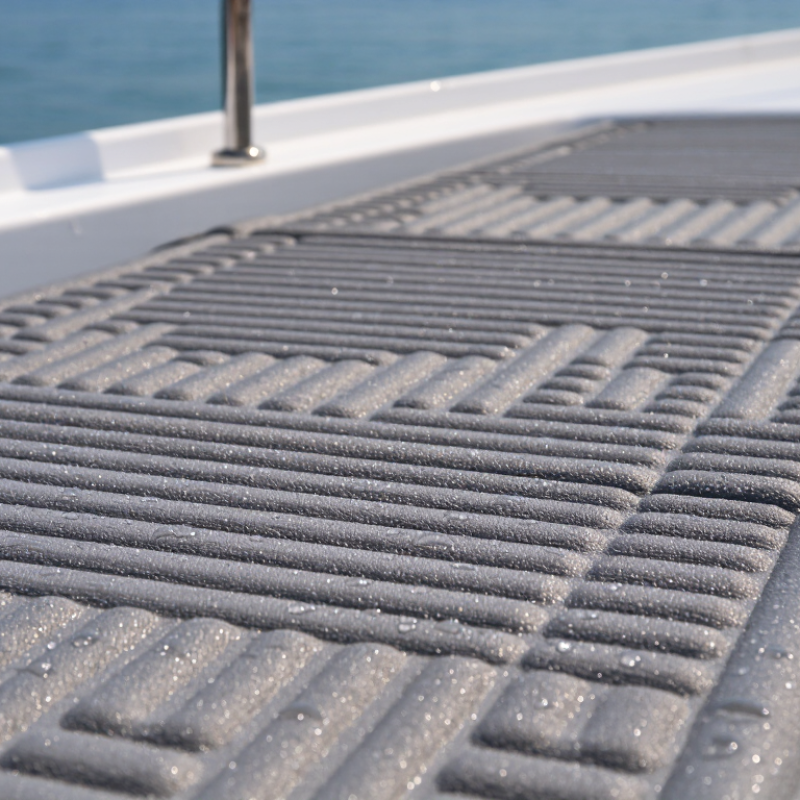
What Is EVA Deck Flooring and Is It Waterproof?

What Is EVA Deck Flooring?

EVA deck flooring is a lightweight cushioning material made from ethylene-vinyl acetate foam. It is commonly fitted over boat decks, paddleboards, kayaks, and other wet-use surfaces. The foam has a closed-cell structure, so it does not readily absorb water. Under bare feet, it feels softer and warmer than painted fiberglass or metal. Its textured surface can also improve grip when the deck is damp.

In practical use, EVA flooring is cut into sheets or patterned panels. The back usually has pressure-sensitive adhesive for installation. A clean, dry, and properly prepared surface matters greatly. Dust, wax, and old residue can cause lifting around the edges. I have seen a well-fitted panel remain stable for years, while a rushed installation developed bubbles within weeks. Small details matter.

Is it waterproof? The foam itself is highly water-resistant, but the complete deck system is not automatically waterproof. Water may enter through seams, cuts, damaged edges, or weak adhesive bonds. The surface should be washed with mild soap and fresh water, then dried before storage. Harsh solvents can affect the foam or weaken its texture. I would also inspect corners regularly. This is easy to overlook. In my view, calling EVA flooring “waterproof” is slightly too simple; “water-resistant with careful installation” is more accurate.

What Is EVA Deck Flooring and Is It Waterproof? - What Is EVA Deck Flooring?

Data Dimension Typical Information Practical Meaning
Material Ethylene-vinyl acetate (EVA) closed-cell foam A lightweight, resilient foam commonly used as a cushioning surface for marine decks and other wet areas.
Primary Function Comfort, traction, noise reduction, and surface protection It makes hard deck surfaces more comfortable underfoot and can help reduce vibration and impact noise.
Common Thickness Approximately 5–10 mm for many deck applications Thicker sheets generally provide more cushioning but may require more careful trimming and bonding.
Cell Structure Closed-cell construction The material has low water absorption compared with open-cell foam, although the finished installation can still admit water through seams or edges.
Water Resistance Generally highly water-resistant as a foam material Routine exposure to rain, spray, and freshwater normally does not saturate the foam itself.
Is It Waterproof? The foam is water-resistant, but the complete deck system is not automatically watertight Water may enter through joints, cutouts, damaged areas, poorly bonded edges, or the underlying deck.
Drainage Dependent on surface texture, grooves, seams, and deck design Grooves and correctly spaced sections can help water move away from the walking surface, but they do not replace deck drainage.
Surface Texture Embossed, brushed, or grooved finishes Texture improves grip and can reduce the slipperiness caused by water, though no surface is slip-proof in every condition.
UV Resistance Usually treated or formulated for outdoor exposure, with performance varying by product Long-term sunlight can cause fading, surface aging, or loss of flexibility; shade and regular inspection can extend service life.
Chemical Resistance Generally tolerates water and mild cleaning solutions; fuel, solvents, and strong chemicals may cause damage Spills should be removed promptly, and the product’s care instructions should be checked before using a cleaner.
Temperature Performance Suitable for normal outdoor temperature changes, but extreme heat and cold affect flexibility and bonding Installation should follow the adhesive and material temperature requirements to reduce lifting or shrinkage.
Installation Method Pressure-sensitive adhesive backing or marine-grade adhesive A clean, dry, smooth, and properly prepared substrate is essential for reliable adhesion.
Maintenance Rinse with fresh water and clean with mild soap and a soft brush Regular cleaning helps remove salt, dirt, algae, and embedded debris without unnecessarily weakening the surface.
Typical Applications Boat decks, swim platforms, steps, docks, paddleboard surfaces, and utility areas It is useful where cushioning, traction, and resistance to occasional water exposure are needed.
Key Advantages Lightweight, cushioned, easy to cut, relatively quiet, and comfortable It can improve walking comfort without adding as much weight as many rigid decking materials.
Key Limitations May stain, tear, compress, fade, or lose adhesion when exposed to harsh conditions It is a deck surface covering, not a structural waterproofing membrane or a replacement for deck repairs.
Best Waterproofing Practice Seal or manage joints and cutouts, use suitable adhesive, and repair the substrate first The underlying deck must already be sound and water-managed because EVA flooring alone cannot prevent leaks.

How EVA Deck Flooring Is Made and Installed

EVA deck flooring is made from closed-cell ethylene-vinyl acetate foam. Manufacturers blend resin, color, and stabilizers before heating the mixture into dense sheets. The foam is then compressed, textured, and cooled under controlled pressure. Some sheets receive a grooved surface for better grip and drainage. The material resists water because its cells absorb very little moisture. However, waterproof performance depends on more than the foam itself.

Installation starts with accurate measurements and a clean deck. Dust, wax, oil, and loose paint can weaken the bond. Installers usually create a paper template before cutting the foam with a sharp knife or digital cutter. Small errors show quickly around corners. Dry-fitting each piece helps reveal gaps, raised edges, or incorrect alignment. The deck should be dry and within the adhesive manufacturer’s temperature range.

A suitable marine adhesive is applied evenly, without thick pools beneath the pad. Rollers help press out trapped air and improve contact. Edges need firm pressure, especially near hatches and curved surfaces. Allow proper curing time before exposing the flooring to water or heavy traffic. It is tempting to seal every seam, but excessive sealant can look uneven and collect dirt. EVA itself is highly water resistant, yet damaged seams, poor bonding, and water trapped underneath can still create problems. Inspect the installation periodically. Small lifting areas are easier to repair early.

How EVA Foam Performs in Wet Marine Environments

EVA deck flooring is a closed-cell foam surface designed for comfort, traction, and reduced glare. In wet marine environments, its cells resist absorbing water, so rain and spray usually remain on the surface. However, EVA foam is not automatically waterproof. Water can enter through seams, cut edges, drain holes, or poorly bonded corners. I would describe it as water-resistant, not a complete waterproofing system.

On a working boat, wet performance depends on more than the foam itself. Salt crystals can collect in textured grooves, while sand may wear the surface under frequent foot traffic. Regular rinsing with fresh water helps protect traction and appearance. The deck should also dry between uses when possible. A damp surface is not always dangerous, but trapped moisture can encourage dirt buildup beneath loose sections. Installation quality matters greatly. One uneven cut can create a weak edge, and I have seen small gaps become larger after repeated flexing. That detail is easy to overlook.

Tips: Check every seam before installation. Apply adhesive to a clean, dry surface. Press corners firmly and allow proper curing time. Inspect edges after several trips. If lifting begins, repair it early rather than waiting for water to spread underneath. Avoid harsh solvents, which may damage the foam or weaken the adhesive. Cleaner is not always better. A mild soap, soft brush, and patient rinsing are usually safer choices.

Is EVA Deck Flooring Waterproof or Water-Resistant?

EVA deck flooring is a lightweight foam surface commonly used on boats, swim platforms, and outdoor decks. Its closed-cell structure helps resist water absorption. However, water-resistant does not mean completely waterproof.

In practical use, EVA flooring usually handles rain, splashes, and wet feet very well. Water tends to remain on the surface briefly, then moves through grooves or drains around the edges. The foam itself absorbs little water. The weak points are usually the seams, cut edges, adhesive layer, and deck beneath the flooring. Small gaps can hold moisture and dirt.

Not fully waterproof.

A proper installation requires a clean, dry, and well-prepared surface. Uneven areas may create pockets where water stays trapped. Strong sunlight, saltwater, sunscreen, and repeated foot traffic can also affect the adhesive over time. Regular rinsing helps, but harsh cleaners may damage the foam surface.

It is easy to describe EVA flooring as waterproof because it feels dry quickly. That description is incomplete. It provides excellent water resistance, not a permanent sealed barrier. If moisture appears under the mat, remove or inspect the affected section before damage spreads. This detail is sometimes overlooked. A careful inspection after heavy rain or long storage can reveal lifting edges, trapped water, or weakened bonding.

How to Maintain EVA Deck Flooring for Long-Term Use

EVA deck flooring is a lightweight, closed-cell foam surface commonly used on boats and outdoor platforms. Its cells absorb very little water, so the material itself is highly water-resistant. However, “waterproof” can be misleading. Water may enter through seams, damaged edges, screw holes, or weak adhesive. The deck beneath can still collect moisture and develop stains or odors.

Regular cleaning keeps EVA flooring safer and more attractive. Rinse away salt, sand, and mud with fresh water after use. Use a soft brush and mild soap for textured areas. Scrub gently in one direction, especially around molded grooves. Harsh solvents, fuel, strong bleach, and abrasive pads may fade the surface or weaken its texture. I have found that cleaning small sections works better than leaving dirt across the entire deck.

Let the flooring dry completely before covering the boat or storing equipment on it. Trapped moisture can remain beneath bags, coolers, and loose mats. Inspect the edges every few weeks for lifting, bubbling, or dark marks. Pressing a loose edge back down may not repair the problem permanently. Clean and dry the area, then follow the adhesive manufacturer’s repair guidance. Avoid dragging metal tools or sharp containers across the foam. Even careful owners miss small cuts sometimes. Photographing damage during inspections can help track changes and support a professional repair decision.

What Is EVA Deck Flooring and Is It Waterproof?

EVA deck flooring is a closed-cell foam material designed to provide cushioning, traction, and thermal comfort on marine and outdoor surfaces. It resists water absorption, but the complete deck system is not permanently waterproof because seams, cuts, edges, and adhesive joints can allow water to reach the surface underneath.

How to read this chart: These are practical maintenance intervals for EVA deck flooring under normal outdoor or marine use. Rinse the surface more frequently in saltwater, muddy, or high-traffic environments. Use mild soap and a soft brush, avoid harsh solvents, and inspect seams and edges regularly to extend the flooring’s service life.

Shopping Basket