
A wide doorway can change how a room feels and works. Heavy-Duty Sliding & Folding Doors can create a generous opening while keeping panels supported by purpose-built tracks and hardware. This can be useful for busy entrances, large patios, workshops, or spaces where lighter doors may not suit frequent use. The practical difference is easy to picture: panels move aside, daylight reaches farther into the room, and people or equipment pass through with fewer obstacles. That matters.
“Heavy-duty” does not mean one standard size or performance level. Panel weight, opening width, track design, locking points, weather seals, and installation quality all affect how a door performs. A system suited to a sheltered interior may not be right for an exposed exterior opening. Check the manufacturer’s specifications, and ask a qualified installer to assess the structure and clearances before choosing. Small details matter, such as whether the floor is level and where folded panels will sit.
These doors can offer flexible access and a strong visual connection between spaces, but they are not ideal for every layout. They need room for panels to stack, and larger systems may require more careful maintenance. A little friction or misalignment can become noticeable over time. That deserves thought. This guide explores their main advantages, key design considerations, and questions to ask before purchase, so you can judge whether the investment fits your space and daily needs.
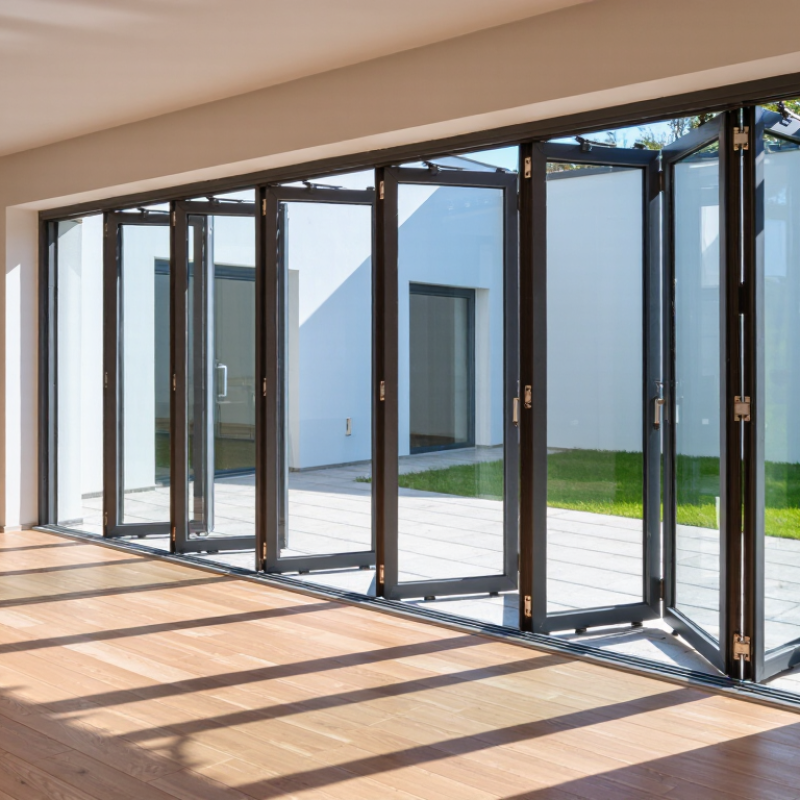
Heavy-duty sliding and folding doors are defined by how their frames, panels, tracks, and hardware handle repeated use and substantial loads.
A thick-looking panel alone does not make a door heavy-duty. The rollers, hinges, pivots, and fasteners must also suit the panel’s weight and dimensions. That matters. On a sliding system, undersized rollers can cause rough movement or uneven wear. Folding panels place different stresses on hinges and support points, especially when several panels move together.
A reliable specification considers the whole opening, not just the door leaf. The frame must be securely fixed to a suitable structure, while tracks need accurate alignment and clear paths for movement. Weather seals, drainage, and locking points also affect everyday performance.
Small details count. A door that feels solid on installation may still become difficult to operate if the opening shifts or hardware is poorly adjusted.
“Heavy-duty” is not a universal rating, either; check the stated load capacity and intended use. Even then, those figures cannot replace careful measurement and installation. It is worth asking whether the extra capacity is genuinely needed for the opening and traffic, rather than assuming heavier is always better.

Heavy-duty sliding doors move on load-bearing rollers that travel along a top or bottom track. The panels shift sideways, so they need clear wall space and a track kept free of grit. Folding doors work differently: hinges connect several panels, while rollers guide the moving leaves into a compact stack. The weight is shared across the hinges, carriage, and frame. Small details matter.
The EN 12400:2002 durability classification covers 5,000 to 500,000 opening-and-closing cycles. That range helps specifiers compare tested door performance, but it does not promise a particular service life; installation, panel weight, and maintenance all matter. With sliding systems, worn rollers can make a large panel drag or sit unevenly. With folding systems, loose hinges can disrupt the panel alignment. In either case, check the track, fixings, and locking points during routine inspections. A smooth test-room cycle is not the whole story: dirt, a slightly uneven threshold, or frequent heavy use can change how the system feels in daily operation.
Heavy-duty sliding and folding doors are built for large, weighty panels and frequent use. Reinforced frames, durable rollers or hinges, and properly sized tracks help support the load and keep movement steady. Strength is not just about thick materials. Panel size, glazing weight, wind exposure, and the structure around the opening all affect performance. A weak fixing point can lead to sticking or uneven gaps. That detail matters.
Sliding panels travel along a track, so they need little floor space to swing open. Folding panels stack to one side and can create a wider clear opening, which is useful when moving furniture or carrying trays between a kitchen and patio. More access, less obstruction. The actual opening depends on the number and width of panels, and folded sections still take up space at the edge. Threshold height, drainage, and weather seals deserve attention too; a smooth indoor-outdoor transition is less useful if rainwater collects at the sill. Check the track for grit and keep moving parts adjusted. Even a sturdy door can become difficult to operate when installation or upkeep is overlooked.
| Key consideration | Heavy-duty sliding doors | Heavy-duty folding doors |
|---|---|---|
| Strength and panel support | Designed for larger or heavier panels than standard lightweight systems. Confirm the system’s tested panel-weight limits, hardware, and structural support requirements for the specific project. | Can support substantial panels when engineered with suitable hinges, tracks, rollers, and fixings. The weight of each panel and the complete assembly must stay within the system’s specified limits. |
| Opening arrangement | Panels travel parallel to the opening and stack or overlap at one or both sides. The clear opening depends on the number and configuration of panels. | Connected panels fold together and park at one or both sides. This arrangement can create a wide opening when the panels are fully folded. |
| Space required | Does not need the door panels to swing into the room or outside area, though space is needed for the panels to stack along the track. | Panels also avoid a conventional swing arc, but the folded stack occupies space at the side of the opening and may project into the room or exterior area. |
| Access and circulation | A suitably configured sliding system can provide a convenient passage opening. The usable clear width is affected by panel overlap and the chosen layout. | Folding the panels away can provide broad access between adjoining spaces. Check the clear opening, operating hardware, and threshold details against the intended access requirements. |
| Everyday operation | Panels generally move along a track using rollers. Smooth operation depends on correct installation, suitable hardware, and keeping the track clear of debris. | Operation involves moving several connected panels and their hardware. Correct adjustment and periodic inspection help maintain smooth folding and closing. |
| Weather and sealing | Weather performance depends on the system design, seals, drainage, installation, and exposure conditions—not on the sliding format alone. | Weather performance depends on the panel joints, seals, threshold, drainage, installation, and exposure conditions. Review tested performance for the complete door system. |
| Best suited to | Projects that need panels to move parallel to the opening and have adequate side space for stacking, such as connecting indoor and outdoor areas. | Projects that prioritize a broad opening and have enough room at the sides for folded panels to park. |
| Specification checks | Verify panel size and weight limits, track and fixing requirements, opening configuration, clear passage width, threshold, and tested performance ratings. | Verify panel size and weight limits, number and direction of folding panels, stack location, clear opening, threshold, hardware requirements, and tested performance ratings. |
Why Choose Heavy Duty Sliding and Folding Doors?
Where These Door Systems Are Most Useful
Heavy-duty sliding and folding doors work well where a wide opening matters more than a traditional hinged door. In homes, they can connect a kitchen or living room with a patio, letting daylight reach deeper inside. Their panels slide or fold aside, so they do not need a large swing area. That helps in compact rooms. But clear floor space is still needed beside the opening.
They are also useful in cafés, event spaces, studios, and other busy settings where people move between indoor and outdoor areas. A broad opening can make serving, moving equipment, or arranging seating easier. In workshops and storage areas, robust panels may suit frequent use, provided the track and frame match the door’s weight. Site conditions matter. Wind exposure, drainage, floor level, and expected traffic should all be checked before choosing a system. A poorly planned track can collect grit and become difficult to operate.
Tips: Measure the opening and nearby furniture, not just the doorway. Ask an experienced installer about panel weight, track cleaning, and weather seals. Check that the folded panels will not block a walkway. These systems are not ideal everywhere; narrow openings may work better with simpler doors.
Choosing a heavy-duty sliding or folding door starts with the opening, not the catalogue. Measure the clear width, height, and available stacking space; folded panels need somewhere to park. Measure twice. For sliding systems, check how much glass remains across the opening when panels stack. For folding systems, consider traffic flow, panel swing, and whether a threshold could catch wheels or toes. A large panel is only useful if its weight suits the frame, rollers, hinges, and supporting structure. Ask for documented load ratings and installation requirements rather than judging strength by handle feel.
Exposure matters just as much. A coastal site, wind-driven rain, or strong afternoon sun can change the required seals and glass specification. Look for clear performance data on air leakage, water resistance, thermal insulation, and wind load. One impressive rating cannot answer everything; site details still matter. Check track drainage, sill height, and cleaning access, since grit in a low track can make robust panels drag. Ask how rollers, seals, and hardware can be inspected or replaced. Small details matter. Flush thresholds improve access, but require careful drainage and detailing. Have the installer explain that junction on a drawing, and pause if the answer stays vague.
We are the most reliable and proficient jute goods manufacturer & supplier that helps businesses or individuals with various exportable agricultural commodities biz and jute goods by shipping them worldwide. Our right-time service ensures that whatever color and size of jute product you need, we can make it happen anytime and anywhere! Let’s keep our earth safer to live in!
Important link
Address
Bangladesh Address:
Fair Plaza (9th Floor), Plot : 3C, Section : 01, Mirpur, Dhaka:1216
UK Office:
242 Manor Road, Droylsden, Manchester, M43 6JD, United Kingdom.
Let's Talk
We are the most reliable and proficient jute goods manufacturer & supplier that helps businesses or individuals with various exportable agricultural commodities biz and jute goods by shipping them worldwide. Our right-time service ensures that whatever color and size of jute product you need, we can make it happen anytime and anywhere! Let’s keep our earth safer to live in!
Bangladesh Address:
Fair Plaza (9th Floor), Plot : 3C, Section : 01, Mirpur, Dhaka:1216
UK Office:
242 Manor Road, Droylsden, Manchester, M43 6JD, United Kingdom.