
• Home
  • About
    • jute Bag

      Eco-Chic and Durable – Perfect for Sustainable Living.

      Cashew Nut Bag

      Sustainable jute bag for lasting cashew nut freshness

      Cocoa Bag

      Eco-friendly jute bag for rich cocoa flavor preservation

      Coffee Bag

      Elegant, durable jute bag to keep coffee beans fresh and eco-friendly

      Hazel Nut Bag

      Eco-conscious jute bag for hazelnut freshness and quality

      Shea Nut Bag

      Durable jute bag for fresh, organic shea nuts

      Tote Bag

      Stylish, eco-friendly jute tote for daily essentials

      Wheat Bag

      Sustainable jute bag for optimal wheat freshness

    • Jute Yarn

      Eco-Chic and Durable – Perfect for Sustainable Living.

      Jute Rope

      Sustainable jute bag for lasting cashew nut freshness

      Jute Fabrics

      Eco-friendly jute bag for rich cocoa flavor preservation

      Hessian cloth

      Sustainable Hessian cloth suppliers

  • Products
  • Export Country
  • Blog

How to Choose the Best Hybrid Printer in 2026?

A Hybrid Printer can look like the obvious answer when one machine must handle rigid boards and flexible rolls. Yet the right choice depends on the work you actually produce: daily material mix, print width, ink system, finishing steps, and operator capacity. A vivid sample matters, but so does a clean edge on a short run of corrugated board—and consistent color across a long vinyl roll.

“[Insert a verified quotation from a named hybrid-printing expert about matching printer capability to production needs.]” This quotation is intentionally left as a placeholder because no source article or verifiable expert statement was provided. Naming an expert or presenting invented words as a real quotation would weaken the credibility this buying guide should earn. Before publication, confirm the expert’s name, exact wording, and source.

This guide will compare the practical trade-offs behind the specifications: throughput versus detail, media flexibility versus changeover time, and purchase price versus maintenance demands. It will also examine printhead configuration, workflow software, service access, and the space required around the machine. Small details count. A roll holder that is awkward to load can slow a busy shift. So can unclear warranty terms. No single model fits every shop, and specifications alone rarely reveal the whole story. The best Hybrid Printer is the one that reliably handles your real jobs, with room for growth but without paying for capacity you may never use.
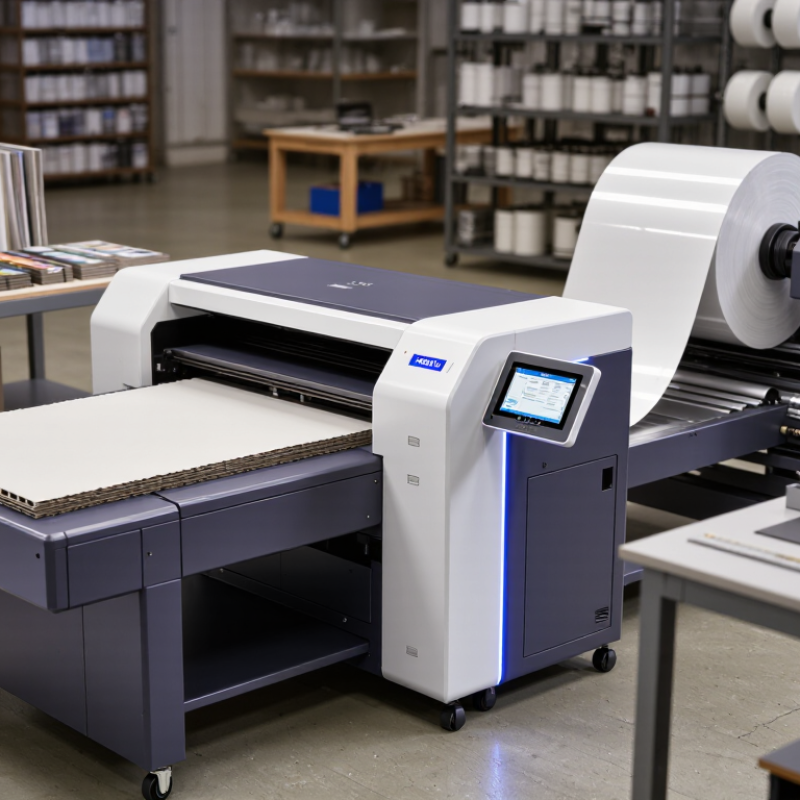
How to Choose the Best Hybrid Printer in 2026?

What a Hybrid Printer Is and Which Printing Methods It Combines

A hybrid printer combines two or more printing methods in one production line. In packaging and label work, a common pairing is flexography and digital inkjet. Flexography uses plates to print steady colors or coatings; inkjet adds changing names, codes, or images without making a new plate. Some systems also connect printing with cutting or finishing. The term is not perfectly consistent, so check the machine’s actual process, not just its label.

That matters.

Smithers’ report The Future of Digital Printing to 2032 estimated digital print’s global value at $167.5 billion in 2022 and projected $230.5 billion by 2032. This growth helps explain interest in digital components, but it does not prove every hybrid setup saves money. For a short run of varied labels, inkjet may reduce plate changes; for long runs, flexography may keep unit costs lower.

Ask for a sample on your real material. Check tiny text, color matching, drying time, and registration between methods. A glossy film may behave differently from uncoated paper.

Not always obvious.

One practical weakness is maintenance: two print technologies can mean more settings, training, and downtime. Compare usable output per shift, not just headline speed.

Identify Your Applications, Materials, and Production Requirements

Choosing a hybrid printer starts with the jobs you actually sell. Will it handle rigid signs, flexible banners, or both in the same shift? List the largest panel, roll width, substrate thickness, and finish required. A board with a slightly warped edge can expose clearance problems that a showroom sample hides. Then check ink compatibility on your real materials, including adhesion, scratch resistance, and curing time. Test the awkward job. It is easy to overvalue maximum speed.

Production needs matter as much as application fit. Record weekly volume, peak deadlines, average job size, and how often operators switch materials. Smithers’ report The Future of Digital Printing to 2027 forecasts global digital print value reaching $230.5 billion by 2027, reflecting the expanding role of digital production. Grand View Research estimates the digital printing market was worth $35.5 billion in 2023, with projected growth through 2030. These figures describe a broad market, not guaranteed demand for your shop. Use them as context, not a purchase justification.

Compare usable throughput, not just headline speed. Ask for a timed run with your artwork, substrate, and finishing workflow. Check whether loading, alignment, curing, and cleaning create bottlenecks. Confirm service access, operator training, and the cost of routine maintenance. I would still leave room for doubt: production estimates often look tidy on paper, while mixed short runs are not. A practical trial can reveal the difference.

Compare Print Quality, Speed, Media Handling, and Connectivity

How to Choose the Best Hybrid Printer in 2026?

Compare print quality, speed, media handling, and connectivity before choosing a hybrid printer. Inspect fine text, gradients, and solid fills on samples similar to your actual jobs. Look closely at small lettering and the edges of colored areas. A glossy sample can hide banding that shows up on matte stock. Compare output at the quality setting you would use daily, not only the printer’s fastest mode. Speed claims rarely tell the whole story; setup and drying time can affect a real production day.

Tips: Bring your own media samples. Check sheet and roll sizes, thickness limits, loading access, and how quickly jobs can switch between materials. Test the workflow, too: confirm that the printer works with your design software, network, and file types. A stable wired connection may suit a busy shop, while wireless access can simplify placement. Check whether users can monitor jobs and spot errors without standing beside the machine.

One trade-off is easy to miss: a printer that handles many media types may need more setup between jobs. Ask for a live demonstration with your materials, and time a complete job from file submission to finished print. Keep notes; it is surprisingly easy to remember the vivid sample and forget the slow changeover. No single specification predicts your results. Actual materials and workload matter more.

How to Choose the Best Hybrid Printer in 2026?

Compare print quality, speed, media handling, and connectivity with a simple 1–5 evaluation rubric.

The scores shown are illustrative rubric values, not measured results for a specific printer. When comparing models, assess print quality using sample output, compare published print speeds under similar settings, check supported media sizes and thicknesses, and confirm the required wired or wireless connections.

Evaluate Total Ownership Costs, Support, and Upgrade Options

A hybrid printer’s purchase price can hide its real cost. Estimate paper, ink or toner, replacement parts, energy, and routine service over three to five years. Use your expected monthly volume, not the supplier’s ideal test conditions. A spreadsheet helps. Include the cost of downtime, too: delayed labels or orders can disrupt a busy workday.

Ask support teams specific questions before buying. How quickly can a technician respond? Are parts stocked locally, and what does the warranty exclude? Request a sample service agreement and check fees for travel, labor, and remote diagnosis. “Fast support” is vague. A written response-time commitment is more useful, though it may still depend on parts availability. Small print matters.

For upgrade options, confirm whether the printer can accept future modules, added capacity, or newer network features. Ask which upgrades require paid installation and whether older components remain supported. In a small office, an optional finishing module might be useful only during seasonal peaks; paying for it upfront could be wasteful. I would compare the cost of adding it later against the price of a higher configuration now. That estimate can be imperfect, especially when workloads change, so leave room in the budget for a surprise.

Test Shortlisted Printers Against Your Real-World Workflows

A printer’s specification sheet cannot show how it will handle your actual workday. Test each shortlisted model with the files, paper, and deadlines you use most. Include a color presentation, a two-sided report, a scanned receipt, and a phone-printed document. Small details matter.

Run the same jobs on every printer. Note setup time, first-page speed, paper jams, scan quality, and how often someone must refill paper or replace supplies. Check whether text stays crisp at small sizes and whether photos look acceptable under ordinary office lighting. If several people share the device, ask each person to print and scan without help. That can reveal confusing menus or unreliable wireless connections. Keep a simple log; memory is a poor measuring tool.

Repeat the test during a busy period, not just on a quiet afternoon. Listen for noise near desks, and check whether completed jobs land in the right tray. A short trial may miss problems that appear after heavy use, so treat the results as useful evidence, not a guarantee. That is worth remembering. Consider which tasks matter most, then compare performance against those needs rather than chasing the longest feature list.

Shopping Basket