What Are the Most Popular Butterfly Specimen Types?
A Butterfly Specimen can be valued for its color, wing shape, scientific significance, or place in a collection. Monarchs are widely recognized for their orange-and-black pattern; swallowtails for their distinctive tails; and morphos for their vivid blue wings. These familiar forms often attract attention, but “popular” does not necessarily mean rare or scientifically important. A clear label and reliable provenance can matter just as much as appearance.
Professional monitoring reports offer useful context, though they do not rank commercial specimen preferences. Butterfly Conservation’s State of Britain’s Butterflies 2022 reports that around 80% of British butterfly species have declined in abundance or distribution since monitoring began in 1976. That finding makes accurate identification and documented origin especially relevant. It also cautions against treating striking color as a measure of conservation status.
This guide looks at the specimen types most often noticed by collectors and educators: colorful tropical species, familiar garden butterflies, and carefully prepared examples that show wing patterns clearly. It also considers presentation, such as spread-wing mounts and labeled educational displays. Small details matter. A specimen with a species name, collection date, location, and transparent source record is easier to assess than an attractive but undocumented example. Popularity can be subjective, and online listings do not provide a complete picture. That limitation deserves attention. We focus on responsible, legally sourced specimens and use appearance, educational value, and available conservation information to explain why certain types stand out.
How Butterfly Specimens Are Classified: Smithsonian Counts 17,500+ Species
Butterfly specimens are classified by biological relationships, not simply by wing color or size. Scientists place butterflies within the order Lepidoptera, then sort them into families, genera, and species. More than 17,500 butterfly species have been described worldwide, though the count can change as research identifies new species or revises existing classifications. It is not a final tally.
Several families are especially familiar in natural-history collections. Nymphalidae includes many brush-footed butterflies, while Papilionidae contains swallowtails. Pieridae includes whites and sulphurs; Lycaenidae includes blues and coppers. Skippers belong to Hesperiidae. These groups differ in features such as wing structure, antennae, and leg shape. Color helps, but it can mislead: males and females of one species may look strikingly different.
A specimen label adds essential evidence. It may record the collection location, date, and habitat, helping researchers compare populations and verify an identification. Adult butterflies are often preserved with their wings spread for examination, while caterpillars and pupae may be documented separately. Names matter. So do details. Some specimens are worn, faded, or missing parts, and classification can remain uncertain until more evidence is available. That uncertainty is worth recording, not hiding.
What Are the Most Popular Butterfly Specimen Types?
Butterfly specimens are commonly classified by family. The chart shows approximate species counts for the seven recognized butterfly families.
Nymphalidae is the largest family by estimated species count. Counts are approximate and may vary among taxonomic sources; more than 17,500 butterfly species are recognized worldwide.
Spread-Pinned Specimens: The Classic Format for Display and Identification
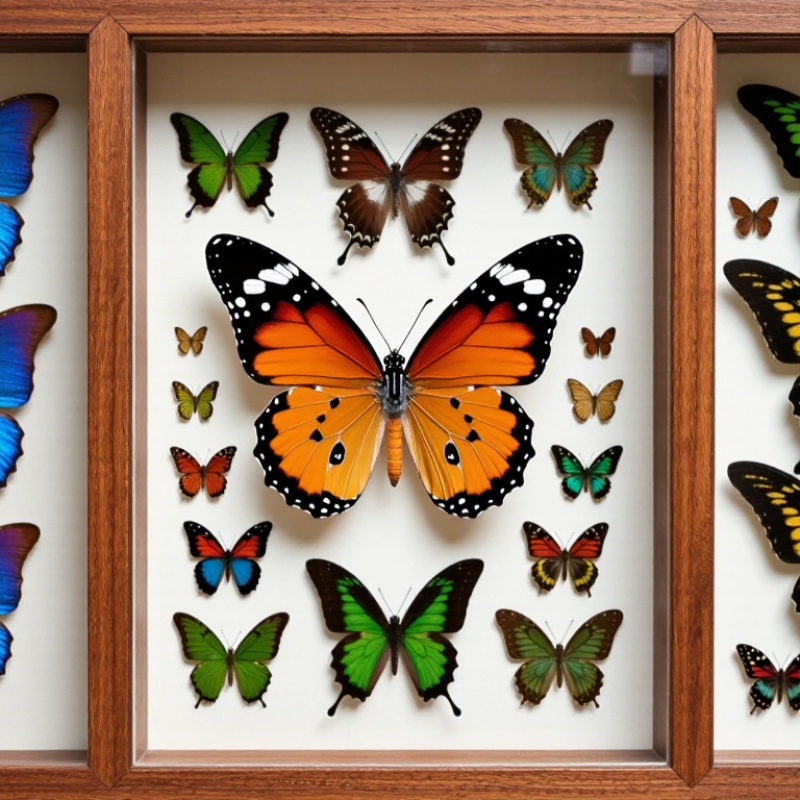
Spread-pinned specimens are the familiar format many people picture: a butterfly rests with its wings extended, held in place by fine pins on a mounting board. This position makes wing shape, color patterns, and the relationship between the forewings and hindwings easier to compare. Small details matter. A pale spot near the wing edge may help distinguish similar species, while a clear view of the body can support identification.
A well-prepared specimen should look balanced, but perfect symmetry is not essential. Natural wings can differ slightly, and forcing them into an exact mirror image may hide useful features. Labels placed beneath the specimen record details such as the collection location and date; without them, an attractive display may have limited scientific value. Handle the case rather than the wings, and keep it away from direct sunlight, dust, and damp rooms. These precautions help preserve color and structure. Still, some fading happens over time. That is worth acknowledging. Spread-pinned specimens offer an accessible way to study butterflies, though photographs and field notes can add context that a display alone cannot provide.
What Are the Most Popular Butterfly Specimen Types? — Spread-Pinned Specimens: The Classic Format for Display and Identification
Common preparation formats for preserved butterflies and their typical uses. | Specimen format | How it is prepared | Typical use | Advantages | Considerations |
| Spread-pinned | The body is pinned through the thorax, and the wings are positioned flat on a setting surface until dry. A label is attached to the pin below the specimen. | Display, teaching collections, and identification using visible upper-wing patterns and wing shape. | Presents the wings clearly and keeps collection data with the specimen. It is a familiar format for museum and study collections. | Wings and scales are delicate. The spread upper surface may make the underside harder to examine, and the specimen needs a protective, pest-resistant storage case. |
| Closed-wing pinned | The butterfly is pinned through the thorax with its wings held together above the body rather than spread flat. | Preserving a natural resting posture and viewing features on the underside of the wings. | Can show underside markings and occupies less horizontal space than a spread specimen. | Upper-wing patterns are less visible, and folded wings can be difficult to inspect without handling the specimen. |
| Papered specimen | The dried butterfly is placed in a small folded paper envelope, usually with its wings folded over the back. It is not mounted on a pin in this format. | Compact field transport and temporary storage before later preparation or study. | Lightweight and space-efficient, with less risk of a pin snagging during transport. | The wings are not displayed for direct comparison. Dry specimens can become brittle; relaxing and setting them requires care to avoid damage. |
| Unmounted specimen in storage | A dried specimen is kept in a suitable labeled container or protective envelope rather than being displayed on a pin. | Temporary holding, transport, or storage when a specimen has not yet been prepared for display. | Avoids committing the specimen to a display position and can reduce space needs. | Provides limited access for examination. Keep the specimen dry, protected from pests, and associated with its collection information. |
Framed Butterflies: Monarchs’ 3.5–4-Inch Wingspans (NABA)
A monarch’s 3.5–4-inch wingspan gives a framed specimen a clear presence without needing an oversized display. The North American Butterfly Association cites this range for the species, though individual butterflies may vary slightly. The measurement describes the distance across open wings, not the butterfly’s body length. That distinction helps when choosing a frame: a specimen needs room for its wings, plus a little breathing space around them.
The orange-and-black pattern reads well from across a room, while small cream spots along the dark borders reward a closer look. Under glass, those details can catch reflections, so a simple, uncluttered background often works best. Leave space between the wing tips and the frame edge; a tight fit can make the specimen feel cramped. Keep the display away from direct sunlight and damp areas, which may affect color and condition over time. Small details matter. Even careful mounting cannot make every wing perfectly symmetrical, and that slight irregularity is part of what makes a real specimen feel distinct.
Rare Birdwing Specimens: Check CITES Rules Before Buying or Displaying
Butterfly collections often feature swallowtails, morphos, and birdwings. Birdwings draw attention with their broad wings and vivid green, gold, or black patterns. Their size can make a specimen striking even in a simple glass case. But rarity calls for extra care.
Not every birdwing species has the same legal status. Some are covered by CITES, and trade controls depend on the species and current rules. Before buying or displaying one, check its scientific name against the current CITES Appendices. Also confirm the requirements of the countries involved; permits or other documents may be needed. A seller’s claim of captive breeding is not a substitute for checking.
Ask for clear provenance, including the species name, source, and relevant permits or certificates. Keep these records with the specimen, not in a separate drawer. A small label can prevent confusion years later. If the paperwork is vague, pause and ask the relevant wildlife authority or a qualified museum professional. It can feel awkward to delay a purchase. Better that than discovering the details do not add up.