
• Home
  • About
    • jute Bag

      Eco-Chic and Durable – Perfect for Sustainable Living.

      Cashew Nut Bag

      Sustainable jute bag for lasting cashew nut freshness

      Cocoa Bag

      Eco-friendly jute bag for rich cocoa flavor preservation

      Coffee Bag

      Elegant, durable jute bag to keep coffee beans fresh and eco-friendly

      Hazel Nut Bag

      Eco-conscious jute bag for hazelnut freshness and quality

      Shea Nut Bag

      Durable jute bag for fresh, organic shea nuts

      Tote Bag

      Stylish, eco-friendly jute tote for daily essentials

      Wheat Bag

      Sustainable jute bag for optimal wheat freshness

    • Jute Yarn

      Eco-Chic and Durable – Perfect for Sustainable Living.

      Jute Rope

      Sustainable jute bag for lasting cashew nut freshness

      Jute Fabrics

      Eco-friendly jute bag for rich cocoa flavor preservation

      Hessian cloth

      Sustainable Hessian cloth suppliers

  • Products
  • Export Country
  • Blog

What Are Organic Socks and Why Do Buyers Choose Them?

Organic Socks are made with organically grown fibers, most often cotton cultivated without synthetic pesticides or genetically modified seeds. Yet the term can sound simpler than it is. A sock may contain organic cotton, but still include nylon, elastane, chemical dyes, or unclear labor practices.

Rebecca Burgess, founder of Fibershed and a respected textile systems expert, has said, “We need to rethink our relationship to fiber.” Her statement fits the growing interest in Organic Socks. Buyers are not only touching a softer fabric. They are examining farming methods, certification, comfort, and product lifespan. The Global Organic Textile Standard can verify organic fibers and set requirements for processing, dyes, and social criteria. That distinction matters.

Comfort remains a powerful reason. Organic cotton socks can feel smooth against warm skin, especially inside tight shoes. Many buyers also value breathability during long commutes, gym sessions, or summer walks. Some choose them because they want fewer agricultural chemicals in the fiber supply chain. Others appreciate brands that explain their sourcing clearly.

The picture is not perfect. Organic does not automatically mean waste-free, plastic-free, or fairly made. A thin sock that wears through after three washes may create more waste than a durable alternative. Shoppers should check certification marks, fiber percentages, stitching, washing instructions, and return policies.

Small details reveal quality.

This is where buyers make informed choices, though labels can still confuse. Organic Socks offer meaningful benefits, but responsible purchasing requires curiosity, comparison, and a willingness to question attractive claims.
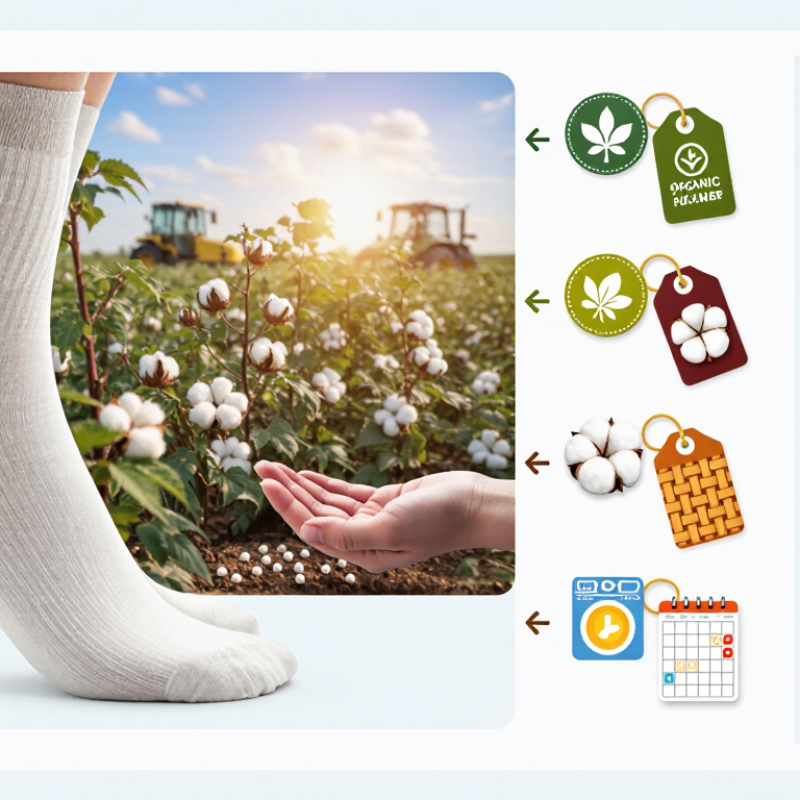
What Are Organic Socks and Why Do Buyers Choose Them?

What Organic Socks Are and How They Are Defined

Organic socks are made with fibers grown under recognized organic farming standards. Organic cotton is the most common example, although organic wool, hemp, and other fibers may also appear. These standards generally restrict synthetic pesticides, genetically modified seeds, and certain fertilizers during cultivation. The exact requirements depend on the certification system and region.

The word “organic” does not automatically describe the entire sock. A pair may contain organic cotton but also use recycled polyester, elastic, or synthetic stitching. Dyes and finishing treatments also matter. Reliable certifications can verify the fiber source, processing stages, and supply chain records. Buyers should read the fiber percentage and certification details instead of trusting a large front-label claim. Small print matters.

Texture is another practical clue. Organic cotton socks often feel breathable, soft, and slightly less polished after washing. Some pairs may shrink or lose shape if dried with high heat. That is not necessarily a quality failure, but it can expose weak construction. The label is not magic. A careful comparison includes rib strength, toe seams, fabric weight, and washing instructions. People may choose organic socks to reduce exposure to certain agricultural chemicals, support traceable materials, or prefer a gentler feel against the skin. These benefits are not identical for every wearer. Personal comfort, durability, and verified material content still deserve equal attention.

How Organic Fibers Are Grown and Turned Into Socks

Organic socks are made with fibers grown under recognized organic standards. Organic cotton farms may use crop rotation, compost, and biological pest control. These methods can support healthier soil and reduce reliance on synthetic chemicals. Organic wool comes from farms following specific animal and land-management requirements. However, “organic” describes the fiber’s origin, not always the entire sock.

After harvesting, cotton is cleaned and separated from seeds. The fibers are then spun into yarn and checked for strength. Machines knit the yarn into tubes, which become sock bodies, heels, and toes. Dyeing and finishing follow, often using approved chemical controls and wastewater practices. Certification can verify these steps, but standards differ by region. A certification label deserves careful checking.

The process is not flawless. Organic farming may require more land, and transportation still creates emissions. Some socks also contain elastic fibers for fit, so buyers should read the fiber percentage. In my experience, comfort depends on knitting density, seam placement, and moisture control, not fiber claims alone. A soft sock can still wear quickly.

Tips: Look for a recognized organic certification. Check the fiber breakdown and care instructions. Examine the toe seam before buying. Choose durable knitting over attractive packaging. Ask how dyeing and finishing are managed. If information seems vague, pause and investigate.

What Are Organic Socks and Why Do Buyers Choose Them?

Certified organic cotton is grown under organic agricultural standards and then cleaned, spun into yarn, and knitted into socks. The chart shows global certified organic cotton production in two recent crop years.

Production increased from approximately 259,145 metric tonnes in 2020/21 to 342,265 metric tonnes in 2021/22. Buyers may choose organic socks to support farming systems that avoid prohibited synthetic pesticides and fertilizers under applicable organic certification rules, while also valuing fiber traceability and material preferences.

Sources: Organic Cotton Market Report, 2023; international organic agriculture and cotton production statistics. Values are rounded where applicable.

Key Materials Used in Organic Sock Production

Organic socks are made mainly from fibers grown or processed with reduced chemical inputs. Organic cotton is the most familiar option. Its soft surface feels comfortable against the skin, especially in lightweight everyday socks. However, organic cotton can absorb moisture without drying quickly during long walks.

Organic wool offers a different performance. Its natural fibers help regulate warmth and can manage small amounts of moisture. Merino-type wool is often chosen for hiking socks because it feels finer than traditional wool. Still, wool may irritate sensitive skin, and its care instructions require attention. Hemp is another useful material. It feels slightly textured, becomes softer after washing, and provides practical durability. It can also feel too firm for people expecting a silky sock.

Some manufacturers blend organic fibers with a small amount of elastane or recycled polyamide. These additions help socks keep their shape and reduce sagging around the ankle. They are not fully organic materials, so buyers should read the fiber percentages carefully. Bamboo-based rayon also deserves careful checking. Bamboo may begin as a plant-based source, but chemical processing can change the final fiber significantly.

Certification matters more than attractive wording. Look for recognized organic textile standards, and check whether they cover the fiber, dyeing, and finishing stages. Inspect the label, toe seam, and wash instructions. No material is perfect. A sock can use organic cotton yet wear thin quickly if its knitting quality is poor. That detail is easy to overlook.

Health, Comfort, and Environmental Benefits of Organic Socks

Organic socks use fibers grown without most synthetic pesticides and fertilizers. Cotton is the commonest option, while wool and other fibers may also carry organic certification. Textile Exchange reported 342,265 metric tonnes of organic cotton production in its 2023 Organic Cotton Market Report. That remains a small share of global cotton output, so availability can be limited.

Health and comfort often drive purchases. Organic cotton can feel breathable against the skin, especially inside warm shoes. It may also reduce exposure to farming residues, although finished socks can still contain dyes, elastic, or finishing chemicals. Certification matters. The Global Organic Textile Standard checks fiber content, chemical inputs, wastewater, and social criteria across certified processing. Organic does not automatically mean softer.

Comfort depends on construction.

Environmental benefits are real but not simple. Textile Exchange’s Materials Market Report 2024 shows that conventional cotton still dominates cotton production, while organic cotton remains a minor category. Organic farming supports soil management and avoids many prohibited agricultural chemicals, but irrigation, transport, dyeing, and washing still create impacts. A poorly made organic sock may wear out quickly, wasting its material advantage. Buyers should check certification, fiber percentages, reinforced heels, and washing instructions. The evidence has limits. More independent, farm-level data would improve comparisons between organic and conventional socks.

What Are Organic Socks and Why Do Buyers Choose Them? - Health, Comfort, and Environmental Benefits of Organic Socks
Data Dimension Organic Cotton Socks Conventional Cotton Socks Why Buyers May Care
Fiber Definition Made with cotton grown according to an approved organic standard. Organic farming systems prohibit genetically modified seeds and restrict the use of synthetic pesticides and fertilizers. Made with cotton that may be grown using conventional agricultural inputs, including synthetic fertilizers and crop-protection chemicals where permitted. Shoppers seeking a clearly defined agricultural standard may prefer organic fiber.
Certified Organic Content Certification labels vary. Under the Global Organic Textile Standard, products labeled “organic” generally require at least 95% certified organic fibers, while “made with organic” generally requires at least 70%. No organic-fiber percentage is required unless the product makes a certified organic claim. Certification helps buyers distinguish verified organic content from general marketing language.
Skin Contact The cotton fiber itself is not automatically hypoallergenic, but some buyers choose it to reduce concern about agricultural chemical residues and to select products with restricted processing chemicals. Comfort and skin response depend on the fiber, dyes, finishes, detergents, and the wearer’s individual sensitivity. People with sensitive skin often look for transparent material and processing information.
Softness and Comfort Can feel soft and breathable when made with suitable yarn, knit construction, and finishing. Organic status alone does not determine softness. Can also be soft and breathable; comfort depends mainly on yarn quality, fabric construction, fit, and finishing. Buyers should evaluate fiber blend, cushioning, stretch, seams, and fit rather than relying on the organic claim alone.
Moisture Management Cotton can absorb moisture, but it dries more slowly than many synthetic performance fibers. Organic cotton has broadly similar moisture behavior to other cotton of comparable construction. Has the same basic cotton behavior when the fiber type and knit structure are comparable. Organic cotton may suit everyday wear, while high-sweat activities may require a design optimized for faster drying.
Farm-Level Environmental Approach Organic systems avoid prohibited synthetic inputs and commonly emphasize soil management, crop rotation, and biological methods, depending on the applicable standard and farm. Farming practices vary widely and may include synthetic inputs and different approaches to soil and pest management. Environmentally conscious buyers may value farming methods that support soil health and reduce reliance on prohibited inputs.
Water Considerations Organic farming does not mean zero water use. Water demand depends on climate, irrigation, soil, farm practices, and supply-chain processing. Water demand also varies by region, irrigation requirements, farming practices, and textile processing. Buyers should avoid universal water-saving claims and look for credible, product-specific evidence.
Processing and Dyes A recognized textile certification may place additional restrictions on dyes, finishes, wastewater treatment, and hazardous substances, depending on the certification scope. Processing requirements depend on local regulations and any voluntary textile standard used by the manufacturer. Certification can provide added information about the wider textile supply chain, not only the farmed fiber.
Durability Durability depends on yarn strength, fabric weight, knit density, reinforcement, laundering, and blend composition—not simply on whether the cotton is organic. Durability is likewise determined by construction, fiber quality, reinforcement, care, and use. A long-lasting pair may reduce replacement frequency and overall material consumption.
End-of-Life Options Unblended cotton may be more straightforward to reuse or recycle than socks containing multiple fibers, elastane, coatings, or complex trims. Actual options depend on local facilities. End-of-life options also depend on fiber blends, dyes, trims, contamination, and available collection systems. Buyers can improve circularity by choosing durable, simpler constructions and using textile-reuse or recycling programs where available.
Common Buyer Motivations Reduced concern about prohibited agricultural chemicals, certified supply-chain practices, natural-fiber comfort, and environmental preferences. Lower price, broad availability, familiar comfort, and a wide range of colors, blends, and performance designs. The best choice depends on the buyer’s priorities, budget, skin sensitivity, intended activity, and care habits.

Note: Organic certification does not automatically guarantee superior softness, durability, lower water use, or hypoallergenic performance. Product construction, certification scope, manufacturing practices, and care instructions should be checked before purchase.

Why Buyers Choose Organic Socks Over Conventional Options

What Are Organic Socks and Why Do Buyers Choose Them?

Organic socks are made with fibers grown under certified organic farming standards, often using organic cotton. Buyers choose them because they want a closer connection between daily comfort and responsible purchasing. A soft pair can feel cooler inside a shoe, especially during long walks or busy workdays. Many shoppers also prefer farming systems that limit synthetic pesticides and protect soil health. Still, organic does not automatically mean perfect. Processing, dyeing, packaging, and transport can affect the product’s wider impact.

Why Buyers Choose Organic Socks Over Conventional Options

The decision often comes down to comfort, values, and trust. People with sensitive skin may appreciate smoother, breathable fibers, although individual reactions differ. Buyers also look for clear certification, fiber content, and care instructions. These details help separate verified organic materials from vague environmental claims. In my experience, durability matters just as much. A responsibly grown sock that stretches after three washes may create more waste than expected. That is an uncomfortable point, but it deserves attention.

Tips: Check the certification wording, not just the word “organic.” Compare fiber percentages and inspect the stitching around the heel and toe. Wash socks in cool water and avoid excessive heat to help them keep their shape. If possible, buy fewer pairs with reliable construction instead of choosing based on appearance alone.

Shopping Basket