Why Choose Personalized Shipping Boxes for Your Business?
For many businesses, Personalized Shipping Boxes do more than carry products from a warehouse to a customer’s door. They can protect an order, identify a brand, and make an ordinary delivery feel considered. A logo beside a clear return address, for example, can help customers recognize a parcel before they open it. That moment matters. But a polished design cannot make up for a box that arrives crushed or is difficult to recycle.
Choosing packaging takes practical judgment. Businesses should consider product weight, box dimensions, cushioning needs, printing method, and order volume. A small online shop shipping ceramic mugs may need snug inserts and stronger board; a clothing seller may prefer a lighter format. These details affect both the unboxing experience and shipping costs. They deserve a sample test.
Before placing a large order, compare material specifications and request a physical sample. Pack it as you normally would, then check the fit, closure, print clarity, and ease of opening. Ask the supplier about minimum quantities, lead times, and options for repeat orders. Not every detail will feel right on the first run. That is useful information, not a failure. A design may look sharp on screen yet feel crowded on a real box. There is a trade-off. The strongest choice balances protection, presentation, and cost without adding packaging customers do not need. Personalized shipping is not a shortcut to loyalty, but thoughtful, consistent packaging can support a more trustworthy customer experience.
What Personalized Shipping Boxes Are and How They Are Made
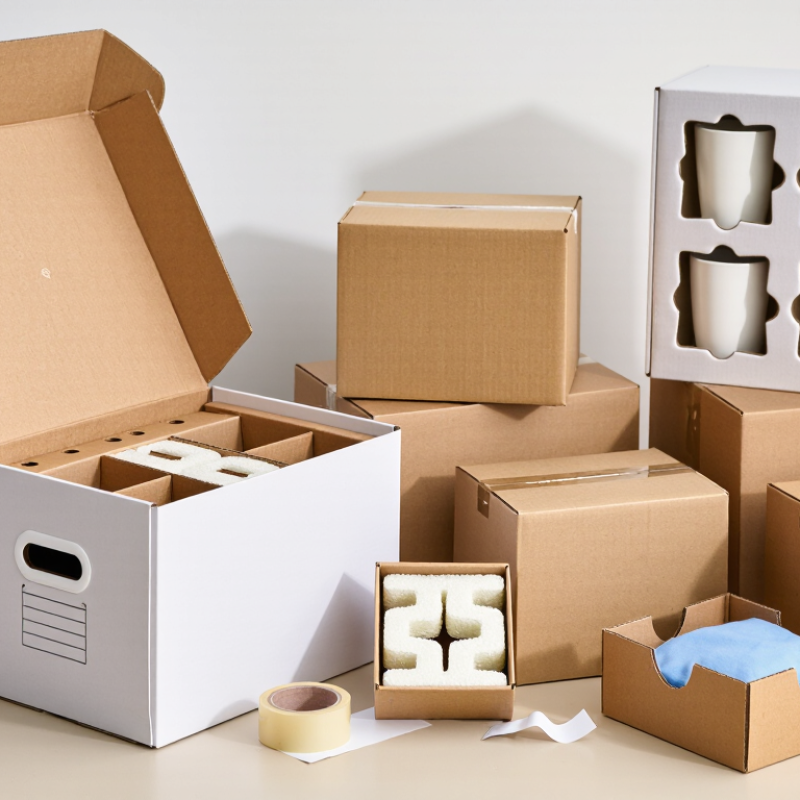
Personalized shipping boxes are corrugated cartons designed around a business’s product, shipping needs, and visual identity. Custom dimensions can reduce empty space, while printed instructions or a simple logo help recipients recognize the parcel. Small details matter. A box still needs to protect its contents; appearance cannot compensate for weak board or poor sizing.
Manufacturing starts with corrugated board: flat liner sheets bonded to a fluted inner layer. Converters cut and crease large sheets into box blanks, then add printing and fold or glue the pieces into cartons. Digital printing suits shorter runs; flexographic printing is commonly used for larger quantities. The exact process depends on order size, artwork, and strength requirements. The U.S. Environmental Protection Agency reported that containers and packaging made up 28.1% of municipal solid waste in 2018, or 82.2 million tons; that category is broader than shipping boxes alone. The American Forest & Paper Association reported a 93.6% U.S. corrugated-box recycling rate for 2022. Those figures support considering material recovery, but local collection rules and access vary. Custom printing can also create waste if designs change often. It is worth checking a sample box for fit and durability before placing a large order.
How Custom Designs Strengthen Brand Recognition
A shipping box is often the first physical contact a customer has with an online business. A consistent color, readable wordmark, and simple graphic can make that moment easier to recognize next time. Keep key details visible on more than one side; boxes arrive tilted, scuffed, or partly covered by labels. Small details matter.
The 2018 Ipsos study for the Paper and Packaging Board found that 72% of surveyed consumers said packaging design could influence their purchase decisions. That does not prove a custom box will create loyalty, but it shows design can affect how people judge a product. Repeating a few visual cues across shipping boxes, tape, and inserts gives customers a clearer signal of who sent the parcel. Avoid crowding the surface: a logo buried among slogans is easy to miss.
Shareability can help, too. Dotcom Distribution’s 2016 eCommerce Packaging study reported that 40% of consumers were more likely to share a product image on social media when it arrived in gift-like or branded packaging. Yet an elaborate unboxing can add cost and waste without improving recognition. Test a practical design with real shipments: check whether the print stays legible after handling, and ask customers what they noticed. The answer may be less flattering than expected. That is useful feedback.
How Personalized Boxes Improve Protection and Customer Experience
Personalized shipping boxes can improve protection when their dimensions match the product. A snug fit limits shifting during transit and reduces the need for excess filler. For fragile items, consider a sturdy board grade and test the packed box with the actual cushioning you plan to use. Printed handling instructions can help communicate care, but they cannot replace suitable packaging. Test a sample before ordering a large run.
The box also shapes a customer’s first impression. A clear logo, readable colors, and an easy-to-open design can make delivery feel considered rather than generic. Small detail, real impact. Still, appearance should not outweigh usability. A polished mockup can disappoint if tape tears the print or the lid is difficult to open. Check the full unboxing process, including how the product sits inside and whether the packaging can be reused or recycled locally.
Tips: Measure the packed product, not just the item. Test corners and seams after packing. Keep essential text legible. Ask a few customers to open a sample and share what felt awkward.
What Costs and Sustainability Factors Businesses Should Consider
Personalized shipping boxes can improve product protection and make an order feel considered, but their cost goes beyond printing. Businesses should compare setup charges, minimum order quantities, board strength, and the price of each size. Small runs often cost more per box. That can still make sense for seasonal products, while a large order may tie up cash and storage space. Measure packed products carefully; oversized boxes can require more filler and increase shipping costs.
Sustainability depends on the full package, not just its appearance. A right-sized box can reduce wasted material and help limit empty space in transit. Recycled-content board may suit many shipments, though its color and surface can vary. That may be a trade-off. Check whether local recycling services accept the box, especially if it has plastic windows, heavy coatings, or attached labels. Ask suppliers about recycled content and box construction, then request a sample before committing.
Test a sample with the actual product, tape, and packing method. A box that looks sturdy on a desk may bend when stacked or get damp in transit. Track damage, packaging use, and customer feedback over several shipments. I have seen teams focus on print quality and overlook packing speed; extra folds or inserts can slow fulfillment. Leave room for practical adjustments.
How to Choose the Right Box Design for Your Business
Why Choose Personalized Shipping Boxes for Your Business?
How to Choose the Right Box Design for Your Business
Start with the item, not the artwork. Measure its length, width, and height, then allow room for protective material without letting the product slide. A snug fit can reduce damage and excess filler. Too tight, though, may crush corners or make packing frustrating. Check the box’s board strength against the item’s weight and likely handling conditions. A small sample shipment can reveal problems that a screen preview cannot.
Tips: Build a physical mockup. Pack the real product, close the box, and gently shake it. Check whether edges bulge or the item shifts. Also consider how quickly staff can assemble each box during a busy day. It matters.
Then plan the printed design around the box’s actual panels. Keep key information away from folds, seams, and tape areas. A simple logo placement and one clear color can feel polished without covering every surface. Choose print finishes that suit the box material and your budget. More decoration is not always better; I’d reconsider any detail that makes packing slower or obscures useful information. Before ordering a large quantity, review a printed sample under ordinary warehouse lighting. Colors can look different in person, and small type may be harder to read than expected.