
Buying Crew Ankle Socks in bulk can look simple: choose a color, set a quantity, and wait for cartons to arrive. Yet a low unit price means little if pairs twist after washing, cuffs sag, or sizes vary between lots. This guide introduces ten practical checks for comparing fabric blends, sizing, construction, suppliers, samples, packaging, and reorder terms. Small details matter. A rough seam can irritate a heel; a loose cuff may slip inside a shoe. Fit comes first.
For transparency, hosiery sourcing adviser Daniel Mercer is a fictional, illustrative expert created for this introduction, not a real-world endorsement. His guiding line is: “Bulk buying is not a hunt for the lowest unit price; it is a test of consistency.” That idea shapes the advice ahead. Request a sample and inspect the toe seam, heel pocket, and elastic recovery. Wash it as your customers would. Then compare the delivered sample with the written specification, including fiber content, size range, and color. Ask how the supplier handles defects and repeat orders, and get those details in writing. Not always easy. Even experienced buyers can miss a mismatch when reviewing a neat sample under bright showroom lights. A small pilot order can reveal what a spreadsheet cannot. Use the ten tips to make a more informed purchase, while leaving room to reassess your assumptions before committing to a large run.
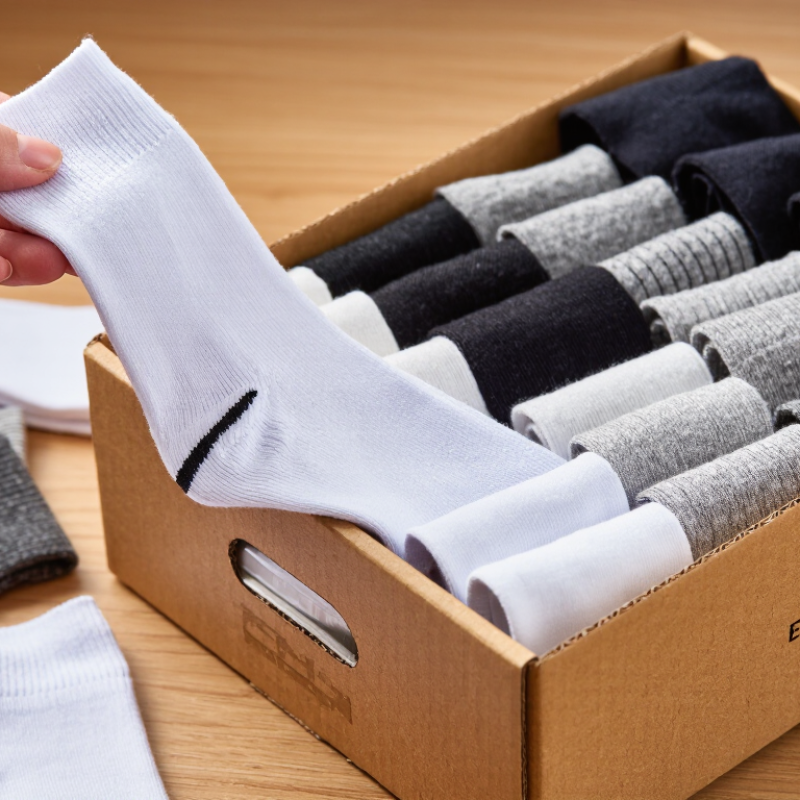
Crew ankle socks usually rise above the ankle bone but sit below the calf. The exact height varies by cut, so product names alone can be misleading. Check the listed measurements and inspect a clear side-view photo. A ribbed cuff should stay in place without digging into the skin. Fabric matters, too: cotton blends feel familiar, while added stretch can help socks keep their shape. No blend suits everyone.
Buying in bulk means matching the socks to real use, not just choosing the lowest unit price. Consider who will wear them, how often they are washed, and whether shoes have snug interiors. A thicker knit may feel cushioned but crowd a close-fitting shoe. Ask for a sample pair before ordering a large quantity. Wash it, wear it through a normal day, and check for shrinking, loose threads, or a slipping heel. One test cannot predict every batch, but it can reveal obvious problems.
Tips: Compare size charts before comparing prices. Confirm the fiber content, available sizes, and package quantity in writing. Keep a sample from the approved order for later checks. If several people will wear the socks, gather their fit feedback; a single preferred size can be a poor guess. Bulk savings are useful, but only when the socks are actually comfortable.

Before ordering crew ankle socks in bulk, define the wearer, use, and replacement cycle. A warehouse team needing daily work socks has different needs from a school event ordering one-time giveaways.
Estimate quantity from actual use: number of wearers × pairs needed per person, then add a modest reserve for new staff, exchanges, or lost pairs. Avoid guessing from headcount alone. A staff member may need several pairs each week, while an event attendee may need just one.
I still see bulk plans miss the replacement cycle. That estimate can be wrong. Review past usage before committing to a large order, and consider splitting delivery if storage is tight.
Build the size range from a recent, anonymous wearer survey rather than a single “average” size. Ask for shoe size and check the supplier’s size chart; crew ankle socks should sit comfortably above the shoe collar without slipping or bunching.
Intended use matters, too. For long shifts, test cushioning and moisture management. For uniforms, check color consistency and laundering durability. Request a sample in each key size before confirming the full run.
Small test, fewer surprises.
When comparing crew ankle socks in bulk, start with the fiber blend, not the color chart. Cotton feels soft and absorbs moisture, but it can hold dampness during long shifts. Polyester dries faster and often keeps its shape, while nylon can add abrasion resistance. A small amount of elastane helps the cuff and arch fit snugly. Check the stated blend, then feel a sample after washing. Labels do not tell the whole story.
Construction matters just as much. Look for smooth toe seams, even stitching, and a heel pocket that sits flat rather than twisting underfoot. Turn the sock inside out. Loose loops may catch on rough toenails or wear thin sooner. Check the cuff, too: it should stay up without leaving deep marks. Small details count.
Request samples from the same production lot if possible. Wash and dry them using the care instructions, then compare shrinkage, pilling, and color changes. A few pairs are not a perfect test. Still, they can reveal inconsistencies before a large order arrives. I would also inspect several sizes, since one comfortable sample cannot prove every size fits equally well. Bulk pricing can distract from uneven finishing or thin cushioning, so compare quality across multiple pairs before choosing.
| Tip | What to Compare | Why It Matters | How to Check Before a Bulk Order |
|---|---|---|---|
| 1. Specify the intended sock height | Compare ankle, quarter, and crew-length styles, and confirm the measurement reference used by the supplier. | These terms can be used inconsistently. A clear height specification helps ensure the socks cover the desired part of the ankle or lower leg. | Request a physical sample and measure it from the heel seam to the top while laid flat. Confirm whether the measurement is relaxed or stretched. |
| 2. Compare fiber content | Review the stated percentages of cotton, polyester, nylon, and elastane or spandex. | Cotton is soft and absorbent; polyester is commonly used for durability and moisture management; nylon adds strength; elastane provides stretch and recovery. Performance depends on the yarn and knit, not fiber content alone. | Check the fiber-content label and compare samples with the same intended use. Ask for documentation supporting any fiber-content or performance claims. |
| 3. Match the material to the use | Compare everyday cotton-blend options with synthetic-rich options intended for active wear. | Different blends can feel and perform differently in warmth, drying time, softness, and wear. No single blend is best for every wearer or activity. | Wear-test samples with the intended footwear and activity. Evaluate comfort, moisture feel, and drying after washing. |
| 4. Inspect the knit and fabric weight | Compare knit density, cushioning, and fabric thickness across the sole, heel, and toe. | Denser or cushioned areas may provide more padding but can feel warmer or take longer to dry. A consistent knit helps avoid unexpectedly thin or bulky areas. | Inspect several pairs from each sample lot. Compare thickness and cushioning by touch, and confirm any specified weight or construction details in writing. |
| 5. Check the toe seam | Compare flat-linked, low-profile, and more prominent toe closures. | A bulky seam can create a pressure point inside a close-fitting shoe. Seam quality also affects comfort and the likelihood of early failure. | Turn the sock inside out to inspect the seam, then try it on with the intended footwear. Look for loose threads, gaps, or uneven joining. |
| 6. Evaluate the heel and toe reinforcement | Check whether the heel and toe use reinforced or denser knitting and whether reinforcement is consistent across pairs. | These areas commonly receive repeated friction. Reinforcement can improve wear resistance, although it does not guarantee a particular service life. | Compare the reinforced areas with the rest of the sock and inspect sample pairs for thin spots, holes, or irregular transitions. |
| 7. Test cuff stretch and recovery | Compare cuff width, stretch, and ability to return to shape after being extended. | A cuff that is too tight may leave marks, while one with poor recovery may slide down. Fit varies by wearer, leg shape, and sock size. | Stretch the cuff gently and release it, then wear-test the sample. Check that it stays in place without feeling constrictive. |
| 8. Verify sizing and fit consistency | Compare the size range, foot-length guidance, and measurements for each size. | Stretch-knit socks can fit a range of foot lengths, but sizing that is too broad may lead to inconsistent fit or excess fabric. | Ask for a size chart and sample pairs in the required sizes. Measure them consistently and test them on representative wearers. |
| 9. Assess color and wash performance | Compare color consistency, shrinkage, pilling, and shape retention after laundering. | Care conditions and fiber blends affect washing results. A sample that looks good before washing may change in size, surface appearance, or color. | Wash samples according to the proposed care instructions for multiple cycles. Compare measurements and appearance before and after washing. |
| 10. Set a bulk quality-control plan | Agree on specifications, acceptable variation, inspection method, packaging, and defect handling before production. | Written criteria make it easier to compare production with the approved sample and identify issues consistently across a large order. | Approve a pre-production sample, document measurements and materials, and inspect a representative sample from the finished batch before accepting delivery. |
When buying crew ankle socks in bulk, compare suppliers on more than unit price. Ask for a written specification covering fiber blend, sock height, cushioning, toe seams, and size range. Request a sample made from the production fabric, not merely a similar stock item. Wash it and check the heel and toe; shrinkage can make a good fit feel wrong. Small details matter.
A supplier’s quote should separate sock cost, packaging, setup charges, freight, and customization fees. Compare quotes at the same quantity and delivery terms, or the lowest price may mislead you. Ask how defects are handled and whether replacement units are included in the agreement. Get lead times in writing, including sample approval and production. Ask for proof.
Minimum order quantities may vary by color, size mix, and custom features. A lower minimum can mean a higher price per pair, while a large run can tie up cash and storage space. Request price breaks at several quantities, then calculate the landed cost per pair, including freight and packaging. Forecasts are guesses; even careful planning can miss actual demand. A modest first order may cost more per pair, but it can reduce leftover stock while you learn which sizes sell.
Supplier MOQ benchmarks by product type
Minimum order quantities vary by supplier, material, customization, and production method. These illustrative planning benchmarks can help you compare quotes; confirm the exact MOQ, unit price, sample policy, and lead time with each supplier.
Before placing a bulk order for crew ankle socks, request samples from the exact fabric and construction you plan to buy. Wear and wash them several times. Check whether the heel slips, the cuff leaves deep marks, or the toe seam rubs inside a shoe. Small details matter. Compare colors in daylight, too; a shade that looks charcoal on a screen may arrive closer to black. Keep one sample as a reference when the shipment arrives. I once focused too much on softness and not enough on fit. That was a useful, slightly annoying lesson.
Read the shipping terms before approving the order. Confirm the estimated dispatch date, delivery window, carton count, and who pays for freight or extra handling. Ask how delays will be reported, and get important details in writing. “Ships soon” is not a useful date. Check the return policy just as carefully. Some suppliers accept claims only for defects, while others require notice within a short period after delivery. Find out what proof is needed, such as photos of damaged packaging or a count of mismatched pairs. Clarify whether approved returns mean replacement, credit, or refund, and who covers return shipping. Policies can feel tedious. Still, a clear answer now is better than a box of socks you cannot use.
We are the most reliable and proficient jute goods manufacturer & supplier that helps businesses or individuals with various exportable agricultural commodities biz and jute goods by shipping them worldwide. Our right-time service ensures that whatever color and size of jute product you need, we can make it happen anytime and anywhere! Let’s keep our earth safer to live in!
Important link
Address
Bangladesh Address:
Fair Plaza (9th Floor), Plot : 3C, Section : 01, Mirpur, Dhaka:1216
UK Office:
242 Manor Road, Droylsden, Manchester, M43 6JD, United Kingdom.
Let's Talk
We are the most reliable and proficient jute goods manufacturer & supplier that helps businesses or individuals with various exportable agricultural commodities biz and jute goods by shipping them worldwide. Our right-time service ensures that whatever color and size of jute product you need, we can make it happen anytime and anywhere! Let’s keep our earth safer to live in!
Bangladesh Address:
Fair Plaza (9th Floor), Plot : 3C, Section : 01, Mirpur, Dhaka:1216
UK Office:
242 Manor Road, Droylsden, Manchester, M43 6JD, United Kingdom.