What Are the Top 10 Air Cooled Chiller Units?
Choosing an Air Cooled Chiller Unit is not simply a matter of picking the biggest machine or the most familiar brand. A good match depends on cooling capacity, operating conditions, available space, and the needs of the facility. A unit serving a compact commercial building may have very different priorities from one supporting a production line.
This guide introduces ten notable Air Cooled Chiller units and the features buyers may want to compare. These include rated capacity, energy performance, sound levels, controls, refrigerant information, and service access. Specifications can vary by model and region, so product data should be checked with the manufacturer before a purchase decision. Numbers on a brochure are useful, but they do not tell the whole story. It depends.
Installation details matter, too. Consider where hot discharge air will go, whether maintenance staff can reach filters and components, and how local weather may affect operation. A technically capable chiller can still be a poor fit if it is difficult to install or maintain. That matters.
The list is a starting point, not a universal ranking. There is no single best choice for every site, and performance claims deserve careful review against consistent test conditions. We will look at practical strengths and trade-offs, while noting where specifications alone leave unanswered questions. A little uncertainty is useful. It encourages buyers to verify assumptions, consult qualified cooling professionals, and match the equipment to actual load requirements.
How Air-Cooled Chillers Work and Where They Are Used
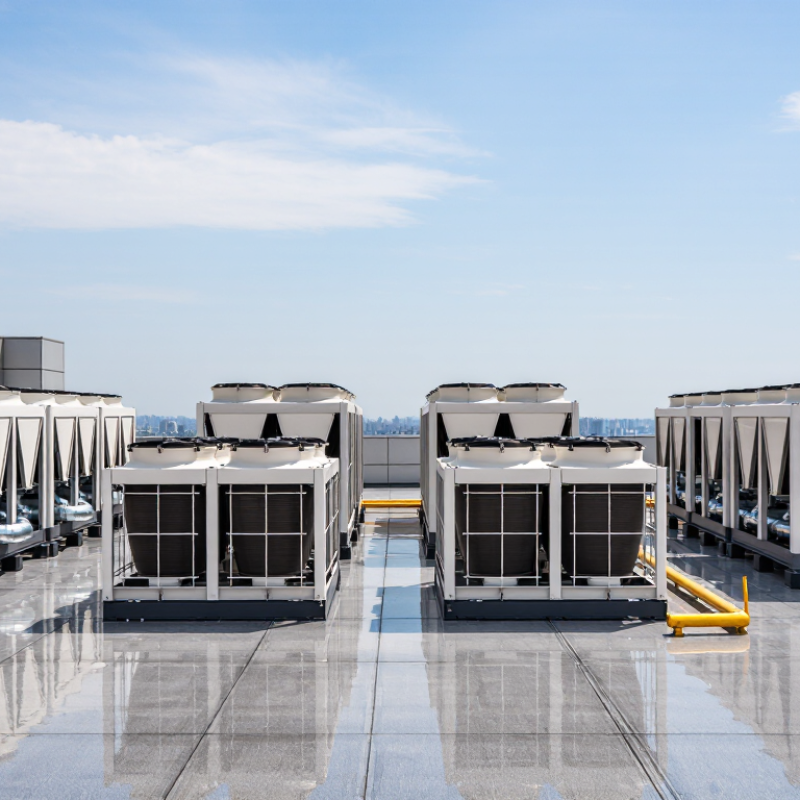
An air-cooled chiller removes heat from water and releases it into the outdoor air. Inside the unit, refrigerant absorbs heat in an evaporator while chilled water circulates to air handlers or process equipment. A compressor raises the refrigerant’s pressure and temperature. Fans then move outdoor air across condenser coils, carrying heat away. The refrigerant cools and cycles back to absorb more heat. It is not magic.
Because the heat goes directly outdoors, these chillers usually need no cooling tower. That can simplify installation, especially where water supply or plant-room space is limited. You may see them serving offices, hotels, clinics, manufacturing areas, and equipment rooms. Their actual suitability depends on the building’s heat load, local climate, and operating schedule. Hot afternoons can reduce capacity, so sizing from a mild-day estimate alone is risky.
Placement matters. Keep the condenser’s air intake and discharge clear; walls or nearby equipment can cause hot air to recirculate. That often means higher energy use and less cooling. Fans may also create noticeable outdoor noise, a detail that is easy to overlook on drawings. Regular coil cleaning and checks for unusual vibration help maintain performance. Even with good maintenance, results vary with weather and installation, so measured operating data is more useful than a brochure rating.
How they work: An air-cooled chiller removes heat from circulating water or another fluid, then rejects that heat to outdoor air through a condenser and fans. These systems are used in offices, hotels, hospitals, data centers, and industrial facilities.
About the chart: The values are reference capacity points, not a ranking or a list of specific products. Actual unit capacities vary by design and application. One refrigeration ton (TR) is approximately 3.517 kW of cooling.
Key Criteria for Evaluating Air-Cooled Chiller Units
What Are the Top 10 Air Cooled Chiller Units?
Key Criteria for Evaluating Air-Cooled Chiller Units
A credible top-ten comparison starts with your building’s actual cooling needs, not the largest capacity on a specification sheet. Check rated capacity at your expected outdoor temperature; performance can fall on very hot days. Compare efficiency across part-load conditions, since chillers often run below full capacity. Look beyond one headline efficiency number. Review compressor staging, fan controls, and the unit’s operating range, then match them to your seasonal load profile.
Noise, footprint, and service access matter too. Picture a chiller beside occupied offices: fan sound may affect comfort, while tight clearance can slow maintenance. Examine coil protection for the local climate, especially where dust or coastal air is common. Confirm that controls can communicate with your building system and provide useful fault alerts. Air-cooled systems avoid cooling-tower water use, but they still need clear airflow and regular coil cleaning. A detail buyers sometimes overlook.
Tips: Ask for performance data at your design conditions, not just standard ratings. Compare installation and maintenance needs alongside purchase cost. Recheck your assumptions with an engineer; early estimates are not always accurate.
Ten Notable Air-Cooled Chiller Units Compared
What Are the Top 10 Air Cooled Chiller Units?
Ten notable air-cooled chiller units are best compared by duty, not by a universal ranking. Compact scroll units suit small buildings with limited plant-room space. Modular scroll units add capacity in stages, though extra connections need careful maintenance. Fixed-speed screw units handle steady industrial loads. Variable-speed screw units adjust output as demand changes, often reducing energy use during partial-load operation. Magnetic-bearing centrifugal units can be efficient at larger capacities, but require skilled commissioning.
Other useful options include fixed-speed centrifugal units for predictable, high-load operation; low-ambient units designed for colder outdoor conditions; heat-recovery units that reuse condenser heat; low-noise units with quieter fans; and process-duty units built for demanding temperature control. Noise matters. A unit beside office windows may need different fan and enclosure choices than one on a remote roof.
Compare published performance at the conditions your site actually faces. Check capacity, entering and leaving water temperatures, outdoor design temperature, sound levels, service clearances, and part-load data. A catalog figure alone can mislead. I would also check coil access and how easily filters, fans, and controls can be serviced. These ten types offer a practical shortlist, but selection still depends on load patterns, climate, installation limits, and maintenance support. Even a strong choice can disappoint when those details are guessed.
How the Top 10 Differ in Capacity, Efficiency, and Design
Air-cooled chillers differ less by appearance than by compressor layout, controls, and operating range. A practical top-ten comparison might include compact scroll units, multi-scroll units, modular systems, variable-speed scroll units, screw chillers, high-ambient screw models, low-noise designs, heat-recovery units, free-cooling-assisted units, and process-duty configurations. These are useful profiles, not a universal ranking.
Compact scroll machines often serve smaller loads, while multi-scroll and modular designs add capacity in stages. That can reduce energy use during mild weather, when the building needs only partial cooling. Larger screw units handle heavier loads and longer operating hours, but need careful airflow clearance around their condenser coils. Variable-speed compressors can adjust output more smoothly. Still, efficiency depends on the full system, not one component.
Design choices matter on site. Low-noise models may use larger fans or sound treatments, while heat-recovery designs redirect rejected heat for water heating. Free-cooling features can help when outdoor air is cool enough, though local climate limits their value. Check rated capacity at the actual design temperature; hot afternoons can reduce available cooling. Compare seasonal efficiency figures under matching test conditions, too. A polished rating can mislead. I would also check service access and part-load performance before choosing; those details are easy to overlook.
How to Select and Maintain an Air-Cooled Chiller
What Are the Top 10 Air Cooled Chiller Units?
The best air-cooled chiller depends on the building’s load, climate, and available space; a generic ranking can mislead. Start with design cooling capacity, then compare seasonal performance rather than full-load efficiency alone. The IEA’s The Future of Cooling report estimates that cooling used about 10% of global electricity in 2016. It projects space-cooling demand could triple by 2050. Efficiency deserves close attention.
Ask suppliers for performance data tested under AHRI Standard 550/590, including part-load ratings such as IPLV. Check that the rating matches your expected entering-water temperatures and outdoor conditions. A chiller near a hot wall or blocked by stored equipment may reject heat poorly. Leave the manufacturer’s specified airflow clear, and confirm that electrical service, noise limits, and maintenance access suit the site. The cheapest quote is not always the least costly choice.
Maintenance is unglamorous. It matters. Keep condenser coils free of dust, leaves, and lint; inspect them more often during pollen season or nearby construction. Check fan motors, electrical connections, refrigerant alarms, and operating pressures against the service manual. Log readings monthly, especially approach temperatures and energy use. A rising trend can reveal fouling or a control issue before comfort suffers. I still find that checklists miss small changes, so compare readings with the unit’s own baseline—not only a general target.