
• Home
  • About
    • jute Bag

      Eco-Chic and Durable – Perfect for Sustainable Living.

      Cashew Nut Bag

      Sustainable jute bag for lasting cashew nut freshness

      Cocoa Bag

      Eco-friendly jute bag for rich cocoa flavor preservation

      Coffee Bag

      Elegant, durable jute bag to keep coffee beans fresh and eco-friendly

      Hazel Nut Bag

      Eco-conscious jute bag for hazelnut freshness and quality

      Shea Nut Bag

      Durable jute bag for fresh, organic shea nuts

      Tote Bag

      Stylish, eco-friendly jute tote for daily essentials

      Wheat Bag

      Sustainable jute bag for optimal wheat freshness

    • Jute Yarn

      Eco-Chic and Durable – Perfect for Sustainable Living.

      Jute Rope

      Sustainable jute bag for lasting cashew nut freshness

      Jute Fabrics

      Eco-friendly jute bag for rich cocoa flavor preservation

      Hessian cloth

      Sustainable Hessian cloth suppliers

  • Products
  • Export Country
  • Blog

Top 10 Car Aroma Diffusers for Wholesale Buyers

A Car Aroma Diffuser is a small product with a demanding job: it must fit neatly in a cabin, release fragrance consistently, and withstand daily handling. Wholesale buyers also need to weigh refill availability, packaging, materials, and clear product specifications. The opportunity is sizeable, but broad market figures need careful interpretation.

Grand View Research estimated the global air freshener market at USD 12.3 billion in 2023 and projected 5.1% annual growth from 2024 to 2030. OICA reported 93.5 million motor vehicles produced worldwide in 2023. These figures offer useful context, not a direct measure of car diffuser demand. Forecasts are not purchase orders. Product-level testing and supplier checks still matter.

This Top 10 guide compares diffuser styles and buying considerations for wholesale sourcing, including vent clips, compact plug-in units, and refillable designs. Look closely at fragrance consistency, leakage protection, fit, and packaging that survives shipping. Small details count. A sample that smells strong in a showroom may perform differently inside a warm parked car. That deserves a second look. The rankings can help buyers frame supplier conversations, but they cannot replace checking specifications, requesting samples, and confirming claims with the manufacturer.
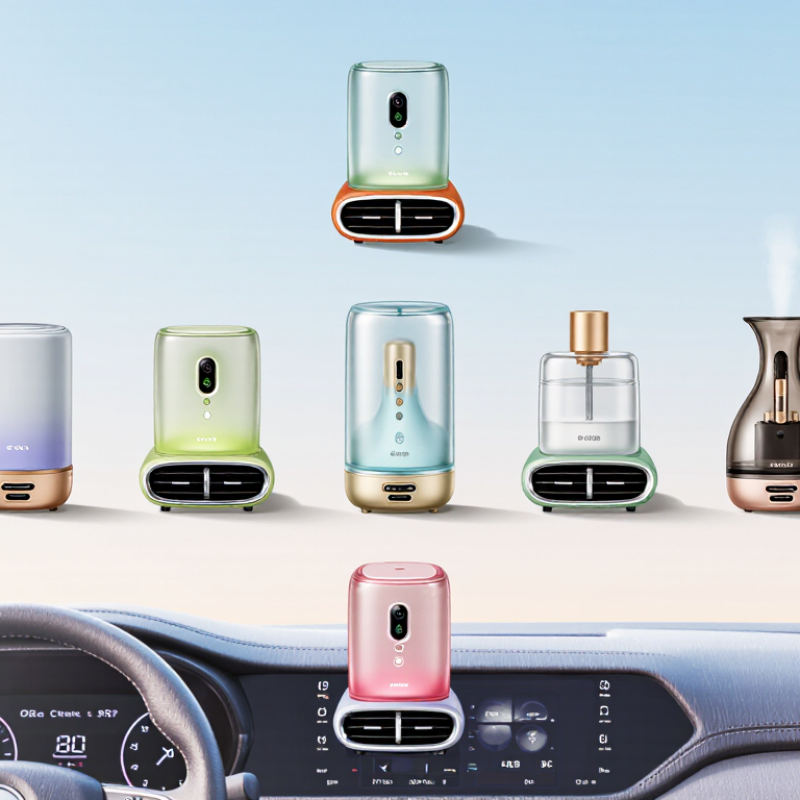
Top 10 Car Aroma Diffusers for Wholesale Buyers

What Car Aroma Diffusers Are and How They Work

Car aroma diffusers are compact devices that release fragrance inside a vehicle. Most use one of three methods: absorbent pads, porous ceramic, or a small powered system. With passive designs, fragrance oil moves through a wick or material and evaporates into the cabin air. Powered models may use airflow or gentle vibration to disperse fine droplets. They do not remove odors; they add scent, so a clean cabin matters.

For wholesale buyers, construction affects performance and customer expectations. A vent-mounted unit should stay secure on rough roads, while a hanging diffuser needs a sealed bottle to reduce leaks. Check refill access, material compatibility, and whether scent intensity can be adjusted. Small details count. A fragrance that seems mild in a showroom may feel strong in a closed car on a warm afternoon. Not always. Product tests should include different cabin temperatures and ventilation settings, not just a desk sample. Also review usage instructions and packaging that protects glass or ceramic parts in transit. No diffuser suits every driver. Some prefer a barely noticeable scent, while others want longer-lasting output. Set realistic claims and verify them with repeat testing.

Key Features Wholesale Buyers Should Compare

When comparing car aroma diffusers, begin with the diffusion method and its effect on scent consistency. Fan-based units spread fragrance through airflow, while waterless designs use replaceable absorbent cores or direct atomization. Ask suppliers how output changes as the vehicle warms up or the reservoir runs low. Neither method is automatically better. The right choice depends on the cabin size, refill plan, and expected retail price.

Check scent controls, power options, and compatibility with common vehicle interiors. A useful device should offer a clear off setting and avoid obvious spills when tilted. Request details on refill capacity, recommended replacement intervals, and whether the unit fits standard cup holders or dashboard mounts. Small details matter. A glossy sample may conceal loose caps or difficult-to-clean residue, so inspect several production samples rather than relying on one.

For wholesale orders, compare material consistency, packaging protection, and quality checks across batches. Ask how units are tested for leakage, charging performance, and repeated use; specific procedures are more useful than broad assurances. Also compare carton dimensions and protective inserts, since cracked housings can erase savings through returns. One imperfect point: quieter operation may come with less noticeable scent output. Test both in a parked car before settling on specifications, and record results under similar conditions.

Main Types of Diffusers for Different Vehicle Needs

Wholesale buyers should match diffuser type to cabin layout, power access, and refill expectations. OICA recorded about 93.5 million motor vehicles produced worldwide in 2023, showing why one format rarely suits every fleet. Vent-clip diffusers use airflow and need no charging, making them practical for compact cars and rental vehicles. Their scent output can weaken when ventilation is low. Fit matters.

USB-powered fan diffusers offer adjustable output and steady circulation. They suit vehicles with accessible ports, though cables may clutter a small console. Ultrasonic water-based models create a soft mist but require refilling and careful placement near electronics. Solid gel or wood-based units need little maintenance, making them useful for delivery fleets; cabin heat can still change scent intensity. The IEA’s Global EV Outlook 2024 reports nearly 14 million electric-car sales in 2023, around 18% of global car sales. That changing vehicle mix makes power-compatible designs worth testing, rather than assuming one format fits all. Not always.

Ten Car Aroma Diffusers Worth Considering for Wholesale

Wholesale buyers can compare ten distinct formats: vent-clip diffusers, USB fan units, compact ultrasonic models, nebulizing devices, wooden passive diffusers, felt-pad holders, hanging glass bottles, solar-powered vent units, cup-holder diffusers, and rechargeable portable models. Each suits a different shopper. Vent clips save space, while cup-holder units need a stable base and enough clearance. Check whether refills are easy to replace. Small details matter.

For a first sample review, test the diffuser in a parked car and inspect the mounting, controls, and refill access. A hanging bottle should seal securely; a water-based model should resist spills during ordinary vehicle movement. Solar models depend on light, so performance may vary behind tinted glass. Ask suppliers for material specifications, packaging dimensions, sample lead times, and consistent refill availability. Then compare noise, cleaning effort, and scent output across several units. A sleek sample can still rattle on a rough road. That detail is easy to miss. Wholesale selection is not perfect science; vehicle layouts and customer preferences differ, so one format may not suit every market.

How to Assess Suppliers, Pricing, and Bulk Orders

When comparing car aroma diffusers for wholesale, assess function before appearance. Ask suppliers for sample units, material details, scent refill options, and clear operating instructions. Check whether clips hold firmly on a vent and whether the diffuser obstructs airflow. Small details matter. Run samples in a parked car for several days. Note scent strength, leakage, rattling, and how easily refills can be replaced. A neat product photo proves little.

Supplier checks should cover production capacity, quality-control steps, and realistic sample and production lead times. Request written specifications and a sample inspection record, then compare them with the units received. Pricing should include the diffuser, packaging, inserts, customization, and shipping—not just the unit price. Ask how costs change at different order quantities and whether replacement parts are available. It is easy to overvalue a low quote; I would still question unusually wide gaps between suppliers.

Before placing a bulk order, confirm the minimum order quantity, payment schedule, packaging dimensions, and delivery window in writing. Agree on what happens if a batch arrives with cracked housings, weak clips, or inconsistent scent output. Inspect a small production sample before approving the full run, where possible. Keep some budget for freight changes or damaged cartons. That cushion can feel excessive, but skipping it may leave buyers with stock they cannot confidently resell.

Shopping Basket