
China Top Cold Plunge Cooling Unit Manufacturers?
Cold water recovery is moving from elite sports facilities into hotels, clinics, gyms, and private homes. The Global Wellness Institute valued the worldwide wellness economy at $5.6 trillion in 2022. Its 2024 monitor projected continued expansion across physical activity, wellness tourism, and related services. That growth creates practical demand for reliable temperature-control equipment. A Cold Plunge Cooling Unit must do more than lower water temperature. It should maintain stable cooling, support clean circulation, limit operating noise, and simplify service.
Industry reports from Grand View Research and Fortune Business Insights describe strong growth in cold plunge and recovery equipment. Their market estimates differ because product categories and regional definitions are not identical. That difference matters. Buyers should not trust one impressive percentage without checking its research method. China has become an important manufacturing base for compact refrigeration systems, pumps, controllers, and stainless-steel bath components. Leading suppliers may offer OEM design, private labeling, export packaging, and technical documentation. Yet factory scale alone proves little.
A practical evaluation should examine cooling capacity, target temperature, water-flow rate, filtration, electrical safety, warranty terms, and replacement-part access. Ask for test records under realistic water volumes, not only laboratory claims. Inspect the compressor sound beside a hotel room or treatment area. Small details reveal manufacturing discipline. China’s top manufacturers may deliver excellent value, but quality can vary between models and production batches. This guide examines supplier capability, certifications, customization, after-sales support, and long-term operating evidence. The goal is not to praise a country or a catalog. It is to identify dependable partners for safe, efficient, and commercially realistic cold-water recovery systems.
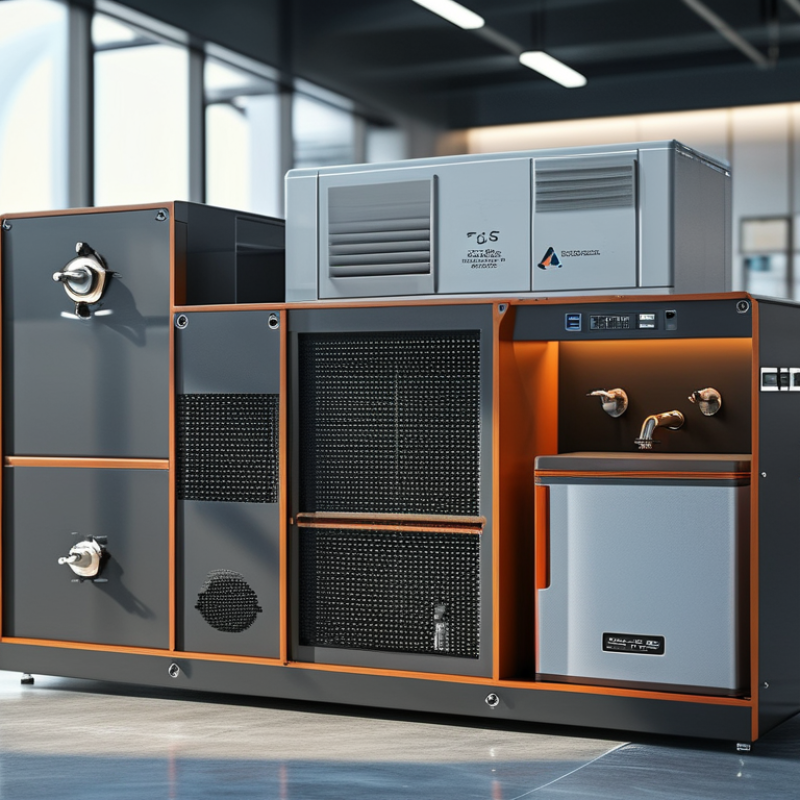
Table of Contents [Hide]
What Is a Cold Plunge Cooling Unit?
China Top Cold Plunge Cooling Unit Manufacturers?
What Is a Cold Plunge Cooling Unit?
A cold plunge cooling unit is a compact refrigeration system for reducing and maintaining water temperature. It usually combines a compressor, heat exchanger, circulation pump, filter, and digital controller. Unlike ice, it provides steady cooling and reduces repeated manual refilling. Many commercial systems operate around 5–15°C, depending on design, insulation, and user tolerance.
The refrigeration cycle matters. Water passes through the heat exchanger, releases heat, and returns to the plunge tub. Good circulation prevents warmer pockets near the surface. In practical installation, poor insulation can raise energy use and slow recovery. That detail is easy to overlook. The Global Wellness Institute reported that the global wellness economy reached $6.3 trillion in 2023. This growth supports wider interest in recovery equipment, but it does not prove every cold plunge claim.
Cooling capacity should match water volume, room temperature, usage frequency, and target temperature. A unit designed for a small home tub may struggle in a busy facility. ASHRAE refrigeration guidance also emphasizes correct heat-load assessment and airflow management. Colder is not always better. Sudden exposure may be uncomfortable or unsuitable for some users, so clear operating guidance remains essential. One practical mistake is choosing by headline temperature alone. Noise, filtration access, electrical safety, and maintenance often determine long-term reliability.
| Evaluation Dimension | What It Means | Typical Technical Information | Why It Matters When Selecting a Manufacturer |
|---|---|---|---|
| Cooling Function | A cold plunge cooling unit removes heat from the water through a refrigeration cycle and transfers that heat to the surrounding air. | Many residential systems are designed to cool water to approximately 3–15°C, depending on the model, ambient conditions, water volume, and insulation. | A clearly stated operating range helps confirm whether the unit is suitable for recovery, wellness, or commercial hydrotherapy applications. |
| Cooling Capacity | The rate at which the system removes heat from the water. | Capacity is commonly expressed in watts (W), kilowatts (kW), BTU/h, or horsepower (HP). Required capacity increases with larger water volume, warmer surroundings, frequent use, and poor insulation. | Manufacturers should provide cooling-capacity data under defined water and ambient temperatures rather than quoting horsepower alone. |
| Water Volume Compatibility | The amount of water the cooling unit can cool effectively. | Compact systems may be intended for small tubs, while higher-capacity systems can support larger residential or commercial plunge pools. Actual performance depends on heat load and usage frequency. | A reliable supplier should state the recommended water volume and explain the assumptions used for the rating. |
| Temperature Control | The control system maintains the selected water temperature. | Common features include a digital temperature display, electronic thermostat, adjustable set point, temperature sensor, and automatic start/stop control. | Accurate controls improve user comfort, reduce unnecessary energy consumption, and help prevent excessive cooling. |
| Circulation Requirement | Water must flow through the heat exchanger for cooling to occur. | Systems may include an integrated circulation pump or require an external pump. Flow specifications are normally provided in litres per minute (L/min) or gallons per minute (GPM). | Flow compatibility affects cooling performance, installation cost, filtration efficiency, and pump reliability. |
| Water Filtration | Filtration removes suspended particles before water enters the pump and heat exchanger. | Typical systems may use a replaceable cartridge filter, strainer, or other mechanical filtration method. Filtration does not replace regular water sanitation. | Manufacturers should specify filter dimensions, replacement intervals, cleaning procedures, and the availability of service parts. |
| Sanitation Compatibility | The cooling unit must tolerate the selected water-treatment method. | Compatibility should be confirmed for the intended use of chlorine, bromine, ozone, or other approved treatment systems. Chemical concentration limits vary by equipment design. | Incorrect chemical levels can damage seals, pumps, heat exchangers, and other wetted components. |
| Heat Exchanger Material | The heat exchanger transfers heat between the water circuit and the refrigerant circuit. | Common materials include titanium, stainless steel, copper, and corrosion-resistant alloys. Material suitability depends on water chemistry and sanitation method. | Titanium heat exchangers are often selected for demanding water-treatment environments, but the complete water circuit must also be corrosion-compatible. |
| Refrigerant | The refrigerant absorbs heat from the water-side heat exchanger and releases it through the condenser. | Possible refrigerants include R32 and R290, subject to product design, local regulations, safety requirements, and installation conditions. | The manufacturer should provide refrigerant type, charge information, safety classification, regulatory compliance, and servicing requirements. |
| Energy Consumption | The electrical power required by the compressor, fan, pump, and control system. | Power input is normally listed in watts (W) or kilowatts (kW). Actual consumption varies with target temperature, ambient temperature, insulation, and operating time. | Comparing rated input with cooling capacity provides a more useful efficiency assessment than comparing electrical power alone. |
| Electrical Configuration | The voltage, frequency, phase, and protection requirements of the unit. | Common market configurations include single-phase electrical supplies such as 220–240 V or 110–120 V, subject to the destination market. | The electrical specification must match the installation site and should include overcurrent protection, grounding, and residual-current protection requirements. |
| Outdoor Installation | The ability of the equipment to operate safely in an outdoor environment. | Important factors include enclosure protection, ventilation clearance, rain protection, operating ambient temperature, drainage, and protection from direct flooding. | Outdoor suitability should be supported by documented installation instructions rather than assumed from appearance alone. |
| Noise Level | The sound produced by the compressor, fan, pump, and vibration during operation. | Noise is generally reported in decibels (dB or dB(A)), but measurement distance and test conditions must also be stated. | Lower noise is especially important for residential installations, hotels, gyms, treatment rooms, and nighttime operation. |
| Safety Protection | Built-in functions that protect users and equipment during abnormal conditions. | Common protections include low-water-flow protection, freeze protection, high-pressure protection, low-pressure protection, overload protection, sensor-fault alarms, and leakage-current protection. | A complete protection list can reduce equipment damage and improve operational safety, but it should not replace correct installation and maintenance. |
| Standards and Compliance | Testing and certification requirements applicable to the destination market. | Depending on the sales region, relevant requirements may include electrical safety, electromagnetic compatibility, refrigerant regulations, energy labeling, and product-market certification. | A manufacturer should provide verifiable technical files, test reports, declarations, labels, and manuals appropriate for the target country. |
| Installation Method | The way the unit connects to the plunge tub or pool. | Typical arrangements use water inlet and outlet connections, flexible hoses or rigid piping, a filter circuit, electrical wiring, and adequate airflow around the condenser. | Clear connection diagrams, recommended pipe sizes, maximum pipe lengths, and service clearances help prevent installation errors. |
| Maintenance Requirements | Routine work needed to preserve cooling performance and service life. | Typical tasks include cleaning the air-side coil, checking water flow, replacing or cleaning filters, inspecting connections, maintaining water chemistry, and preparing the system for freezing conditions. | Simple maintenance procedures and accessible replacement parts reduce downtime and long-term operating costs. |
| Manufacturing Capability | The supplier’s ability to produce consistent units and support custom requirements. | Useful evidence includes documented quality controls, production testing, traceability, sample inspection, packaging standards, and stable component sourcing. | Capability should be evaluated through technical documentation, factory audits, sample testing, and after-sales support rather than marketing claims alone. |
| Warranty and Service | The technical and commercial support available after delivery. | Important terms include warranty duration, covered components, response time, troubleshooting procedures, spare-parts availability, and service responsibilities. | A transparent warranty and accessible technical support are essential for commercial installations and repeated daily use. |