
Choosing a heat-resistant bucket is less about bold claims and more about matching the container to the task. A Heat Resistant Plastic Bucket may suit hot-water cleaning, food preparation, or workshop tasks. Its rating determines whether it fits warm-material handling. Polypropylene and high-density polyethylene are common choices, but heat performance varies by grade, wall thickness, and design. A sturdy rim, secure handle, and stable base matter when a bucket is full. Details matter. Check the manufacturer’s temperature guidance, intended-use notes, and care instructions instead of judging by appearance alone. A bucket can look tough and still soften, warp, or lose strength when exposed to excessive heat. Don’t assume.
This guide compares practical features to consider when shopping for heat-resistant plastic buckets, including capacity, grip, lid options, and ease of cleaning. It also explains why a clearly stated temperature limit is more useful than a vague “heat resistant” label. For food-related tasks, look for documented suitability for that use; not every utility bucket is designed for it. Think about the real setting, too: a bucket used near a hot sink faces different demands from one carrying warm materials across a workshop. No single model fits every job. The right choice depends on the material, temperature, load, and frequency of use. Check product details carefully, and replace a bucket if it shows cracking, distortion, or a weakened handle.
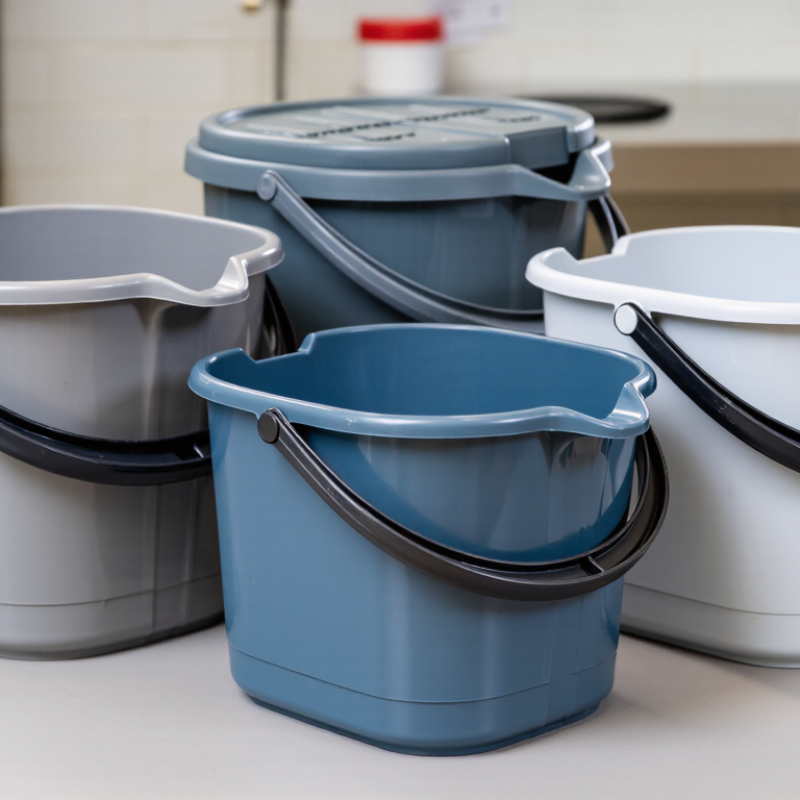
A heat-resistant plastic bucket is not simply a thicker bucket. Its resin, wall design, and stated service-temperature range shape how it performs around heat. Polypropylene and high-density polyethylene are common options, but limits vary by grade. A bucket may tolerate warm contents yet soften during prolonged exposure or under a heavy load. The label matters.
Check the continuous-use temperature, not just a brief peak rating. Ask what conditions the rating assumes: an empty bucket, room-temperature surroundings, or no mechanical stress. Hot liquid pushes against the base and seams, while carrying adds strain. Leave some headspace and handle the bucket carefully. Small details count.
Heat can also affect a bucket unevenly. Set it on cold concrete, and one side may cool faster; place it on a hot surface, and the base may warp. Avoid sudden temperature changes unless the supplier confirms suitability. Look for whitening, cracks, warped walls, or softened handles. For food use, verify food-contact suitability separately; heat resistance alone does not establish it. I would not treat one temperature number as a guarantee. The actual contents, exposure time, and load all matter.

Heat-resistant plastic buckets are selected by resin and rated service temperature, not thickness alone. Polypropylene (PP) often tolerates warmer contents than many everyday polyethylene (HDPE) buckets. Actual performance depends on the resin grade, wall shape, and load. Check the stated temperature limit, and see whether it applies to brief contact or continuous use.
Heat ratings can be less straightforward than they look.
A molded rating and clear product specifications are more useful than a bucket’s sturdy appearance. Hot liquid may soften the walls, while a heavy load can make a softened bucket flex or tip. Check that the handle and rim are rated for the intended temperature and weight, too.
For example, a bucket filled with hot wash water needs different consideration from one used for warm storage. I would not assume that “heat resistant” means suitable for boiling liquid or direct heat.
Still, labels can leave questions unanswered, so confirm the intended use with the supplier before buying.
Heat-resistant plastic buckets are useful wherever warm liquids or repeated hot-water rinsing are part of the job. In kitchens, they can carry warm wash water, collect food scraps, or hold ingredients when the bucket is specifically rated for food contact. A smooth interior is easier to rinse, while a sturdy handle helps when the bucket is full. Not every bucket qualifies.
Cleaning crews may use them for diluted detergents and warm mop water. In workshops, they can hold warm rinse water or washable tools, provided the chemical and temperature ratings match the task. A bucket that handles a quick rinse may soften during prolonged heat exposure. That distinction is easy to miss.
For gardening and maintenance, these buckets can transport warm water, mix suitable materials, or gather damp debris. Check the marked temperature range and intended use before filling one; “heat-resistant” does not mean suitable for boiling liquids. Keep hot contents below the rim, and set the bucket on a stable surface. Plastic can flex. I’d also inspect the handle joints after frequent heavy use, since small cracks are easy to overlook.
Top Heat Resistant Plastic Buckets for Sale
Choosing the right heat-resistant plastic bucket starts with the material and the job. Check the stated operating temperature, not just a phrase like “heat resistant.” Hot water, oils, cleaning solutions, and sunlight can affect plastics differently. A bucket used near a warm process may need different properties from one carrying freshly heated liquid.
Consider capacity, wall thickness, handle design, and cleaning needs. A full 20-liter bucket can become awkward quickly, especially when its handle has narrow edges. Grip matters. Look for a stable base, and choose a lid only if storage or splash control is important. Confirm that the bucket suits the liquid you plan to hold. Avoid sudden temperature changes; thermal shock can warp or crack some plastics. I have seen buyers focus on temperature alone, then overlook weight and comfort. That can be a costly mistake.
Tips: Compare the stated temperature range with your actual use, including brief peaks. Check the bucket while empty and in use. Watch for softening, cracks, or discoloration. If product details are unclear, ask for material and care guidance before buying.
Compare representative continuous-use temperature ranges for common bucket plastics.
Polypropylene (PP) generally tolerates higher continuous temperatures than high-density polyethylene (HDPE). These are indicative material-level ranges, not certified bucket ratings; actual limits depend on the product, load, and exposure time. Check the manufacturer's specifications before using a bucket with hot contents.
When comparing heat-resistant plastic buckets, start with the stated temperature range. Check whether it describes continuous use or brief contact with hot contents. Those limits differ. A bucket rated for warm water may not suit freshly boiled liquid. Read the product specifications, and ask for test details if the intended use is demanding.
Material and construction matter too. Compare wall thickness, base strength, handle attachment, and resistance to sudden temperature changes. A thick wall can feel reassuring, but it does not guarantee better performance. Inspect the rim and handle joins for rough edges or weak spots. Small details count. Confirm that the plastic is compatible with the contents and cleaning process, especially if detergents or repeated washing are involved.
Think about how the bucket will be used on an ordinary workday. Will it be carried while full, stacked, or exposed to heat for several hours? Choose a capacity that remains manageable when loaded. Also check whether the bucket is suitable for food contact when that is relevant; heat resistance alone does not confirm this. I have seen buyers focus on the highest temperature figure and overlook handling comfort. That comparison can be misleading. No single specification tells the whole story, so match the bucket to the actual task and review its care instructions before purchase.
| Bucket Material | Typical Temperature Guidance | Heat-Related Strengths | Limitations to Check | Common Fit | Buying Factors to Compare |
|---|---|---|---|---|---|
| Polypropylene (PP) | Many grades are used around 100°C in continuous service; short-term limits may be higher, depending on the grade and load. | Often a practical choice for warm contents; lightweight and generally resistant to many household acids and alkalis. | Can soften or deform under heat, weight, or prolonged stress. Not every PP bucket is suitable for hot filling. | General-purpose handling and applications involving moderately warm contents, when the supplier confirms suitability. | Ask for the exact resin grade, hot-fill temperature, exposure time, filled-load limit, and whether the lid and handle share the same rating. |
| High-density polyethylene (HDPE) | Many grades are used up to about 80°C in continuous service; brief-use limits vary by product and conditions. | Tough, lightweight, and commonly used for utility and storage containers. | Typically loses stiffness sooner than heat-oriented grades; prolonged hot loading can lead to distortion. | Cool-to-warm storage and general utility use where high-temperature exposure is not sustained. | Compare the stated maximum fill temperature, wall thickness, stacking requirements, and resistance to the intended contents. |
| Heat-stabilized PP | Temperature capability is grade-specific; the term “heat-stabilized” alone does not establish a safe operating temperature. | May retain useful properties better than a standard grade under elevated-temperature conditions. | Performance depends on formulation, bucket design, duration, and mechanical load; confirm documented test data. | Repeated warm-use applications that need a specified, verified temperature rating. | Request a technical data sheet and written confirmation for the actual temperature, contact time, and filled weight. |
| Glass-filled polypropylene | Depends on the specific formulation; published resin data may not match a finished bucket’s safe-use limit. | Glass reinforcement can improve stiffness and reduce deformation compared with unfilled PP. | May be heavier or more brittle in some designs; reinforcement does not automatically make a bucket suitable for hot liquids. | Specialized applications requiring greater rigidity, where the finished container is rated for the intended use. | Check impact resistance, reinforcement percentage, handle design, food-contact status, and the finished-product temperature rating. |
| Other engineering plastics | Some engineering resins can tolerate higher temperatures, but suitability varies widely by resin and product design. | Can provide higher heat performance for specialized requirements when supported by product-specific testing. | May cost more, be less readily available, or be unnecessary for routine bucket use. | Special-purpose applications with demanding, clearly defined temperature requirements. | Compare verified service limits, chemical compatibility, certification, availability, and total cost rather than relying on resin name alone. |
| Important selection note | Temperature figures are general guidance for common resin families, not guaranteed ratings for every bucket. Heat resistance depends on resin grade, wall thickness, design, duration, contents, and applied load. Before purchase, obtain the manufacturer’s rating for the complete bucket, lid, and handle under your intended conditions. Do not use a plastic bucket for boiling liquids, microwave heating, or food contact unless the product is expressly rated for that purpose. | ||||
We are the most reliable and proficient jute goods manufacturer & supplier that helps businesses or individuals with various exportable agricultural commodities biz and jute goods by shipping them worldwide. Our right-time service ensures that whatever color and size of jute product you need, we can make it happen anytime and anywhere! Let’s keep our earth safer to live in!
Important link
Address
Bangladesh Address:
Fair Plaza (9th Floor), Plot : 3C, Section : 01, Mirpur, Dhaka:1216
UK Office:
242 Manor Road, Droylsden, Manchester, M43 6JD, United Kingdom.
Let's Talk
We are the most reliable and proficient jute goods manufacturer & supplier that helps businesses or individuals with various exportable agricultural commodities biz and jute goods by shipping them worldwide. Our right-time service ensures that whatever color and size of jute product you need, we can make it happen anytime and anywhere! Let’s keep our earth safer to live in!
Bangladesh Address:
Fair Plaza (9th Floor), Plot : 3C, Section : 01, Mirpur, Dhaka:1216
UK Office:
242 Manor Road, Droylsden, Manchester, M43 6JD, United Kingdom.