
• Home
  • About
    • jute Bag

      Eco-Chic and Durable – Perfect for Sustainable Living.

      Cashew Nut Bag

      Sustainable jute bag for lasting cashew nut freshness

      Cocoa Bag

      Eco-friendly jute bag for rich cocoa flavor preservation

      Coffee Bag

      Elegant, durable jute bag to keep coffee beans fresh and eco-friendly

      Hazel Nut Bag

      Eco-conscious jute bag for hazelnut freshness and quality

      Shea Nut Bag

      Durable jute bag for fresh, organic shea nuts

      Tote Bag

      Stylish, eco-friendly jute tote for daily essentials

      Wheat Bag

      Sustainable jute bag for optimal wheat freshness

    • Jute Yarn

      Eco-Chic and Durable – Perfect for Sustainable Living.

      Jute Rope

      Sustainable jute bag for lasting cashew nut freshness

      Jute Fabrics

      Eco-friendly jute bag for rich cocoa flavor preservation

      Hessian cloth

      Sustainable Hessian cloth suppliers

  • Products
  • Export Country
  • Blog

Top 10 Onion Rings Cheese Types for Global Buyers

Global buyers are paying closer attention to cheese performance in frozen and foodservice onion rings. The opportunity is clear, but product selection is not simple. Melting speed, stretch, oil release, browning, salt, and cold-chain stability can change the final bite.

The USDA Foreign Agricultural Service’s Dairy: World Markets and Trade reports continuing global growth in cheese production and consumption. The OECD-FAO Agricultural Outlook 2024–2033 also identifies expanding dairy demand across developing markets. However, neither report measures Onion Rings Cheese as a standalone category. That gap matters. Buyers must interpret broader cheese data carefully, rather than treating every market forecast as directly applicable.

Food scientist Dr. Paul Kindstedt, author of Cheese and Culture, describes cheese as “a concentrated form of milk.” That simple view has practical meaning here. A dense mozzarella may create a long stretch, while processed cheese can deliver smoother melting and stronger consistency. Cheddar can add color and sharpness, but excessive oil may weaken the coating.

Small details matter. A ring should crackle first, then release a controlled cheese pull. Not a greasy leak. Not a rubbery center.

This guide compares ten cheese types for international purchasing teams. It considers flavor, melt behavior, processing reliability, packaging needs, and cost sensitivity. Some conclusions remain imperfect because supplier formulas differ widely. Even the same cheese name can perform differently across factories.

Real testing is still necessary. Buyers should request samples, review technical sheets, and conduct fryer trials before approving a global specification.
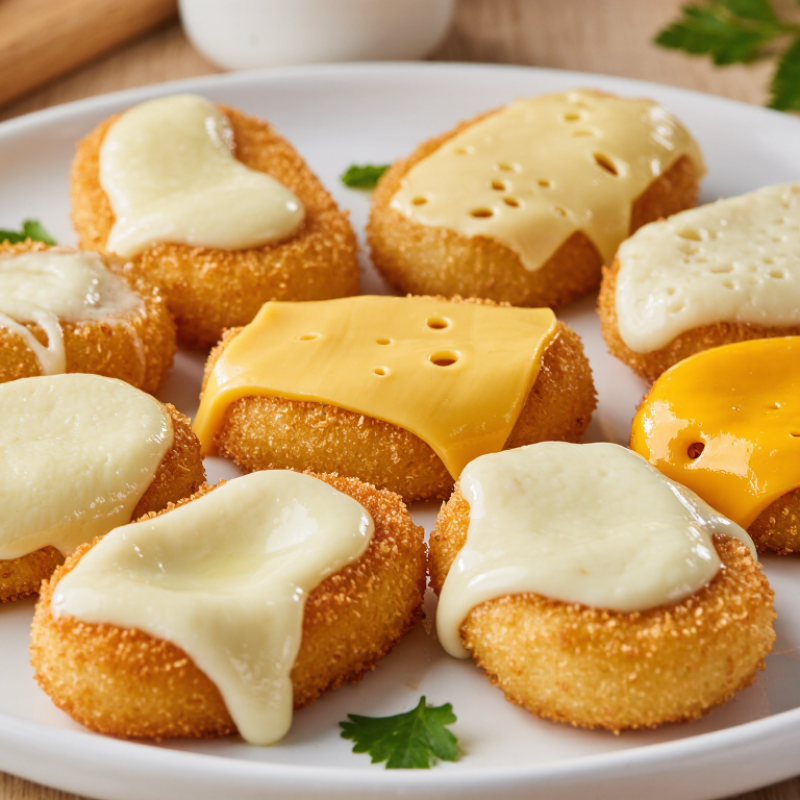
Top 10 Onion Rings Cheese Types for Global Buyers

What Makes a Cheese Type Suitable for Onion Rings

What makes a cheese suitable for onion rings? In kitchen trials, melt control matters more than impressive flavor. The cheese should soften evenly without flooding the coating with oil. Texture matters. A balanced moisture level helps the filling stay creamy while the outer crust remains crisp.

Cheddar, mozzarella, provolone, gouda, Monterey Jack, and mild Swiss cheese can perform well when their formulas are consistent. Mozzarella offers stretch, but excessive stretch can pull the onion from the crust. Cheddar brings stronger flavor and attractive browning, yet aged varieties may become greasy. Gouda melts smoothly, while Swiss cheese adds nuttiness but can create small holes during heating. A blend may improve texture, although blending can make quality control less predictable.

For global buyers, cheese specifications deserve close attention. Review moisture, fat, melting behavior, salt level, particle size, and storage requirements. A frozen cheese filling should thaw without becoming watery or rubbery. Test it in the actual batter, oil temperature, and cooking time. Small changes matter. In one trial, a cheese that melted perfectly alone leaked after coating because the onion released moisture. That result was easy to miss. Suppliers should also provide clear ingredient declarations, allergen information, lot traceability, and documented food-safety controls. Flavor preferences differ across markets, so a mild profile may travel better, but it should not become bland. Loose assumptions can create expensive reformulation work.

How Cheese Varieties Are Classified for Global Buyers

Top 10 Onion Rings Cheese Types for Global Buyers

Cheese for onion rings is classified by moisture, aging, milk source, texture, and melting behavior. These factors help global buyers compare products beyond familiar names. Fresh and soft cheeses include cream cheese and young mozzarella. They provide moisture and a smooth bite, but may release water during frying.

Semi-soft varieties include Monterey Jack, pepper Jack, and young provolone. They melt quickly and create visible cheese stretch.

Semi-hard cheeses include cheddar, Gouda, and Swiss cheese. Their balanced moisture supports a stronger flavor and cleaner filling structure. Hard cheese, such as Parmesan, offers sharp taste but limited stretch. It works better as a seasoning blend or outer coating.

Blue cheese adds a bold aroma and needs careful dosage. Processed cheese can deliver consistent melting, although its ingredient declaration requires close review. Milk type also matters, especially for buyers managing dietary or regional requirements. Definitions can vary between markets.

Tips: Request moisture, fat, salt, melting-point, and storage data from suppliers. Test each cheese inside the same onion size and batter thickness. Check the filling after three minutes at the target frying temperature. Watch for leakage, browning, and oil absorption. A cheese that performs well in one kitchen may fail in another. That is an easy detail to underestimate. Also confirm allergen statements, cold-chain conditions, and local labeling rules before purchase.

Top 10 Cheese Types Used in Onion Ring Production

Onion ring production depends heavily on cheese performance. The right variety must melt evenly, cling to the onion, and remain stable during frying. USDA Economic Research Service data places U.S. per-capita cheese availability near 40 pounds in 2023, showing the scale of consumer familiarity with cheese-based foods. However, global buyers should assess texture, cost, local supply, and labeling rules together.

Mozzarella offers clean stretch and mild flavor, making it suitable for broad markets. Cheddar provides stronger taste and an attractive golden color. Monterey Jack melts smoothly with moderate saltiness. Provolone adds a firmer pull and a subtle smoky note. Gouda brings sweetness and a glossy surface. Gruyère delivers deeper roasted flavor, but its cost can limit volume production. Swiss cheese creates visible holes and a distinctive aroma. Pepper Jack adds heat, although spice levels require careful market testing. Blue cheese creates a sharp premium profile, but it may not suit every consumer. Processed cheese blends provide consistent melting and portion control, though some buyers may question their ingredient perception.

Texture matters. A stable coating usually needs controlled moisture and particle size. The International Dairy Federation’s World Dairy Situation reports continuing pressure on dairy costs, energy, and supply chains, so formulation efficiency remains important. My practical warning is simple: a laboratory melt test cannot predict every fryer. Batter thickness, oil temperature, and onion moisture can change the result. A test batch may disagree. Buyers should compare at least three cheese options under real production conditions before approving a final specification.

How to Compare Flavor, Texture, Melting, and Frying Performance

Top 10 Onion Rings Cheese Types for Global Buyers

How to Compare Flavor, Texture, Melting, and Frying Performance

Global buyers should compare cheese after frying, not from a cold sample. No cheese wins every test. Mild mozzarella and Monterey Jack melt evenly and create a clean, stretchy bite. Cheddar delivers sharper flavor, while gouda offers sweetness and a smooth finish. Provolone, Swiss, pepper jack, blue cheese, parmesan, and smoked cheese provide more distinctive profiles. However, strong flavors may not suit every regional market.

Melting performance depends on moisture, fat, protein, and cut size. High-moisture cheeses can become loose and leak through the coating. Lower-moisture options often hold their shape better, but they may produce less stretch. Test each sample inside the same onion variety and batter thickness. Measure the center temperature and inspect the cheese after 60 to 90 seconds. Look for controlled melt, a crisp shell, and no oily puddle. Texture changes quickly.

Frying performance also depends on oil temperature, coating adhesion, and frozen storage. A practical trial should record oil temperature, cooking time, yield, and breakage rate. Buyers should request samples in several formats, including slices, shreds, or portions. Packaging and cold-chain conditions can alter the final result. I once preferred a bold cheese during tasting, but it overwhelmed the onion after frying. That mistake showed me that flavor balance matters more than strength. Supplier data helps, but kitchen testing remains essential.

Top 10 Onion Rings Cheese Types for Global Buyers - How to Compare Flavor, Texture, Melting, and Frying Performance
Rank Cheese Type Typical Moisture Flavor
Intensity
Melt
Performance
Stretch Browning Frying
Containment
Flavor and Texture Profile Purchasing and Processing Considerations
1 Low-Moisture Mozzarella 45–52% 2/5 5/5 5/5 2/5 3/5 Mild dairy flavor, smooth melt, high elasticity, and a pronounced cheese pull. Best for highly stretchy fillings. Use a firm cut, controlled portion size, and complete breading to reduce leakage during frying.
2 Mild Cheddar 35–39% 3/5 4/5 3/5 4/5 4/5 Balanced buttery, milky, and slightly tangy flavor with a rich melt and attractive golden browning. A versatile choice for retail and foodservice. Mild or medium grades generally melt more evenly than aged cheddar.
3 Processed Cheese 40–50% 2/5 5/5 2/5 2/5 5/5 Smooth, uniform, creamy texture with a mild savory profile and very consistent melt. Emulsifying salts help limit oil separation and improve frying stability. Confirm local labeling, compositional, and additive requirements.
4 Monterey Jack 37–40% 2/5 4/5 4/5 3/5 3/5 Mild, buttery flavor, soft bite, creamy melt, and moderate stretch without dominating the onion. Suitable for blended cheese fillings. Its relatively soft body requires cold handling and accurate portion control.
5 Young Gouda 41–44% 3/5 4/5 3/5 3/5 3/5 Mildly sweet, buttery, and creamy, with a smooth melt and a soft, cohesive interior. Young Gouda is preferable to aged Gouda for melting applications. Check firmness and moisture consistency between lots.
6 Provolone 39–43% 3/5 4/5 4/5 3/5 4/5 Elastic, savory, and slightly tangy, offering a stronger cheese character than mozzarella. Good for premium onion rings that need stretch and flavor. Mild provolone is easier to melt uniformly than sharp varieties.
7 Emmental 35–38% 3/5 4/5 3/5 4/5 3/5 Nutty, lightly sweet flavor, smooth melt, and visible browning with a moderately elastic texture. Works well in premium or European-style products. Larger holes can make portioning and sealing more difficult.
8 Pepper Jack 37–40% 4/5 4/5 3/5 3/5 3/5 Creamy, buttery cheese flavor with chili heat and visible pepper pieces for a spicy positioning. Verify pepper distribution, heat level, and piece size. Inclusion particles may affect cutting, sealing, and filling flow.
9 Halloumi 45–50% 3/5 2/5 1/5 4/5 5/5 Firm, salty, and pleasantly chewy; it browns and grills well while retaining its shape. Ideal for products where shape retention is more important than cheese pull. Control salt level and slice thickness for consumer acceptance.
10 Gruyère 34–38% 4/5 4/5 2/5 4/5 3/5 Complex nutty, savory flavor with a rich melt and strong premium positioning. Best suited to higher-value products or blends. Its lower moisture and firm body can improve handling but increase ingredient cost.

Comparison key: Scores are indicative processing ratings from 1 (low) to 5 (high), based on typical natural or processed cheese characteristics. Actual results vary with age, moisture, fat content, pH, salt level, cut size, breading system, oil temperature, and frying time. For commercial validation, confirm melt point, oil separation, leakage rate, and finished-product texture through supplier samples and pilot trials.

Key Sourcing Factors for International Cheese Buyers

Top 10 Onion Rings Cheese Types for Global Buyers

Cheese selection for onion rings starts with melting behavior, not popularity.

Cheddar, mozzarella, provolone, gouda, Monterey Jack, Swiss, blue cheese, Parmesan, pepper jack, and Colby each create different results. Cheddar offers strong color and flavor. Mozzarella gives stretch but may taste mild. Parmesan adds savory notes, yet its low moisture can reduce coating adhesion. Blue cheese is distinctive, although its flavor may divide customers.

International buyers should request technical data before approving samples.

Check moisture, fat content, salt level, pH, shred size, and melting temperature. These details affect filling stability, oil absorption, and bite. A cheese that melts smoothly in a test kitchen may leak during high-volume frying.

Small trials matter. Fry samples at the target temperature and holding time.

Record appearance after five and fifteen minutes.

Supply reliability also deserves close review.

Ask about production capacity, minimum order quantities, shelf life, packaging strength, and cold-chain controls. Temperature records should accompany shipments when required. Verify allergen declarations, ingredient lists, country-specific labeling rules, and accepted food-safety certificates. Requirements differ across markets.

Do not rely on an old specification sheet. A perfect sample can hide inconsistent batches. Buyers should compare at least two production lots, not only one carefully prepared sample. That extra check may slow purchasing, but it exposes texture and flavor changes before a large shipment.

Article Source:

Shopping Basket