
• Home
  • About
    • jute Bag

      Eco-Chic and Durable – Perfect for Sustainable Living.

      Cashew Nut Bag

      Sustainable jute bag for lasting cashew nut freshness

      Cocoa Bag

      Eco-friendly jute bag for rich cocoa flavor preservation

      Coffee Bag

      Elegant, durable jute bag to keep coffee beans fresh and eco-friendly

      Hazel Nut Bag

      Eco-conscious jute bag for hazelnut freshness and quality

      Shea Nut Bag

      Durable jute bag for fresh, organic shea nuts

      Tote Bag

      Stylish, eco-friendly jute tote for daily essentials

      Wheat Bag

      Sustainable jute bag for optimal wheat freshness

    • Jute Yarn

      Eco-Chic and Durable – Perfect for Sustainable Living.

      Jute Rope

      Sustainable jute bag for lasting cashew nut freshness

      Jute Fabrics

      Eco-friendly jute bag for rich cocoa flavor preservation

      Hessian cloth

      Sustainable Hessian cloth suppliers

  • Products
  • Export Country
  • Blog

Top Canopy Outdoor Suppliers for Global Buyers

Global buyers are rethinking outdoor shelter as demand becomes more diverse, seasonal, and specification-driven. The U.S. Bureau of Economic Analysis reported that outdoor recreation generated $639.5 billion in U.S. value added during 2023. That figure represented 2.3% of the national GDP. It includes recreation services, equipment, travel, and related manufacturing.

The opportunity is substantial. The Outdoor Industry Association’s 2024 Outdoor Participation Trends Report recorded 175.8 million U.S. participants in 2023. This is not a global measurement, but it shows the scale of potential demand. For importers, a reliable Canopy Outdoor supplier must offer more than attractive photographs. Buyers should examine fabric denier, UV resistance, waterproof ratings, frame alloy, wind testing, replacement parts, and packaging protection. A canopy may look excellent in a showroom, then fail beside a windy beach. Small details matter.

Supplier selection also requires evidence. ISO-certified production systems, independent test reports, factory audits, and traceable material records can reduce avoidable risk. Grand View Research and similar market studies indicate continued growth across outdoor recreation and shelter-related categories, although forecasts vary by definition and region. That uncertainty deserves attention. No single report explains every market. Currency movements, port delays, climate conditions, and local safety requirements can change the final cost. Experienced buyers should request samples, inspect stitching, test assembly time, and confirm after-sales support before placing large orders. A low quotation is not always a low total cost. Sometimes, it hides a future problem. This guide introduces leading canopy suppliers for global buyers, focusing on practical capability, documentation, durability, and transparent communication rather than marketing claims alone.
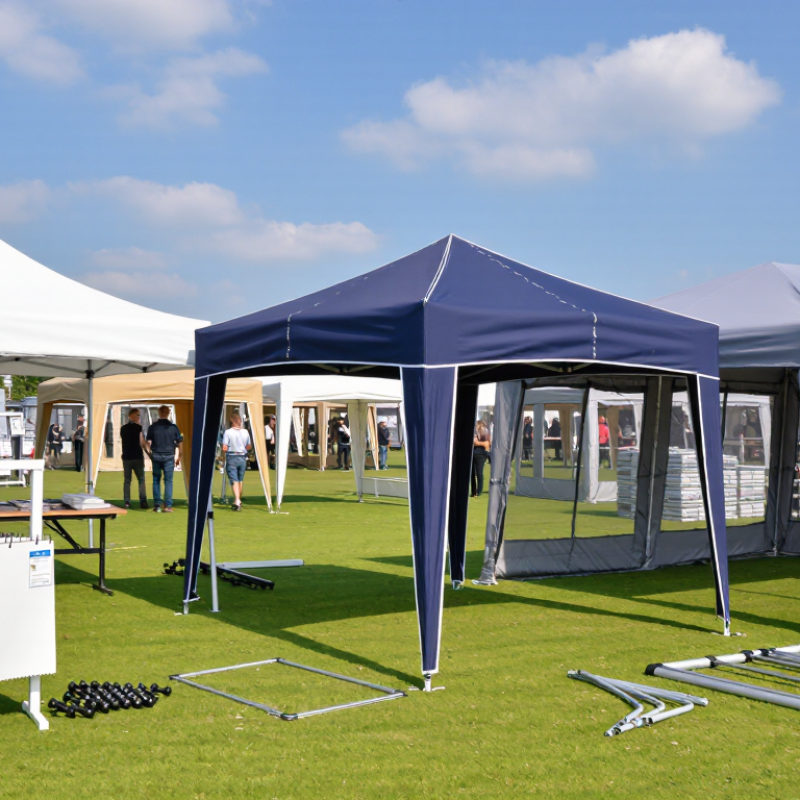
Top Canopy Outdoor Suppliers for Global Buyers

Canopy Outdoor Suppliers: Product Categories and Market Scope

Top Canopy Outdoor Suppliers for Global Buyers

Canopy outdoor suppliers serve several product categories: pop-up canopies, gazebo structures, patio shelters, event tents, and commercial shade systems. Materials vary from polyester fabric and aluminum frames to UV-resistant PVC and galvanized steel. According to Grand View Research’s Outdoor Furniture Market Report 2024–2030, the global outdoor furniture market reached about USD 19.8 billion in 2023. This wider market signals demand for outdoor comfort, but canopy suppliers also serve hospitality, exhibitions, sports venues, gardens, and temporary retail spaces.

Market scope differs by buyer type. Residential customers often need compact, waterproof canopies with simple assembly. Hotels and event contractors usually require larger spans, replacement covers, wind ratings, and installation support. Suppliers should provide fabric test reports, frame specifications, packaging details, and documented quality inspections. ISO-related quality systems can help, but certification alone does not prove field performance. A perfect supplier does not exist. Even strong samples may hide weak stitching or delayed spare parts.

Tips: Request one production sample. Check seams after rain. Confirm packed dimensions, load limits, warranty terms, and replacement-part availability. Review third-party test evidence, not only catalogue claims. The World Bank’s Logistics Performance Index shows that customs reliability and shipment tracking strongly affect international trade efficiency. Therefore, compare lead times and delivery records before choosing the lowest quotation.

How to Evaluate Canopy Suppliers for International Purchasing

Top Canopy Outdoor Suppliers for Global Buyers

How to Evaluate Canopy Suppliers for International Purchasing

For global buyers, selecting a canopy supplier requires more than comparing catalogue prices. The right evaluation begins with product purpose, destination climate, and expected installation frequency. Ask for exact fabric weight, frame dimensions, wind guidance, water resistance, and replacement-part availability. Request recent production photos, inspection records, and a sample before discussing large volumes. A sample reveals stitching, pole fit, seams, packaging, and instructions. Small details matter.

Supplier credibility should be checked through factory documentation, traceable quality procedures, and clear communication. Confirm whether the quoted company manufactures products or coordinates outside production. Review material specifications against independent test reports when performance claims affect purchasing decisions. Ask how defects are recorded, corrected, and reported before shipment. A reliable supplier explains limitations instead of promising impossible performance. That honesty is valuable.

International purchasing also depends on consistent commercial terms. Compare minimum order quantities, lead times, packaging strength, payment stages, and delivery responsibilities. Use a written specification sheet with drawings, color references, tolerances, and approved materials. It reduces confusion across time zones. For larger orders, arrange a pre-shipment inspection or independent quality check. I would not rely on polished emails alone. One overlooked issue can be expensive. Even experienced buyers miss details when deadlines create pressure. Leave room for a second sample review. This step may feel slow.

Top Canopy Outdoor Suppliers for Global Buyers - How to Evaluate Canopy Suppliers for International Purchasing
International Canopy Supplier Evaluation Scorecard and Purchasing Data Framework
Evaluation Dimension Weight Recommended Purchasing Benchmark Required Supplier Evidence International Buyer Assessment Method Priority
Product Configuration 10% Confirm canopy type, footprint, peak height, sidewall configuration, frame material, roof design, color options, and packed dimensions before quotation. Dimension drawings, technical datasheets, component list, product photographs, and approved sample. Compare the quotation against the final specification sheet. Record dimensional tolerances and permitted substitutions in the purchase contract. High
Structural Safety and Wind Performance 15% Require test-based wind performance information for the complete configuration, including frame, roof, sidewalls, anchors, and ballast. Do not rely only on a claimed wind-speed figure. Independent test report, engineering calculation, installation manual, anchoring plan, and defined test conditions. Check whether the test configuration matches the purchased size and whether the stated wind value applies to the complete installed structure. High
Frame Material and Corrosion Resistance 10% Verify frame alloy or steel grade, tube dimensions, wall thickness, joint design, surface treatment, and corrosion-protection method. Material declaration, tube specifications, coating information, salt-spray or corrosion-test report where applicable, and factory inspection records. Use third-party inspection or random sampling to check tube dimensions, weld quality, coating uniformity, and joint fit. High
Fabric Performance 12% Specify fabric composition, mass per unit area, tear strength, tensile strength, seam strength, UV resistance, colorfastness, and water resistance according to the intended use. Fabric test reports, batch traceability, material composition declaration, seam-construction details, and production sample. Test samples from the actual production batch. Compare the results with the agreed specification rather than a general catalog value. High
Flame-Resistance Compliance 12% Identify the destination-market requirements before production. Temporary structures may require fire-performance documentation under local building, event, or fire-safety rules. Current laboratory report, material identification, test method, report scope, and declaration of conformity where required. Confirm that the report covers the exact fabric, coating, color, and construction supplied. Check validity and laboratory accreditation. High
Chemical and Product-Safety Documentation 8% Screen for applicable requirements concerning restricted substances, heavy metals, plasticizers, formaldehyde, packaging materials, and product labeling. Material safety information, restricted-substance test report, supplier declarations, packaging specification, and country-specific compliance documents. Use a destination-country compliance checklist and request testing from an independent laboratory for higher-risk materials or markets. High
Quality Management System 8% Prefer a documented quality system with incoming-material inspection, in-process controls, final inspection, nonconformance handling, and corrective-action records. Quality manual, inspection plan, calibration records, internal audit summary, corrective-action examples, and certification if available. Audit the production site or appoint an inspection agency. Verify that documented procedures are used on the actual production line. High
Production Capacity and Scalability 7% Assess monthly capacity, sewing-line capability, frame-processing capacity, subcontracting exposure, workforce stability, and peak-season production plans. Capacity statement, production schedule, equipment list, staffing plan, and previous production records with confidential details removed. Compare available capacity with the required order quantity and delivery window. Include a contingency plan for urgent replenishment. Medium
Sample Approval and Change Control 6% Require a signed golden sample or approved digital specification. Any change to fabric, frame, accessories, packaging, or subcontractor should require written approval. Approved sample, bill of materials, inspection checklist, change-control procedure, and pre-production sample record. Retain a reference sample and compare pre-shipment goods against it using measurable acceptance criteria. High
Packaging and Export Readiness 5% Packaging should protect fabric and coated surfaces from moisture, abrasion, compression, and contamination during international transport. Packing list, carton dimensions, gross and net weights, pallet plan, packaging photographs, shipping marks, and moisture-protection method. Calculate container utilization and landed logistics cost. Conduct a packaging-drop or vibration review for fragile components where appropriate. Medium
Incoterms and Landed-Cost Transparency 4% Request comparable quotations under a clearly stated Incoterms® 2020 rule, currency, port or place, payment terms, tooling charges, spare parts, and export documents. Formal quotation, cost breakdown, commercial invoice format, packing list sample, and stated assumptions. Compare total landed cost rather than unit price alone, including freight, duty, inspection, insurance, inland delivery, and compliance expenses. Medium
Lead Time and Delivery Reliability 5% Separate sample lead time, material-procurement time, production time, inspection time, and transit time. Use a written shipment date and escalation process. Production schedule, capacity reservation, historical on-time-delivery data, order milestones, and delay-response procedure. Measure on-time delivery against the confirmed ship date over multiple orders. Do not treat quoted lead time as historical performance. High
Warranty, Spare Parts, and After-Sales Support 4% Define warranty duration, exclusions, claim evidence, response time, replacement-part availability, and responsibility for transport or labor costs. Written warranty policy, spare-parts list, claim form, service-response commitment, and replacement procedure. Evaluate the support process using a practical warranty scenario and confirm whether replacement components remain available for the expected product life. Medium
Supplier Verification and Ethical Risk 4% Verify legal registration, manufacturing location, ownership of production assets, labor practices, environmental controls, and subcontracting arrangements. Business registration, factory address, audit consent, environmental permits where applicable, labor-policy documents, and subcontractor disclosure. Use independent factory audits, document verification, site photographs with timestamps, and reference checks before placing a large order. High
Scoring guidance: rate each dimension from 1 to 5, multiply the rating by the stated weight, and request corrective action for any critical safety, compliance, traceability, or documentation gap. Benchmarks should be adapted to the destination country, canopy type, installation environment, order volume, and applicable local regulations.

Leading Supplier Regions and Manufacturing Capabilities

Top Canopy Outdoor Suppliers for Global Buyers

Leading supplier regions differ in materials, production scale, and customization. China remains strong in aluminum frames, polyester fabrics, and high-volume orders. Southeast Asian factories often provide practical designs and competitive labor costs. European manufacturers usually emphasize engineering accuracy, weather testing, and refined finishing. Regional strengths matter, but factory capability matters more.

Experienced buyers should inspect welding points, fabric seams, drainage details, and packed dimensions. Ask for material specifications, load data, corrosion tests, and sample photographs from real production lines. Weather resistance matters. A canopy used beside a windy coast needs different reinforcement from one used at a quiet garden venue. Production audits can reveal inconsistent stitching or weak powder coating. I have found that attractive samples sometimes hide packaging problems. That risk deserves attention. No region is perfect.

Tips: Compare at least three suppliers before ordering. Request one physical sample when practical. Confirm fabric weight, frame thickness, spare-part support, and replacement terms. Check whether the supplier can maintain identical colors across batches. Do not judge solely by the lowest quotation; cheaper packaging may create expensive damage during transport. A clear inspection checklist improves reliability, although it cannot prevent every production mistake.

Top Canopy Outdoor Suppliers for Global Buyers

Leading supplier regions and manufacturing capabilities

This chart presents a qualitative capability benchmark for major canopy manufacturing regions. Scores range from 1 to 5, where 5 indicates strong and widely available capability. The assessment covers common industry strengths such as large-volume production, frame engineering, textile fabrication, customization, and export readiness; it is not a market-share ranking.

Quality Standards, Customization, and Compliance Requirements

Global buyers should evaluate canopy suppliers through measurable quality standards, not attractive catalog images. Experienced suppliers can provide fabric specifications, frame alloy details, stitching samples, and test records. Ask for the actual report, not a vague claim of “premium quality.” Details matter.

Outdoor canopies face ultraviolet exposure, rain, wind, and repeated folding. The fabric should show consistent coating, sealed seams, and stable color performance. Frames need accurate joints, corrosion-resistant finishes, and secure locking points.

A practical inspection includes opening the canopy several times, checking water entry, and measuring the packed dimensions. Small defects often appear during handling, not during photography.

Customization should match the buyer’s operating conditions. Suppliers may adjust roof size, sidewalls, printing, drainage, ballast systems, and carry cases. However, customization can weaken a design if changes are made without structural review. Measure twice.

Compliance also requires attention to destination-market rules, labeling, chemical restrictions, fire performance, and packaging requirements. Relevant standards differ by country and product use, so suppliers should identify the applicable requirements before production.

Request material declarations, inspection records, and traceable batch information. A missing document may not prove poor quality, but it deserves investigation.

Even experienced buyers sometimes focus too heavily on price and overlook replacement parts, warranty terms, or installation instructions. That oversight can create avoidable costs after delivery.

Sourcing, Shipping, and Partnership Considerations for Global Buyers

Global canopy buyers need more than attractive photos. A reliable supplier explains fabric weight, frame alloy, wind rating, waterproofing, and replacement parts. Ask for a physical sample before approving a large order. I prefer measurable specifications. “Commercial grade” means little without test details. Check stitching, welds, drainage points, and packed dimensions. Small samples reveal large problems.

Sourcing should include factory capacity, quality controls, and clear communication. Request a pre-production sample and a signed inspection checklist. Independent inspection can verify color, dimensions, carton labels, and hardware counts. Keep tolerances realistic. Perfect consistency is difficult, especially across seasonal production. Still, unexplained changes deserve questions. We once underestimated carton volume during planning; freight costs changed sharply. That lesson supports rechecking cubic meters before payment.

Shipping decisions depend on destination, season, and delivery urgency. Compare sea freight, rail, and air after confirming total landed cost. Confirm Incoterms, export documents, tariff classification, insurance, and port responsibilities in writing. A dependable partner shares production updates with dated photos. They explain delays instead of hiding them. Build a communication schedule. Monthly contact may be too slow during loading. Partnership is tested when a frame arrives scratched or a canopy is missing. Agree on evidence, response times, spare parts, and remedies before shipment. Review the process after each order, including your own assumptions.

Shopping Basket