
Choosing the right China Paper Bowl manufacturer requires more than comparing factory prices. A reliable supplier should demonstrate stable production, food-contact safety controls, and clear quality records. This guide examines manufacturers through practical criteria, including material sourcing, coating options, production capacity, export experience, and customization services. It also considers whether a factory can consistently produce bowls with clean edges, firm rims, and leak-resistant interiors.
The phrase “top manufacturer” can be misleading. There is no universal ranking for every buyer. A strong supplier for a restaurant chain may not suit a small catering business. Therefore, this overview focuses on measurable performance rather than advertising claims. Factory audits, product samples, certifications, and customer feedback can reveal more than a polished website. Ask for evidence.
Experienced manufacturers usually explain their paper grades, printing inks, forming processes, and packaging methods clearly. They should also discuss testing procedures for heat resistance, oil resistance, and dimensional accuracy. However, even established suppliers can have weaknesses. Communication delays, inconsistent batches, or limited mold flexibility may appear during real orders. That point deserves attention.
This introduction will help buyers compare China’s leading Paper Bowl manufacturers with a more disciplined approach. It highlights their production strengths, product ranges, technical capabilities, and suitability for different applications. The goal is not to promote one company blindly. It is to support informed sourcing decisions based on transparent information, verified samples, and realistic expectations.
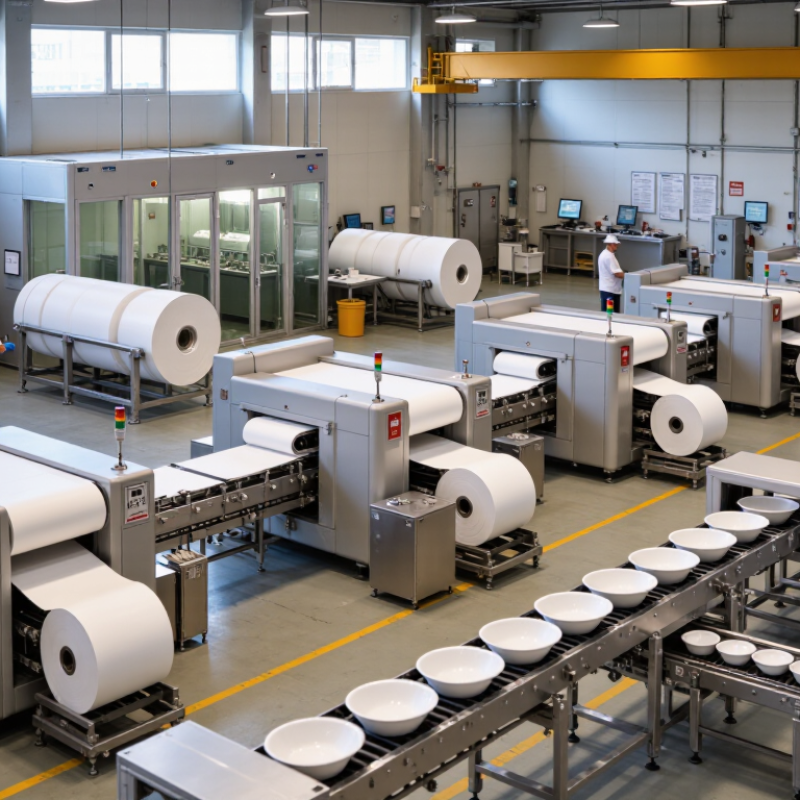
Paper bowl manufacturers in China are industrial producers that convert paperboard into food containers. Their role extends beyond forming a round bowl. They select paper grades, apply barrier coatings, print designs, shape rims, and test resistance to heat and moisture.
According to Grand View Research, the global disposable tableware market was valued at about US$29 billion in 2022. Its projected growth reflects steady demand from takeaway meals, catering, and institutional kitchens.
China remains a significant production base because its supply chain combines paper mills, coating facilities, tooling workshops, and export logistics.
A capable manufacturer should provide measurable specifications, not vague promises. Buyers should check paperboard weight, coating type, rim strength, leakage results, and production tolerances. A 2024 Smithers paper-packaging outlook also identifies recyclable and fiber-based formats as important growth areas.
Yet, material claims need careful review. Some bowls contain plastic barriers, even when their outer surface looks entirely like paper. That distinction affects recycling decisions and customer communication.
Factory audits can reveal practical details: clean forming rooms, sealed cartons, batch records, and samples tested with hot soup for thirty minutes.
Small details matter. In my experience, supplier brochures often look more precise than factory evidence. Independent testing remains worthwhile, especially when a manufacturer claims compostability, food-contact suitability, or high-temperature performance.

What Are China’s Top Paper Bowl Manufacturers?
Key Criteria for Identifying China’s Top Paper Bowl Manufacturers
China’s top paper bowl manufacturers are not defined by low prices alone. Strong suppliers provide clear factory records, stable production, and documented food-contact safety testing. Buyers should request material specifications, coating details, and recent laboratory reports. These documents should identify paper weight, coating type, test methods, and issuing laboratories. A polished website is not proof of manufacturing ability.
Factory verification matters. Check production lines, storage conditions, printing areas, and quality-control procedures through an audit or live video inspection. Reliable manufacturers inspect bowl size, rim strength, leakage resistance, and stacking performance. Ask for samples from regular production, not specially prepared pieces. Small differences can appear between samples and bulk orders. That gap deserves attention.
Responsible manufacturers also explain their sourcing and traceability systems. They should identify raw-material suppliers, batch records, and corrective actions for defective products. Export experience can support smoother documentation, but it does not replace technical evidence. Communication is another practical test. A capable team answers specifications directly and admits limitations. Environmental claims require careful review, especially when terms like biodegradable or compostable are used without certification. No factory gets every detail right; dependable partners show how they find and correct mistakes.
Key criteria for identifying reliable paper bowl manufacturers
This screening framework prioritizes food-contact compliance, production consistency, and product performance. Buyers should verify certifications, test reports, factory quality systems, material traceability, minimum order quantities, and delivery records before selecting a supplier. The percentages represent suggested evaluation weights, not company rankings or market-share data.
China’s leading paper bowl manufacturers are best assessed by product strength, not name recognition. High-volume producers focus on stable forming, uniform rims, and fast delivery. Their bowls often use 250–350 gsm paperboard, supporting soups, noodles, rice, and takeaway meals. According to Smithers’ paper packaging research, global demand is being driven by foodservice growth and pressure to replace difficult-to-recycle formats.
Some factories specialize in leak-resistant bowls. They combine paperboard with polyethylene, PLA, or water-based barrier coatings. This choice affects heat tolerance, sealing performance, and recycling options. Others focus on molded fiber bowls made from bagasse or recycled fiber. These products suit operators seeking a more natural texture and lower fossil-plastic content. Grand View Research reports continued expansion in the global disposable tableware market, with sustainability influencing purchasing decisions. The data is useful, but it cannot replace physical testing.
Customization is another clear strength. Experienced suppliers can adjust bowl depth, lid fit, printing accuracy, and carton packing for different food categories. A practical buyer should request samples filled with hot liquid for at least thirty minutes. Weak rims often appear only then. Manufacturers serving export markets usually provide food-contact documentation, batch records, and production inspections. However, “eco-friendly” claims can be too broad. Coating composition, recycling access, and local regulations still matter. Product strength is real only when factory evidence supports it.
China’s leading paper bowl manufacturers are usually distinguished by process control, not glossy catalogs. A reliable supplier should explain pulp sources, coating chemistry, production capacity, and testing records clearly. During a factory audit, check clean storage areas, sealed raw-material packaging, and batch codes on finished bowls. Small details matter.
Manufacturing standards should match the bowl’s intended use and destination market. Ask for food-contact declarations, migration test reports, and quality-system certificates such as ISO 9001 when relevant. These documents need current scope and traceable laboratory results. “Compliant” alone proves little. Confirm rim strength, leak resistance, heat tolerance, and stacking performance through samples. A bowl that survives a ten-minute soup test may still deform during transport.
Material selection affects performance and recycling considerations. Kraft paper gives a natural appearance, while bleached paper supports brighter printing. PE, PLA, water-based, and dispersion coatings offer different barriers against oil, moisture, and heat. None is perfect. Customization can include diameter, depth, wall structure, embossing, color printing, lid fit, and carton design. Request a physical prototype before approving mass production. Check color under store lighting, not only on a screen. Strong manufacturers also disclose minimum order quantities, tooling charges, lead times, and inspection points. Some suppliers promise fast delivery too easily. That deserves a second question. Compare trial orders, independent testing, and after-sales response before choosing a long-term partner.
When comparing China’s top paper bowl manufacturers, price should not lead the decision. The better question is whether the supplier can deliver safe, consistent, and traceable products. Ask for factory certificates, food-contact test reports, and recent production records. Verify whether these documents match the actual factory and bowl materials.
Request samples in several sizes. Test them with hot soup, oily food, and refrigerated desserts. Check rim strength, coating adhesion, leakage, odor, and stacking stability. Small details matter. A bowl that softens after ten minutes can damage customer trust. Confirm the paper weight, coating type, printing ink, packaging method, minimum order quantity, and production lead time in writing.
Factory evidence matters. Review production photos, quality-control procedures, and batch inspection records. If possible, arrange an independent factory audit before placing a large order. Ask how defects are handled and how replacement costs are calculated. Communication is a test. Send the same technical questions to several suppliers. If replies remain vague, treat that as a warning. Still, no supplier is perfect. I once overlooked carton compression during sampling; the bowls passed liquid tests but arrived partly crushed. Buyers sometimes focus too heavily on certificates and forget transport conditions. Request export packaging samples and a clear corrective-action process before final approval.
We are the most reliable and proficient jute goods manufacturer & supplier that helps businesses or individuals with various exportable agricultural commodities biz and jute goods by shipping them worldwide. Our right-time service ensures that whatever color and size of jute product you need, we can make it happen anytime and anywhere! Let’s keep our earth safer to live in!
Important link
Address
Bangladesh Address:
Fair Plaza (9th Floor), Plot : 3C, Section : 01, Mirpur, Dhaka:1216
UK Office:
242 Manor Road, Droylsden, Manchester, M43 6JD, United Kingdom.
Let's Talk
We are the most reliable and proficient jute goods manufacturer & supplier that helps businesses or individuals with various exportable agricultural commodities biz and jute goods by shipping them worldwide. Our right-time service ensures that whatever color and size of jute product you need, we can make it happen anytime and anywhere! Let’s keep our earth safer to live in!
Bangladesh Address:
Fair Plaza (9th Floor), Plot : 3C, Section : 01, Mirpur, Dhaka:1216
UK Office:
242 Manor Road, Droylsden, Manchester, M43 6JD, United Kingdom.