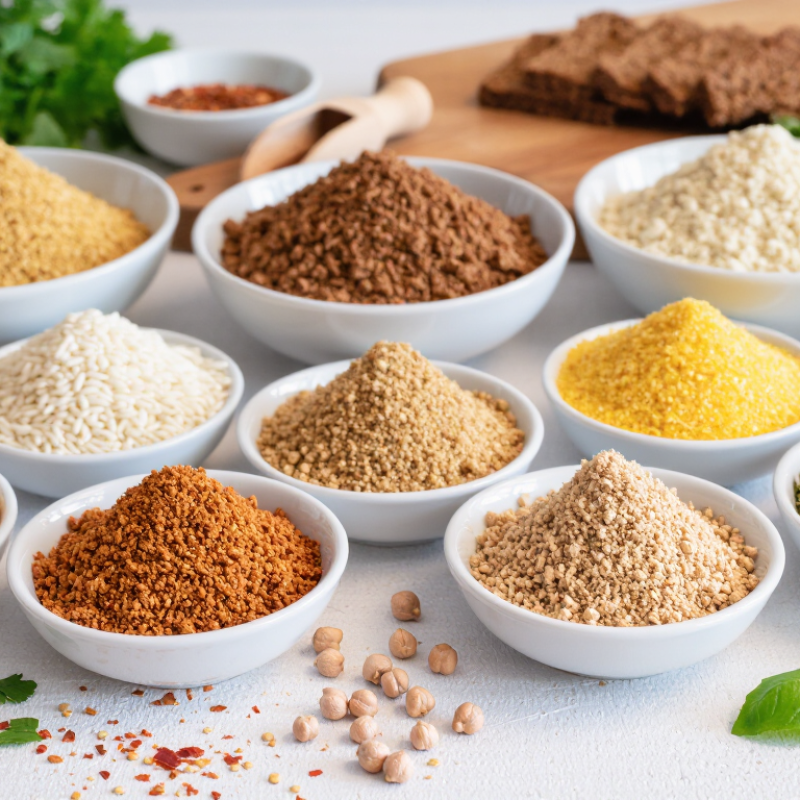
Vegan Bread Crumbs have moved beyond a simple coating ingredient. They now support plant-based nuggets, mushroom cutlets, vegetable burgers, pasta toppings, and frozen convenience foods. Global buyers need more than a crispy surface. They need dependable texture, clean labels, stable supply, and clear allergen information.
Plant-based chef and educator Derek Sarno captures the broader purpose of this market: “Plants can be delicious, satisfying, and full of flavor.” That principle also applies to bread crumbs. A good product should create a golden crust without hiding the food underneath. Panko offers large, airy flakes. Whole-wheat crumbs provide a darker color and stronger grain notes. Rice, corn, chickpea, sourdough, gluten-free, seasoned, herb-infused, and low-oil varieties serve different buyers and applications.
Details matter. A crumb that stays crisp after frying may soften inside a chilled ready meal. A fine powder can work for binding, yet fail on a thick vegetable patty. Humidity can change performance during shipping. Sometimes, the best-looking sample is not the most reliable one.
This guide examines the Top 10 Types of Vegan Bread Crumbs for Global Buyers. It considers texture, ingredient sourcing, processing, packaging, certification needs, and application performance. Buyers should still test every sample in real production conditions. Laboratory results alone can miss practical problems. A small kitchen trial may reveal more than a polished specification sheet.
Vegan bread crumbs are defined by more than the absence of meat. They must contain no eggs, milk, butter, cheese, animal fats, or honey. Processing aids and flavor carriers also deserve careful review. A plain crumb can hide dairy-derived ingredients in seasoning blends. That detail matters.
Common vegan options include panko, fine white crumbs, whole-wheat crumbs, sourdough crumbs, corn-based crumbs, rice crumbs, gluten-free crumbs, seasoned crumbs, coarse crumbs, and toasted crumbs. Each type serves a different application. Panko creates a light, crisp shell. Fine crumbs bind vegetable patties more evenly. Rice and corn crumbs help serve gluten-free markets. Sourdough adds a sharper aroma, but its flavor may not suit every region.
Global buyers usually assess more than taste. They check ingredient declarations, allergen controls, batch traceability, moisture levels, particle size, and microbiological safety. Consistent color and frying performance also influence repeat orders. Packaging should protect crumbs from humidity during long transport. Multilingual labels can reduce clearance delays, although local rules still require professional verification.
Certification may strengthen buyer confidence, but documentation must match the actual facility and formula. A vegan product can lose trust through shared equipment or unclear supplier records. This is often overlooked. Even “natural flavor” needs explanation when markets apply different labeling standards. Product testing should cover baking, frying, storage, and regional recipes. No single crumb fits every market. Careful adjustment remains necessary.
Global buyers increasingly judge vegan bread crumbs by ingredients, texture, and coating performance. The Good Food Institute’s 2023 State of the Industry report recorded US plant-based retail sales of $8.1 billion in 2022. That demand supports wider ingredient choices, but it does not remove quality risks.
Standard wheat crumbs provide a fine, even crust for cutlets and vegetables. Whole-wheat crumbs add bran, darker color, and a rougher bite. Panko-style crumbs create large, airy flakes with strong frying appeal. Sourdough crumbs bring mild acidity and a brittle crunch. Corn-based crumbs offer bright color and a coarse, gluten-free texture. Rice crumbs deliver a lighter, cleaner coating. Chickpea crumbs add earthy flavor and useful protein. Quinoa crumbs create a small, nutty crunch. Oat crumbs feel softer and absorb more moisture. Seeded bread crumbs add visible texture, but can brown unevenly.
A practical trial should test oil absorption, breakage, and crispness after ten minutes. That detail matters. Whole grains may turn bitter when stored poorly. Gluten-free products also require careful cross-contact controls and clear documentation. Buyers should request ingredient statements, allergen controls, moisture data, and vegan verification. Texture claims are sometimes optimistic. A crumb can look crisp in a sample and soften inside humid export packaging. Personally, I would compare two particle sizes before placing a large order. Small differences can change the final eating experience.
Top 10 Types of Vegan Bread Crumbs for Global Buyers: Nutritional, Allergen, and Dietary Features
Global buyers can choose from ten practical types: plain white, whole-wheat, panko, sourdough, rye, rice-based, corn-based, chickpea, lentil, and seed-enriched crumbs. USDA FoodData Central records show that standard dry breadcrumbs provide about 395 calories, 72 grams of carbohydrate, and 13 grams of protein per 100 grams. Whole-wheat and legume crumbs usually offer more fiber and protein. However, figures change with recipes, moisture, and processing.
Vegan does not mean allergen-free. Wheat crumbs contain gluten, while seeded or legume formulas may include sesame, soy, or peanut traces. Sourdough may still contain wheat. Buyers should review supplier allergen matrices and cross-contact controls, not only front-label claims. Codex guidance supports clear allergen communication, but requirements vary between importing markets. A gluten-free rice crumb needs reliable testing and documented production separation.
Dietary suitability also depends on sodium, oil, and added ingredients. The World Health Organization recommends less than 2 grams of sodium daily for adults, so seasoned crumbs deserve careful review. Chickpea and lentil crumbs can support higher-protein diets, while corn and rice options may suit wheat-avoidant consumers. Still, “high fiber” claims need laboratory evidence. A short ingredient list helps, but it proves little by itself. I would request nutrition panels, allergen statements, microbiological results, and batch samples before approval. Mistakes happen. Even an attractive specification can hide texture loss after frying.
Chickpea, almond, oat, rye, and whole-wheat crumbs generally provide more protein or dietary fiber than refined rice and standard panko crumbs. Sodium can vary substantially because it is mainly affected by added salt and seasoning. Wheat, rye, and sourdough varieties normally contain gluten; almond-based crumbs contain tree nuts; chickpea-based crumbs contain legumes. Formulations differ by supplier, so buyers should verify ingredient declarations, allergen controls, and certification documents before purchase.
Representative values per 100 g, compiled from generic food-composition profiles in USDA FoodData Central and standard ingredient formulations. Values are intended for product comparison, not nutrition-label replacement.
Vegan bread crumbs begin with plant-based bread, not animal-derived ingredients. Manufacturers mix flour, yeast, water, salt, and vegetable oil into a controlled dough. After baking, the loaves cool before being dried and milled. Fine crumbs suit coatings and meat-free patties. Coarse crumbs add texture. Panko-style crumbs create a lighter, crispier surface. Seasoned versions may include herbs, garlic, or paprika. Gluten-free formulas require separate production controls to reduce cross-contact risks.
Moisture control matters throughout processing. Crumbs that retain too much water may soften, clump, or develop spoilage problems. Producers usually test moisture, texture, color, and microbiological safety by batch. Records should identify ingredients, processing dates, and cleaning checks. Practical experience shows that clean equipment is not enough. Airflow and cooling time also influence final quality. Small differences can matter.
Packaging should protect the crumbs from humidity, oxygen, light, and rough handling. Multi-layer food-grade bags, sealed pouches, or lined cartons are common options. Export buyers should check seal strength and packaging performance during transport simulations. A beautiful package can still fail in a damp container. That deserves reflection.
Storage works best in a cool, dry, clean warehouse away from chemicals and strong odors. Pallets should stay off the floor and away from walls. After opening, buyers should reseal the package tightly and use clean, dry scoops. Stock rotation should follow batch dates and verified shelf-life instructions. Temperature changes remain easy to overlook.
| Rank | Type | Typical Base Ingredient | Common Particle Profile | How It Is Made | Typical Applications | Recommended Packaging | Storage Conditions | Typical Unopened Shelf Life | Key Buyer Checks |
|---|---|---|---|---|---|---|---|---|---|
| 1 | Plain Fine Bread Crumbs | Wheat bread or rolls; water, yeast, salt, and vegetable oil may be used | Fine, dry particles; generally below 1.5 mm | Bread is baked, cooled, dried or toasted, milled, sieved, and metal-detected. No dairy or egg should be included in a vegan specification. | Coating for vegetables, tofu, plant-based patties, croquettes, and fillings | Moisture-barrier laminated pouches, paper sacks with an inner liner, or bulk bags | Cool, dry, and clean warehouse; protect from moisture, sunlight, pests, and strong odors | Approximately 9–12 months, depending on moisture, fat content, and packaging | Confirm wheat allergen declaration, vegan ingredients, moisture level, particle size, and absence of animal-derived processing aids |
| 2 | Panko Bread Crumbs | Vegan white wheat bread, usually made with a relatively open crumb structure | Large, light flakes; commonly 2–6 mm | Bread is baked, dried, and cut or flaked into elongated pieces. The product is usually lightly toasted rather than deeply browned. | Tempura-style coatings, vegan schnitzels, fried mushrooms, onion rings, and plant-based seafood alternatives | High-barrier polyethylene or laminated bags; nitrogen flushing may help limit oxidation in some formats | Store sealed at below normal room temperature where possible, away from humidity and heat | Approximately 9–12 months | Evaluate flake uniformity, bulk density, frying performance, oil absorption, and resistance to crushing during transport |
| 3 | Whole-Wheat Bread Crumbs | Whole-wheat bread containing bran and germ, plus water, yeast, and salt | Fine to medium particles; brown to tan appearance | Whole-wheat bread is dried and milled. Because bran increases water absorption, particle size and moisture should be controlled carefully. | Whole-food coatings, veggie burgers, baked casseroles, stuffing, and meat-free meatballs | Moisture- and oxygen-barrier pouches or lined cartons | Cool, dry storage; use tighter oxygen control because whole grains contain more natural oils than refined wheat | Approximately 6–9 months | Check bran content, rancidity indicators, moisture migration, wheat allergen labeling, and microbiological specifications |
| 4 | Italian-Style Seasoned Bread Crumbs | Wheat bread crumbs blended with dried herbs, garlic, onion, salt, and spices | Fine to medium particles with visible herbs or seasoning specks | Plain crumbs are blended with dry seasonings after milling. Formulations must exclude cheese, whey, butter, and other non-vegan ingredients. | Stuffed vegetables, baked pasta, plant-based meatballs, gratins, and breaded products | Printed laminated pouches, sachets, or lined food-grade sacks with strong aroma protection | Dry, dark, and well-ventilated storage; protect from humidity and cross-contact with allergens | Approximately 9–12 months | Verify seasoning origin, allergen status, salt level, spice microbiology, color stability, and label compliance in the destination market |
| 5 | Gluten-Free Rice-Based Crumbs | Rice flour, rice bread, or puffed rice-based ingredients; starches may be added | Fine to medium particles; light color and crisp texture | Rice-based bread or formed rice ingredients are baked or dried, milled, and screened. Dedicated or validated gluten-control procedures are important. | Gluten-free breading, tofu, vegetables, allergen-conscious prepared foods, and snack coatings | High-barrier pouches or lined sacks with tamper-evident seals | Keep dry and tightly sealed; avoid humid storage because rice-based crumbs can lose crispness quickly | Approximately 9–12 months | Request gluten-control documentation, rice origin, moisture specification, foreign-material controls, and local gluten-free compliance evidence |
| 6 | Corn-Based Bread Crumbs | Corn flour, cornmeal, or corn-based bread with optional starch and seasoning | Medium to coarse particles; yellow to golden color | Corn-based dough or bread is baked, dried, and milled. Some products combine corn with wheat, so the formulation must be checked carefully. | Crunchy coatings, baked vegetables, plant-based nuggets, fish-free fillets, and regional savory dishes | Moisture-barrier bags, laminated pouches, or bulk sacks with an inner liner | Cool, dry storage protected from insects, moisture, and excessive heat | Approximately 6–12 months | Confirm whether the product is wheat-free or only corn-based, and check particle size, color consistency, mycotoxin controls, and GMO requirements |
| 7 | Chickpea-Based Crumbs | Chickpea flour, roasted chickpea particles, or chickpea-enriched bread | Fine to medium particles; cream to pale yellow color | Chickpea ingredients are baked or roasted, dried, milled, and blended. Thermal processing can improve flavor but may darken the product. | High-protein coatings, falafel, vegetable fritters, gluten-free formulations, and plant-based patties | High-moisture-barrier pouches or lined sacks; oxygen protection is useful for products with higher fat content | Store in a cool, dry place and reseal after opening to prevent moisture uptake and odor development | Approximately 6–9 months | Check legume allergen declarations where applicable, protein content, beany flavor, rancidity, particle uniformity, and microbial limits |
| 8 | Lentil-Based Crumbs | Lentil flour, lentil flakes, or lentil-enriched baked ingredients | Fine to medium particles; cream, orange, yellow, or brown depending on lentil variety | Lentil ingredients are heat-treated, dried, milled, and sieved. Controlled heating helps reduce raw legume notes and improve handling performance. | Protein-fortified coatings, savory snacks, vegetable patties, and gluten-free product concepts | Sealed laminated pouches or lined bulk bags with moisture and oxygen barriers | Cool and dry warehouse storage; protect from humidity, pests, and strong odors | Approximately 6–9 months | Review protein claim substantiation, flavor profile, color stability, moisture, microbial specifications, and possible legume cross-contact |
| 9 | Oat-Based Bread Crumbs | Oat bread, oat flour, or toasted oat flakes combined with bread crumbs | Fine to coarse particles; beige to golden color with a slightly rustic appearance | Oat-based bread or flakes are baked or toasted, cooled, dried, milled, and screened. The final texture depends strongly on oat particle size. | Oat-coated vegetables, plant-based burgers, stuffing, baked toppings, and health-oriented products | Oxygen- and moisture-barrier pouches or lined cartons | Cool, dry, dark storage; oxygen control can help preserve the flavor of oat lipids | Approximately 6–9 months | Check oat purity, gluten-control requirements, beta-glucan claims, rancidity, moisture, and suitability for the target market |
| 10 | Coarse Artisan or Rustic Bread Crumbs | Crusty wheat bread, sourdough-style bread, or mixed-grain vegan bread | Coarse irregular pieces; commonly 3–8 mm | Crusty bread is dried or toasted, coarsely milled, and lightly screened. Irregular particles create a homemade appearance and stronger surface texture. | Premium coatings, pasta toppings, baked vegetables, gratins, stuffing, and foodservice recipes | Durable laminated bags or lined cartons designed to reduce breakage and moisture ingress | Store in a dry, cool warehouse; avoid compression, condensation, and exposure to high humidity | Approximately 6–9 months | Assess particle distribution, crust percentage, visual consistency, breakage during shipping, wheat allergen status, and flavor uniformity |

Global buyers are widening their vegan breadcrumb portfolios. Common options include panko, fine standard crumbs, wholegrain, gluten-free, chickpea, corn-based, sourdough, and seasoned varieties. The purchasing decision, however, should begin with measurable specifications, not attractive claims.
The 2024 State of the Industry report from the Good Food Institute reported approximately 8.1 billion dollars in United States plant-based retail sales during 2023. This signals demand, but vegan status alone does not guarantee repeat orders. Importers should verify particle size, moisture level, oil absorption, colour, and frying performance.
A 2–4 millimetre range may suit coating lines, while larger panko flakes create a more visible crust. Check ingredient declarations against Codex labelling principles and local allergen rules. Suppliers should also provide microbiological results, traceability records, shelf-life evidence, and food-safety certification, such as ISO 22000 or an equivalent scheme.
Packaging needs attention too. Moisture barriers protect texture during long sea shipments.
Tips:
Request pre-shipment samples from each production lot. Test them after storage, not only on arrival. Compare a sealed pouch with an opened pouch after seven days. FAO has estimated that 14% of food is lost between harvest and retail, so weak packaging can become a commercial loss.
It is easy to overvalue a low unit price. I have found that inconsistent seasoning or crumb size causes more complaints than a slightly higher price. A perfect specification rarely exists; buyers should record failed tests and revise their purchase standards.
We are the most reliable and proficient jute goods manufacturer & supplier that helps businesses or individuals with various exportable agricultural commodities biz and jute goods by shipping them worldwide. Our right-time service ensures that whatever color and size of jute product you need, we can make it happen anytime and anywhere! Let’s keep our earth safer to live in!
Important link
Address
Bangladesh Address:
Fair Plaza (9th Floor), Plot : 3C, Section : 01, Mirpur, Dhaka:1216
UK Office:
242 Manor Road, Droylsden, Manchester, M43 6JD, United Kingdom.
Let's Talk
We are the most reliable and proficient jute goods manufacturer & supplier that helps businesses or individuals with various exportable agricultural commodities biz and jute goods by shipping them worldwide. Our right-time service ensures that whatever color and size of jute product you need, we can make it happen anytime and anywhere! Let’s keep our earth safer to live in!
Bangladesh Address:
Fair Plaza (9th Floor), Plot : 3C, Section : 01, Mirpur, Dhaka:1216
UK Office:
242 Manor Road, Droylsden, Manchester, M43 6JD, United Kingdom.