
Finding top wholesale backpack suppliers in China takes more than comparing prices online. You need to check product quality, production capability, and communication before placing a large order. China offers several sourcing routes. Quanzhou has many bag and sports-goods manufacturers, while Guangzhou and Yiwu provide access to broad wholesale networks. The right location depends on your design, order size, and need for customization.
Online platforms such as Alibaba, Made-in-China, and Global Sources can help build an initial shortlist. Trade fairs and local sourcing agents may also make supplier comparisons easier. A polished profile is only a starting point. Ask whether a company is a factory or trading company, and request clear details about minimum order quantities, material options, lead times, and quality checks. Then review a physical sample. Inspect the stitching, zipper movement, lining, shoulder straps, and fabric feel under everyday use. Small flaws show up quickly.
Ask for written specifications and confirm that the production sample matches them. A video call can show work areas, but it does not replace independent checks when the order is substantial. Compare more than quotations. A very low price may reflect thinner fabric or fewer quality checks, though not always. No supplier is perfect. Even experienced buyers can overlook a detail, such as pocket dimensions or color consistency. This guide explains where to search, how to assess wholesale backpack suppliers, and which questions can reduce avoidable surprises before production begins.
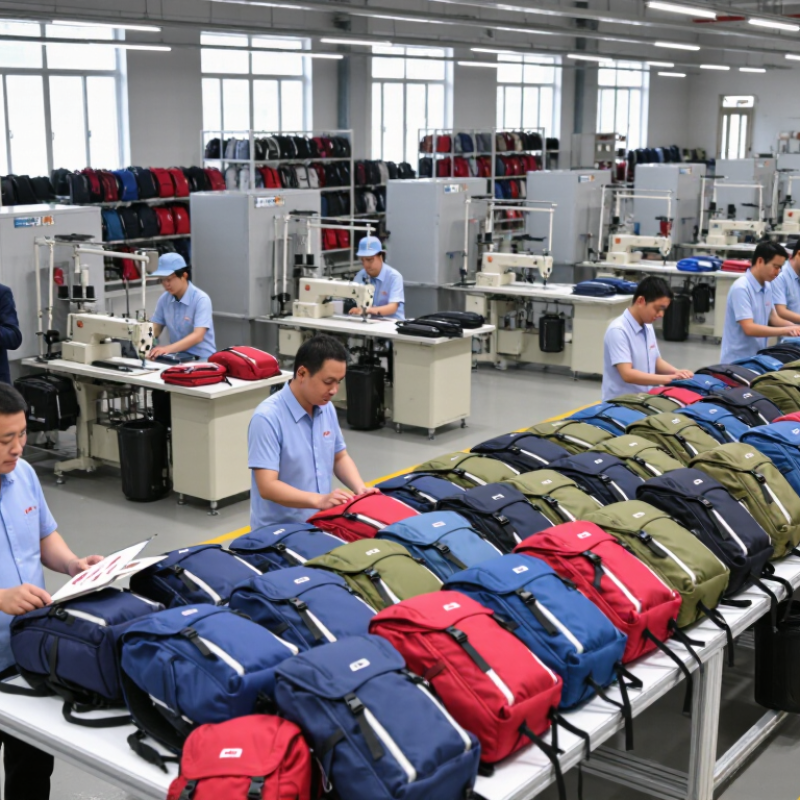
China’s backpack suppliers cluster around manufacturing hubs such as Baigou in Hebei, Guangzhou, and Quanzhou. Baigou is known for luggage production, while Guangzhou offers access to fabric, trim, and sample-making workshops. Quanzhou has strengths in sports and outdoor goods. The choice matters. A nearby fabric market can shorten sampling time, but it does not guarantee consistent stitching or quality. Grand View Research estimated the global backpack market at USD 20.4 billion in 2023 and projected 6.8% annual growth from 2024 to 2030. That demand makes supplier verification essential, not optional.
Trade platforms help buyers compare product categories, minimum order quantities, export experience, and factory audit records before travelling. Use them to build a shortlist, then request close-up photos of seams, zipper ends, back panels, and stress points. Ask for a sample made with the same materials and construction as the quoted product. A polished listing can still hide weak stitching. Details matter. During a factory visit, check whether the workshop’s machines, staff, and production records match its claims. Trade fairs and local sourcing agents can help arrange meetings, but their recommendations still need independent checks. Small things get missed. Even a clear specification sheet may leave room for interpretation, so confirm measurements, fabric weight, color, and packaging in writing before production.
| Sourcing Hub or Channel | Location or Format | What Buyers Can Explore | Suitable Backpack Types | Practical Sourcing Checks |
|---|---|---|---|---|
| Baigou | Hebei Province | A recognized luggage and bag production and wholesale area, with suppliers offering a range of bag styles and price points. | Everyday backpacks, school bags, travel bags, and general-purpose bags. | Ask whether the supplier is the manufacturer or a trading company; confirm materials, sample quality, order quantity, and production lead time. |
| Quanzhou and Jinjiang | Fujian Province | A manufacturing region with experience in footwear, sporting goods, and related products, including bags and backpacks. | Sports, outdoor, and active-use backpacks. | Check fabric specifications, stitching, zippers, load-bearing points, and any test reports relevant to the intended market. |
| Guangzhou | Guangdong Province | A large commercial and manufacturing center with access to bag suppliers, materials, and export services. | Fashion, casual, business, and custom-design backpacks. | Request a pre-production sample, confirm customization options, and agree in writing on quality standards and packaging. |
| Yiwu wholesale market | Zhejiang Province | A broad wholesale marketplace where buyers can compare many consumer-goods categories, including bags; sellers may source products from different factories. | Low-to-mid-volume purchases, promotional bags, and ready-made styles. | Verify the actual production source, available stock, repeat-order consistency, and export documentation before placing a large order. |
| Online B2B marketplaces | Online supplier directories and sourcing platforms | Useful for comparing product specifications, supplier profiles, customization options, and initial quotations before contacting suppliers. | Most backpack categories, depending on supplier capabilities. | Use platform verification features where available, request current factory and product evidence, order samples, and check payment and dispute terms. |
| Trade fairs and regional sourcing visits | Major exhibition venues and manufacturing areas in China | In-person meetings allow buyers to inspect samples, discuss custom requirements, and compare suppliers directly. | Custom, private-label, and larger-volume orders. | Prepare a written specification sheet and compare quotations on the same materials, dimensions, packaging, and delivery terms. |

When comparing backpack suppliers in China, ask for fabric specifications, not just labels. Denier describes yarn thickness; it does not guarantee overall durability. A 300D fabric can suit lightweight daypacks, event bags, and simple school packs. It keeps the bag flexible and often reduces weight. Check the lining, coating, and seam construction too. A thin backing can wear through before the fabric does.
For commuter backpacks and everyday travel bags, 600D polyester is a common middle ground. It feels sturdier than 300D without becoming overly rigid. Ask suppliers for a physical swatch, then bend it and inspect the surface under bright light. Look for consistent weave, clean coating, and even stitching on a sample bag. Not quite a durability test, but useful.
1680D fabrics are often chosen for high-abrasion areas, tool bags, or rugged travel packs. They can feel dense and resist scuffing, yet added weight and stiffness may not suit every design. Denier alone can mislead. Request the same bag construction in each fabric, and compare loaded samples for comfort, seam strain, and zipper performance. One detail is easy to miss: a strong fabric cannot compensate for weak bartacks or poorly finished stress points. Ask the supplier to document fabric composition and coating, then confirm those details against the sample before placing a bulk order.
A reliable backpack supplier should fit your order plan, not just offer an attractive unit price. Ask for the minimum order quantity (MOQ) by fabric, color, and design. A factory may accept 300 pieces in one color but require more for several custom colors. Confirm whether the quoted MOQ applies to a trial order or only repeat production. Get the details in writing.
Monthly output helps you judge whether a supplier can handle your schedule. Ask how many backpacks the factory completes in a typical month, and whether that figure includes other product lines. For a large order, request a production calendar with cutting, sewing, inspection, and packing dates. A busy workshop can still be dependable, but vague capacity claims deserve a second look. I have seen timelines slip when buyers assumed stated capacity meant unused capacity.
Tips: Request a sample before approving bulk production. Ask for the sample lead time, then check stitching, zipper movement, strap reinforcement, and pocket dimensions. Compare the sample with your written specifications. Confirm whether revisions add time or fees. A seven-day sample promise sounds useful, yet it may exclude material sourcing and shipping. Allow room for delays; planning too tightly is an easy mistake.
Where to Find Top Wholesale Backpack Suppliers in China?
A supplier search should include a production-quality check, not just a price comparison. Ask for the ISO 9001 certificate and confirm its scope, issuing body, and validity. ISO’s 2022 Survey reported more than 1.2 million valid ISO 9001 certificates worldwide. That shows how widely the system is used, but certification alone does not prove that a backpack batch is defect-free.
Use ISO 2859-1 to agree on an attribute-sampling plan before production. It helps buyers inspect a sample from a lot and make an acceptance decision against agreed AQL levels. For backpacks, define visible checks: zipper operation, seam strength, strap stitching, measurements, and color consistency. Set different limits for critical, major, and minor defects, and record the sample size and inspection level. AQL is not a promise of zero defects. It is a decision tool, and a rushed inspection can still miss problems.
Tips: Request a dated inspection report with clear photos of sampled units. Check that the lot number matches the shipment, and keep one approved sample for comparison. A certificate looks reassuring. It is not the whole story.
Use ISO 9001-based quality management checks and ISO 2859-1 sampling plans to assess production quality.
The chart shows selected AQL values used in ISO 2859-1 sampling plans. AQL is an index for selecting a sampling plan, not a promise that a lot will contain that exact percentage of defects. Confirm the inspection level, lot size, and acceptance criteria before inspecting backpack orders.
When comparing wholesale backpack suppliers in China, ask how they verify materials against chemical limits. For REACH, the 0.1% SVHC threshold applies by article, not simply to the finished backpack as a whole. Request a current material breakdown and test reports identifying the tested fabric, coating, zipper, and plastic parts. Details matter.
For children’s backpacks sold in the United States, CPSIA sets a 100 ppm total lead limit for accessible component parts. Confirm which parts were tested and whether the reports match your exact materials and construction. A report for a similar-looking bag is not enough. Check dates, sample descriptions, and laboratory details, then clarify who will arrange retesting if a supplier changes a coating or trim. Keep the records with the purchase order.
A neat certificate can still leave gaps. I would ask suppliers to trace each report to a production batch, and to notify you before material substitutions. Small parts can be overlooked, especially painted zipper pulls or printed decorations. If a claim is unclear, pause the order and seek qualified compliance advice for the destination market.
We are the most reliable and proficient jute goods manufacturer & supplier that helps businesses or individuals with various exportable agricultural commodities biz and jute goods by shipping them worldwide. Our right-time service ensures that whatever color and size of jute product you need, we can make it happen anytime and anywhere! Let’s keep our earth safer to live in!
Important link
Address
Bangladesh Address:
Fair Plaza (9th Floor), Plot : 3C, Section : 01, Mirpur, Dhaka:1216
UK Office:
242 Manor Road, Droylsden, Manchester, M43 6JD, United Kingdom.
Let's Talk
We are the most reliable and proficient jute goods manufacturer & supplier that helps businesses or individuals with various exportable agricultural commodities biz and jute goods by shipping them worldwide. Our right-time service ensures that whatever color and size of jute product you need, we can make it happen anytime and anywhere! Let’s keep our earth safer to live in!
Bangladesh Address:
Fair Plaza (9th Floor), Plot : 3C, Section : 01, Mirpur, Dhaka:1216
UK Office:
242 Manor Road, Droylsden, Manchester, M43 6JD, United Kingdom.