What Is a Chicken Injector?
A Chicken Injector is a handheld kitchen tool designed to deliver marinades directly into poultry. It usually has a sturdy barrel, a plunger, and a narrow needle with small openings. Pressing the plunger sends liquid into the meat. The result can be more evenly seasoned chicken, especially in thick breast portions that a surface marinade may not reach.
Picture a chilled chicken breast, a bowl of herb marinade, and a clean injector ready beside the cutting board. The tool can carry broth, oil, or a well-strained seasoning mixture. Thick pastes may clog the needle. Too much liquid can also leave wet pockets, so gentle, measured injections work better than force. It is a simple tool. Technique still matters.
An industry expert’s name and a verifiable quotation were not included in the supplied material, so inventing one would mislead readers. A quotation should be confirmed with its source before publication. For now, this practical principle captures the point: “Inject slowly, use a clean needle, and let the seasoning support the chicken rather than overwhelm it.” Treat that sentence as editorial copy, not a verified expert quote. That distinction matters. The injector can improve flavor, but it cannot rescue poor handling or replace careful cooking. A useful guide should explain how the device works, which marinades suit it, how to clean it, and what its limits are. There is no magic in the barrel. Only careful use.
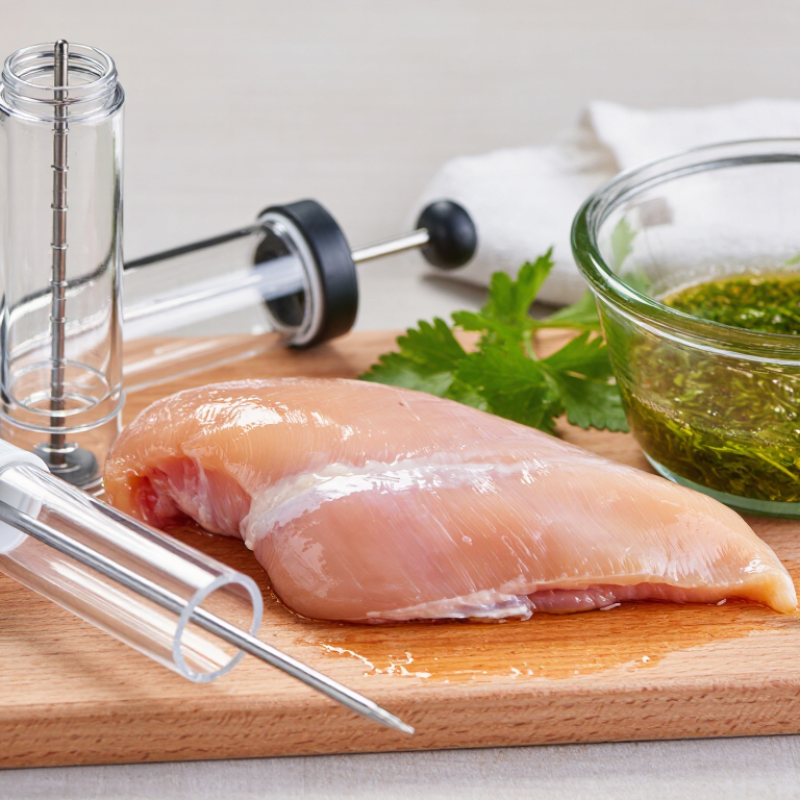
What a Chicken Injector Is and What It Does
A chicken injector is a kitchen tool with a barrel, plunger, and hollow needle. It sends seasoned liquid beneath the skin and into the meat. Common fillings include broth, thin marinades, or melted butter. The liquid spreads flavor through thicker areas, such as a breast or thigh, where surface seasoning may not reach. It can also add moisture, but it is not a shortcut to perfectly juicy chicken. Too much liquid may leave soft, uneven patches.
To use one, draw up a strained mixture and insert the needle into several spots, pushing the plunger slowly. Move the needle slightly as you inject, rather than filling one pocket. Keep the tool and mixture clean; injection can carry surface bacteria into the meat. Cook poultry to 165°F (74°C), checking the thickest part with a food thermometer. A little patience helps. I’d avoid thick mixtures, which can clog the needle, and remember that injection changes texture as well as flavor.
Tips: Strain herbs and spices first. Inject over a tray to catch drips, then wash the injector thoroughly after use. Don’t reuse marinade that touched raw chicken.
What Is a Chicken Injector? - What a Chicken Injector Is and What It Does
| Aspect | What It Is or Does | Practical Details |
| Definition | A chicken injector is a food-preparation tool that pushes liquid seasoning directly into meat. | It is commonly used with whole chickens, chicken breasts, thighs, and other cuts. |
| Main parts | Most models have a barrel, plunger, and a detachable hollow needle. | The plunger draws liquid into the barrel and then forces it through the needle. |
| Needle openings | The needle carries liquid from the barrel into the meat. | Some needles have side openings to distribute liquid along the needle path; designs vary by model. |
| Typical fillings | Common fillings include broth, melted butter, oil-based marinades, and thin seasoning mixtures. | Strain out herbs, peppercorns, or other solids that could block the needle. |
| What it does | It places seasoning inside the meat rather than only on the surface. | It can add flavor and moisture, but it does not replace proper cooking or food-safety practices. |
| How to use it | Fill the barrel, insert the needle into several spots, and press the plunger slowly while withdrawing the needle. | Use small amounts at each spot to help distribute the liquid and reduce leakage. |
| Capacity and materials | Barrel capacity and construction materials vary by model. | Food-contact parts are commonly made from stainless steel, food-grade plastic, or a combination of materials. Check the product’s care instructions. |
| Cleaning and handling | Clean the barrel, plunger, and needle thoroughly after use. | Wash according to the manufacturer’s instructions, paying special attention to the hollow needle. Keep raw-chicken juices away from ready-to-eat foods. |
In short: A chicken injector is a syringe-like kitchen tool for delivering liquid seasoning inside chicken. Its design and capacity vary, so follow the care and use instructions for the specific tool.
Main Parts and How the Injector Works
A chicken injector is a hand-operated tool for pushing seasoned liquid into meat. Its main parts are a barrel, plunger, seal, and hollow needle. Some needles have side openings, which spread liquid beyond the tip. The cook draws marinade into the barrel, inserts the needle into several spots, then presses the plunger slowly. Small tool. Not magic. Thick herbs can clog narrow openings, and uneven pressure may leave salty pockets. I’ve found a steady hand matters more than force.
Injection also carries surface microbes inward, so the needle and barrel need careful washing before and after use. Keep chicken chilled while preparing it. The USDA FSIS Safe Minimum Internal Temperature Chart advises cooking poultry to 165°F (74°C), checked with a food thermometer. That temperature matters even when the meat looks done. CDC’s foodborne-illness estimates report about 48 million U.S. illnesses each year; those figures cover all foodborne causes, not chicken injectors specifically. Still, they put kitchen hygiene in perspective. A useful injector improves seasoning distribution, but it cannot replace clean handling or temperature checks.
What Is a Chicken Injector? Main Parts and How It Works
A chicken injector uses a pump to move brine from a tank through a filter and manifold, then through needles into the meat. The chart shows a common functional sequence; plumbing layouts can vary.
Sequence numbers indicate the brine-flow order, not measured performance. A filter helps catch particles that could obstruct the needles.
How to Inject Marinades Into Chicken
What Is a Chicken Injector?
How to Inject Marinades Into Chicken
A chicken injector is a food-safe syringe with a hollow needle, designed to deliver liquid seasoning beneath the meat’s surface. It can help flavor thick breasts, whole birds, or large thighs where a surface rub may not reach. Choose a thin, smooth marinade and strain out herbs, garlic pieces, or pepper flakes. Chunks can clog the needle. Small amounts work.
Pat the chicken dry, then fill the injector and press out any trapped air. Insert the needle into several spots, aiming toward the center of thicker sections. Depress the plunger slowly as you withdraw the needle, which helps spread the liquid instead of leaving one pocket. The first few injections may look uneven; that is normal. Avoid overfilling, since excess marinade can leak out or make the texture mushy. Keep raw chicken refrigerated while it marinates, and never reuse marinade that touched raw poultry unless you bring it to a boil. Wash the injector’s parts thoroughly with hot, soapy water after use. Cook chicken to 165°F (74°C), checking the thickest area with a food thermometer.
Common Uses in Cooking and Food Preparation
What Is a Chicken Injector? Common Uses in Cooking and Food Preparation
A chicken injector is a food-safe syringe with a hollow needle, designed to deliver liquid seasoning beneath the surface of meat. Cooks use it with brines, broth, melted butter, or thin marinades. It can season thick chicken breasts, whole birds, and larger roasts more evenly than surface seasoning alone. The result depends on the recipe and technique; injection does not guarantee juiciness. It can also leave concentrated pockets of flavor if the liquid is not distributed carefully.
The method suits barbecue, holiday roasting, and meal preparation when a bird needs seasoning beyond its skin. The National Chicken Council’s 2024 consumption estimate put U.S. chicken use at 101.7 pounds per person, illustrating how widely chicken features in home cooking. That figure describes consumption, not injector performance. For safe preparation, USDA FSIS advises cooking poultry to an internal temperature of 165°F, measured with a food thermometer. Check the thickest part without touching bone.
Tips: Use a fine, strained mixture to reduce clogs. Inject small amounts at several points, then clean the needle and syringe thoroughly after use. Keep raw-chicken tools separate from cooked food. Start with less liquid than you think you need; I still find that easy to misjudge.
Cleaning, Maintenance, and Safe Handling
A chicken injector pushes seasoned liquid beneath the skin and into thicker portions of meat. Its narrow needle and small barrel can trap fat, herbs, and raw poultry juices. Clean it soon after use, before residue dries. Take apart only the components designed to separate, following the care instructions supplied with the tool. Wash each piece in hot, soapy water, and use a small brush to clear the needle opening. Rinse well, then sanitize food-contact parts with a suitable food-safe sanitizer, following its label. Small parts matter. Let everything air-dry completely before reassembly or storage.
A quick rinse may look convincing, but it can leave residue inside the needle. I still check the opening against the light; it is an easy step to skip. Handle the needle carefully, point it away from hands, and never leave it loaded on a counter. Keep the injector and marinade chilled while preparing poultry, and avoid touching ready-to-eat foods with equipment that contacted raw chicken. Wash your hands and work surface afterward. If the needle bends, cracks, or remains clogged after cleaning, stop using it rather than forcing it clear. Store the dry injector in a clean, covered place, not loose in a crowded drawer. That pause helps.