
Best Tote Bags for Wholesale Buyers in 2026
Wholesale tote bag buying is not just a price comparison. Buyers need to weigh fabric weight, stitching, print quality, lead times, and the way a bag feels in the hand. A sample may look sturdy on a screen, then sag when loaded with a water bottle and a folded jacket. Small details matter.
Textile designer William Morris offered a useful design principle: “Have nothing in your houses that you do not know to be useful, or believe to be beautiful.” He was not a tote-bag industry specialist, but the idea fits wholesale sourcing: a tote should earn its place through function and appeal. This guide looks at materials, construction, customization, and supplier checks for 2026 orders. It also considers what buyers can verify, from seam strength to color consistency, before committing to a large run.
There are trade-offs. A heavier canvas can feel premium, yet raise shipping costs. A lower quote may leave little room for quality checks. There is no perfect bag for every buyer. The sections ahead help match product choices to budgets, customers, and practical use—without treating a sample as proof of every production run.
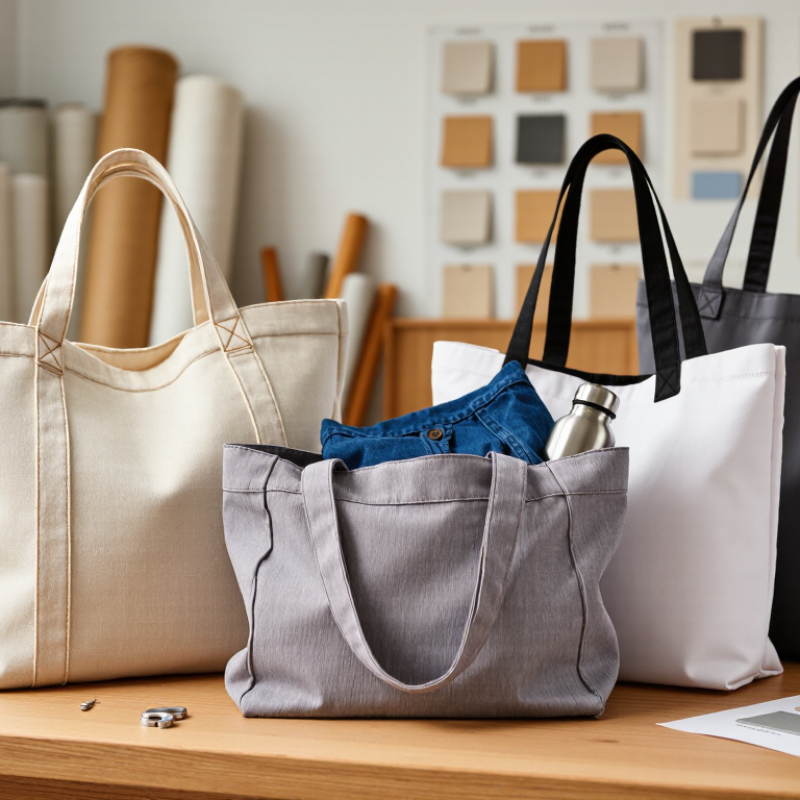
Table of Contents
[Hide]
How Wholesale Buyers Define the Best Tote Bag in 2026
Best Tote Bags for Wholesale Buyers in 2026
How Wholesale Buyers Define the Best Tote Bag in 2026
In wholesale, “best” rarely means the lowest quoted price. Buyers compare cost per usable bag, including freight, packaging, and likely replacement rates. A tote that looks sturdy on a screen can disappoint after weeks of daily use. Ask for fabric weight, finished dimensions, handle length, and stitching details in writing. Small specs matter.
A practical review starts with a sample. Fill it with about five kilograms of books or groceries, then lift it by each handle and inspect the seams. This is not a certified laboratory test, but it can reveal loose threads, twisting handles, or a sagging base. Check the base. Make sure the bag fits the intended shelf, event kit, or packing process. Compare print placement and color across production samples, not only one approved piece.
For 2026 orders, dependable scheduling is part of quality. Confirm minimum order quantity, sample timing, production windows, and how defects will be handled. Ask for material claims to be documented; vague labels are hard to verify. Reusable does not automatically mean durable. Handle comfort is easy to overlook: a narrow strap can dig into the hand when the tote is full. One sample is useful, but it cannot prove that an entire production run will match.
Best Tote Bags for Wholesale Buyers in 2026 — How Wholesale Buyers Define the Best Tote Bag in 2026
| Tote Bag Type | Typical Material | Common Fabric Weight | Typical Capacity | Best-Fit Use | Wholesale Buyer Checks | Key Trade-Off |
|---|---|---|---|---|---|---|
| Lightweight promotional tote | Non-woven polypropylene | 70–100 gsm | Approximately 10–15 L | Events, short-term promotions, and lightweight giveaways | Check handle attachment, seam consistency, print placement, and whether the bag is intended for repeated use. | Low material use and easy distribution; generally less durable than sewn woven-fabric totes. |
| Everyday cotton tote | Plain-weave cotton | 140–200 gsm | Approximately 10–18 L | Retail, conferences, and everyday shopping | Review fabric shrinkage, stitching, handle length, print compatibility, and color consistency between production lots. | Versatile and easy to customize; capacity and durability depend on fabric weight and construction. |
| Heavy-duty canvas tote | Heavy cotton canvas | 280–450 gsm | Approximately 15–30 L | Premium retail, books, groceries, and frequent reuse | Ask for a production sample; inspect reinforced stress points, bottom construction, handle stitching, and finished dimensions. | Robust feel and higher carrying potential; typically heavier and uses more material than a lightweight tote. |
| Recycled-content tote | Recycled cotton, recycled polyester, or a blend | Varies by fiber and construction | Approximately 10–20 L | Retail programs with material-traceability requirements | Request documentation for recycled-content claims, confirm the percentage and method of verification, and check color and texture variation. | Can support recycled-material goals; availability, appearance, and specifications vary by feedstock and supplier. |
| Reusable shopping tote | Woven polypropylene or polyester | Fabric weight varies by construction | Approximately 15–30 L | Grocery shopping and repeated retail use | Evaluate handle reinforcement, seam strength, usable capacity, cleaning guidance, and performance under the intended load. | Designed for repeated shopping trips; quality depends on fabric, stitching, and handle construction rather than material name alone. |
| Foldable travel tote | Lightweight polyester or nylon | Fabric weight varies by specification | Approximately 15–25 L | Travel, convenience retail, and compact storage | Test the folding method, closure, stitching at load-bearing points, and fabric performance after repeated packing. | Compact when stored and convenient to carry; lightweight construction may not suit heavy or sharp-edged loads. |
Planning note: Fabric weights and capacities are indicative ranges for common tote formats, not universal standards. Actual specifications and carrying performance vary with bag dimensions, fabric construction, seams, handles, and intended use; confirm them with a pre-production sample.
Related Posts
-

How to Find the Best Tote Bag Supplier in 2026?
-

The Ultimate Guide to Choosing the Perfect Tote Backpack for Every Occasion
-

Exploring Unique Alternatives to Eco Bags for Sustainable Living
-
China Top Burlap Tote Bag Suppliers for Global Buyers?
-

Future Trends in Best Burlap Tote Market by 2025 with Key Insights and Practical Tips
-
How to Choose the Right Jute Bag Supplier for Your Business Needs