How to Choose the Best Hessian Bags for Wholesale?
How to Choose the Best Hessian Bags for Wholesale?
Wholesale buyers are not choosing fabric alone. They are choosing strength, consistency, presentation, and supply reliability. Hessian bags usually contain jute, a renewable bast fibre valued for its breathability and natural texture. The FAO Future Fibres report identifies jute as an affordable, versatile, and biodegradable fibre. However, “natural” does not automatically mean high quality.
Material differences become visible during inspection. Check the fabric’s GSM, weave density, seam strength, handle attachment, and moisture condition. A 14-ounce bag may suit potatoes, while finer produce may require lighter fabric. Ask suppliers for pre-shipment samples. Rub the weave. Smell the lining. Fill the bag and lift it repeatedly. Small failures become expensive at container scale.
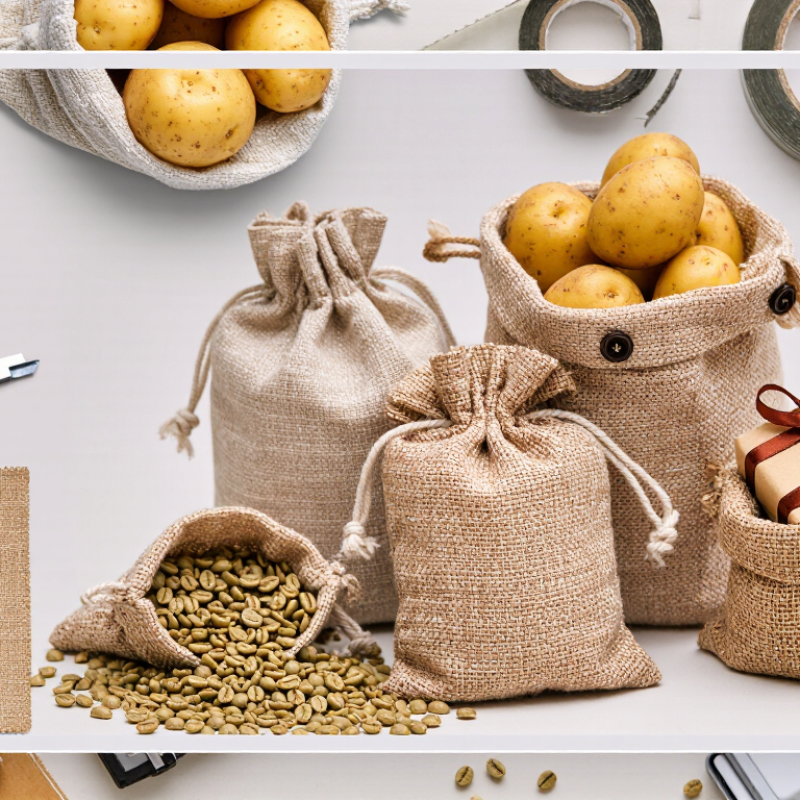
Dr. Mubarak Ahmad Khan, a Bangladeshi jute researcher, has stated, “Jute is a versatile fibre with many possibilities beyond traditional sacks.” That view supports broader wholesale applications, including coffee packaging, gift bags, shopping bags, and agricultural storage. Textile Exchange’s Materials Market Report 2024 also shows growing attention toward preferred and lower-impact fibre systems. Yet the report does not isolate hessian bags specifically. That limitation matters. Buyers should not treat broad sustainability figures as product guarantees.
Reliable sourcing requires more than a low quotation. Request fibre composition, bag dimensions, tolerance ranges, dyeing details, and testing records. Confirm whether the bags are untreated, laminated, printed, or lined. Compare landed cost, not factory price alone. Seasonal jute quality can vary. Port delays can happen. A supplier’s production history deserves careful questioning. The best hessian bags balance measurable performance with credible documentation, even when the cheapest offer looks attractive.
Understanding Hessian Bags and Their Wholesale Uses
How to Choose the Best Hessian Bags for Wholesale?
Hessian bags are made from jute, a coarse natural fibre valued for strength and breathability. They suit grains, coffee, garden products, gift packaging, and dry goods. FAOSTAT crop records place global jute production at roughly 3.5 million tonnes in recent years. Supply remains concentrated in South Asia, so seasonal sourcing can affect wholesale pricing and lead times.
Choose bags by use, not appearance alone. Check fabric weight, weave density, stitching, handles, and finished dimensions. A tighter weave reduces leakage, while reinforced seams improve lifting reliability. Ask suppliers for moisture, odor, and tensile-strength checks. For food-contact applications, request documented material testing and clean storage procedures. The International Jute Study Group’s production and trade reports are useful references for understanding regional supply patterns.
Sample before ordering.
I would test filled bags on a warehouse floor, not only inspect them on a screen. Stack them for several days and check seam strain, dust, and shape loss. Some buyers overlook moisture protection; that mistake can ruin natural-fibre packaging quickly. A perfect bag does not exist. The practical choice balances weight, durability, appearance, and landed cost. Textile Exchange’s 2024 Materials Market Report also highlights the continuing pressure to expand lower-impact fibre use, but natural does not automatically mean low-impact. Transport, processing, and rejected stock still require careful review.
Assessing Hessian Bag Materials, Weights, and Sizes
Choosing Hessian bags for wholesale requires more than comparing prices.
Material quality affects strength, appearance, and storage performance. Most reliable bags use tightly woven jute fibers with consistent thickness. Loose fibers may create weak seams and uneven surfaces.
Check the fabric weight, usually measured in grams per square meter. Lighter bags suit dry goods and decorative packaging. Heavier fabric handles dense products, rough handling, and longer transport.
A 300–400 GSM bag often offers practical durability, but the correct weight depends on the filling. Ask for a sample and inspect the weave under direct light. Small gaps can become larger during packing.
Size must match the product, not just the warehouse shelf.
Measure the filled length, width, and height. Leave enough space for folding or tying without stressing the seams. A bag that is too large may collapse during stacking. One that is too small can split at the corners.
Stitching deserves close attention.
Double-stitched handles and reinforced bases usually perform better in repeated handling.
The first sample may be wrong. Test it anyway.
Fill several bags, lift them, stack them, and check for fiber shedding or seam strain after a few days.
Moisture exposure also matters, since natural jute can absorb humidity and develop an unpleasant odor when stored poorly. Suppliers should provide material details, weight tolerance, dimensions, and inspection records before a wholesale order.
Comparing Suppliers, Prices, and Minimum Order Quantities
When buying hessian bags wholesale, compare suppliers beyond the quoted unit price. A low offer may hide heavier freight, weaker stitching, or inconsistent fabric weight. Ask for a physical sample before discussing large volumes. Check the weave under bright light, then pull the handles firmly. Measure the bag after washing or light moisture exposure, because natural fibers can change shape. Request written details for dimensions, fabric weight, handle length, printing method, and packaging.
Supplier reliability matters as much as cost. Review production photos, sample consistency, response times, and quality-control records. Ask whether one team inspects every batch before dispatch. Clear answers are useful. Vague promises are not. Compare at least three written quotations using the same specifications. A 10,000-piece offer may seem attractive, yet storage costs can erase the saving. Ask for separate pricing at 500, 1,000, 3,000, and 10,000 bags. Include sample fees, packing, inland transport, and delivery estimates.
Minimum order quantities deserve careful negotiation.
A smaller MOQ reduces cash pressure and lets you test customer demand. However, it may raise the unit price or limit customization. A larger MOQ can improve fabric matching and printing efficiency, but it increases inventory risk. Calculate landed cost per usable bag, not only factory price. I have seen buyers focus on one cheap quotation and overlook damaged handles. That mistake is easy to repeat. Leave room for a small quality allowance, and confirm how replacements are handled before payment. If the supplier refuses basic inspection evidence, reconsider the relationship.
Checking Quality Standards, Customization, and Packaging Options
When choosing Hessian bags for wholesale, inspect the fabric before discussing price. Ask for the fabric weight, weave density, and fiber composition. A consistent weave reduces tearing during filling and transport. Check several samples, not just one. Look for loose threads, uneven edges, oil marks, and sharp odors. Measure length, width, and gusset depth with a ruler. Small size differences can affect warehouse stacking. Request test records for tensile strength, seam performance, moisture resistance, and colorfastness when printed designs are required. These checks support dependable purchasing decisions.
Customization should match the product and filling process. You can specify bag dimensions, handle length, closure style, stitching color, and print placement. Simple one-color printing may suit agricultural packaging, while detailed artwork needs a smoother surface. Approve a physical sample before bulk production. Confirm tolerances in writing. I have seen attractive samples fail because the final stitching was rushed. That risk deserves attention.
Packaging affects both protection and cost. Discuss compressed bales, cartons, pallets, inner liners, and moisture-control materials. Hessian can absorb humidity, so storage instructions should be clear. Each bundle should show quantity, size, production code, and handling marks. Ask whether packaging survives stacking without crushing lower bags. Request photos of loaded pallets before shipment. This step feels minor. It is not. Also review whether printed labels remain readable after transport. A cheaper package may create extra sorting work at delivery.