How to Find the Best Cloth Bag Supplier in 2026?
Choosing the right cloth bag supplier in 2026 takes more than comparing prices. A polished website can look reassuring, but it cannot show whether seams stay straight after repeated use. Ask for a sample made with the fabric, handles, and printing method you plan to order. Check the fabric weight, stitching, color consistency, and finish under ordinary handling. Small details count. A handle that feels secure in a showroom may stretch when carrying books or groceries.
Reliable sourcing also depends on clear communication and realistic production promises. Share a written specification, including dimensions, material, colors, packaging, order quantity, and delivery window. Then compare supplier responses, sample quality, minimum order quantities, and lead times. Request relevant customer references and details about quality checks, and confirm that any claimed certifications apply to the actual factory and product. Keep records of agreed changes. It helps when problems arise. Still, a checklist cannot predict every production issue, and a good sample does not guarantee every batch will match. That uncertainty deserves attention, not panic. The best supplier is usually the one who answers specific questions plainly, flags limits early, and agrees on how defects will be handled. With careful checks and a little patience, you can find a partner whose cloth bag quality, capacity, and service fit your needs—not just your budget.
Define Your Cloth Bag Requirements and Sourcing Priorities
Before contacting a cloth bag supplier, describe where and how the bag will be used. A grocery tote needs different construction from a lightweight event giveaway. Note the intended load, carrying time, and whether the bag will be washed. Be specific. “Holds two glass bottles” gives a factory more useful guidance than “strong and durable.”
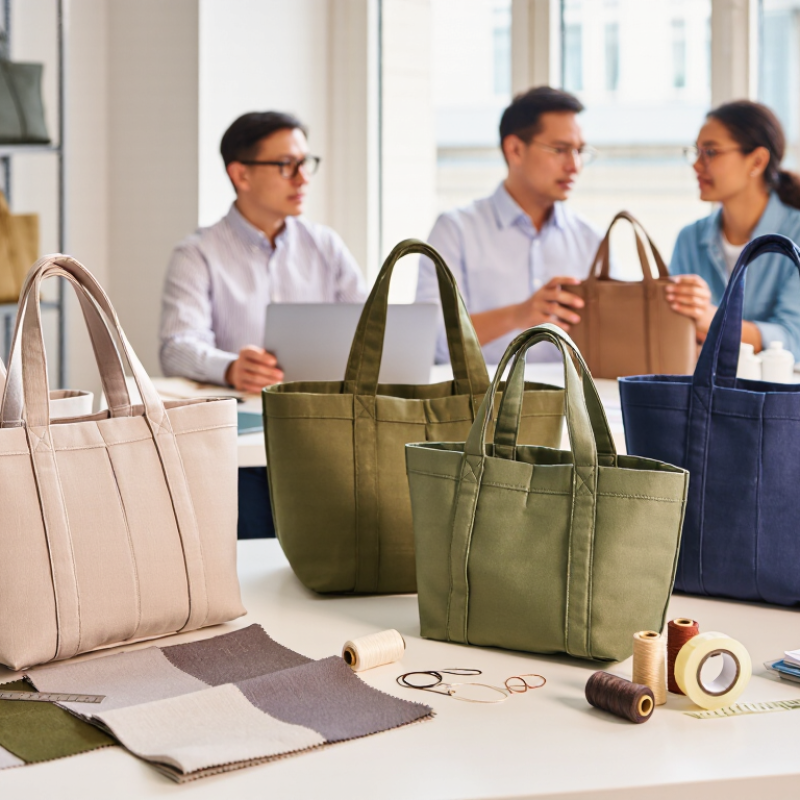
Choose fabric based on use, not appearance alone. Cotton canvas feels substantial, while lighter cotton or blended fabric can reduce shipping weight. Ask for fabric weight in grams per square meter, finished dimensions, handle length, stitching method, and acceptable color variation. Confirm the fiber composition, too. Request a physical sample and test it with the real items. Check the seams, handle comfort, and whether the bag keeps its shape when loaded. Small details matter.
Set priorities before comparing quotes: target price, minimum order, delivery window, customization, and quality checks. Decide which points are flexible. A lower unit price may come with a larger minimum or simpler stitching. Ask how defects are recorded and what happens if a batch differs from the approved sample. Keep measurements and tolerances in writing. The first specification may still be incomplete; revise it after handling a sample. That is normal, though easy to overlook when deadlines are tight.
How to Find the Best Cloth Bag Supplier in 2026?
Define Your Cloth Bag Requirements and Sourcing Priorities
Fabric weight is one useful starting point when defining a cloth bag specification. These 140, 220, and 340 g/m² values are example targets—not universal industry standards. Choose a weight based on the intended load, durability, feel, and budget, then confirm the fabric and finished bag with supplier samples.
Identify Suppliers with Relevant Products and Production Capacity
In 2026, shortlist cloth-bag suppliers by matching each product to the factory, not by catalog breadth. A 12-ounce canvas tote with boxed corners and reinforced handles needs different equipment and sewing controls from a lightweight drawstring pouch. Ask for line-level evidence: monthly output for that construction, current utilization, sample lead time, and recent defect rates. Not a look-alike. Confirm which steps happen in-house; printing or handle stitching may be outsourced. A quoted capacity means little if peak-season orders are already filling the production line.
Textile Exchange’s Materials Market Report 2024 estimates global fiber production reached 124 million tonnes in 2023 and could rise to 160 million by 2030. That scale does not guarantee your chosen fabric will arrive on schedule. The report also puts recycled fibers at 7.9% of the global fiber market in 2023. If recycled content matters, request batch-level documentation and traceability. UNEP’s textile value-chain work cites an estimated 2–8% share of global greenhouse-gas emissions for the fashion industry, making process and energy records more useful than vague environmental claims. Run a small production test. Check handle strength, stitch consistency, seam alignment, and color transfer. A clean audit is only a snapshot; compare the approved sample with bags from the actual production run.
Assess Quality Standards, Certifications, and Responsible Practices
A cloth bag can look sturdy on a showroom table and still fail after a few loaded trips. Ask suppliers for recent test reports covering fabric weight, seam strength, handle load, colorfastness, and shrinkage. Check that test results match the exact fabric and bag construction you plan to order. A certificate for a different product proves little. Small detail, big difference.
The 2024 Textile Exchange Materials Market Report estimated global fiber production at 124 million tonnes in 2023; polyester made up about 57 percent. Ask suppliers to document fiber composition and traceability, especially for recycled content. Certifications can help, but check their scope and validity. GOTS covers organic textile processing, while OEKO-TEX STANDARD 100 tests for specified harmful substances in products. Neither replaces physical quality testing.
Responsible practices need evidence beyond a polished policy. Request the latest social-audit findings, corrective-action records, and clear information about subcontracting. The 2023 Fashion Transparency Index found an average disclosure score of 26 percent among 250 large fashion companies. Disclosure is not the same as good performance, but missing records make verification harder. Ask who cuts and sews the bags, and whether production-site details can be checked independently. Some suppliers may not have every document ready; that deserves a closer conversation, not an automatic pass.
Compare Samples, Pricing, Lead Times, and Minimum Order Quantities
How to Find the Best Cloth Bag Supplier in 2026?
A reliable supplier should be judged by more than a low quote. Request samples made with the same fabric weight, stitching, handles, and print method planned for production. Check whether seams stay straight under light pressure and whether the bag sits flat when filled. A sample can look polished, yet differ from the final batch, so ask how production quality is checked.
Tips: Compare at least three written quotes. Check what each price includes, such as printing, packaging, and shipping. Confirm the minimum order quantity for your exact size and design; a supplier may offer a lower MOQ for plain bags than custom-printed ones. Ask for a production timeline with sample approval and shipping listed separately. Get it in writing.
Lead times need a little scrutiny. Ask about current capacity, material availability, and what happens if a sample needs revision. A quoted four-week schedule may not include shipping or approval delays. It is worth checking references or requesting details about similar orders, though those details do not guarantee your result. Keep all specifications in one document, including dimensions, fabric, color, print placement, and acceptable tolerances. I have seen small details overlooked; a handle length that feels fine on paper can be awkward in hand.
Verify Supplier Reliability Before Placing and Managing an Order
A reliable cloth bag supplier should answer specific questions before asking for a large deposit. Request a recent sample made with the proposed fabric, handle width, stitching, and print method. Check its weight and seams by hand; compare the sample with the written specifications. Photos can mislead. Ask for a live video tour or a clear production update, and confirm who will manage your order. A supplier’s replies should stay consistent across sales, sampling, and production.
Put the order details in one approved document: bag dimensions, fabric weight, color references, logo placement, quantity, packaging, and acceptable tolerances. Agree on sample approval, production milestones, inspection timing, and delivery dates in writing. If the supplier cannot explain how defects are handled, pause before committing. A smaller trial order may reveal issues that a polished quotation will not. It costs time, and sometimes the trial still feels too small to prove much.
During production, request dated photos of cut panels, stitching, and packed cartons, not only finished samples. Keep messages and approvals together, then compare delivered goods with the agreed specifications. Confirm how shortages, color variation, or late updates will be addressed before they happen. Suppliers may miss a checkpoint; what matters is whether they explain the delay and offer a practical recovery plan. Inspect several bags from different cartons, since one neat sample does not represent every unit.