Why Choose a Reliable Jute Bag Supplier?
A jute bag can look sturdy on a showroom shelf. The real test comes later: when the seams carry weight, handles meet repeated use, and a shipment arrives in consistent condition. That is why choosing a reliable jute bag supplier involves more than comparing prices. It means checking fibre quality, stitching, dimensions, production capacity, and the supplier’s willingness to document each specification. Small details matter. A slightly uneven seam can change how a bag performs.
The FAO’s FAOSTAT production database identifies India and Bangladesh as leading jute-producing countries, while its Future Fibres initiative describes jute as a renewable natural fibre with biodegradable properties. These sources provide useful context, but they do not certify any individual supplier. Buyers still need samples, clear specifications, and realistic lead-time commitments. Ask how batches are inspected. Request a sample that matches the intended order, not just a polished showroom piece. Keep records. They help resolve disagreements later.
A verified, attributable quotation from a named jute-industry expert was not available for this introduction, so no quotation is invented. That restraint matters. Supplier claims deserve the same scrutiny as product claims. Even a promising sample may not reveal inconsistent quality across a full production run. A careful sourcing process cannot remove every risk, but it can make problems easier to spot before thousands of bags are packed.
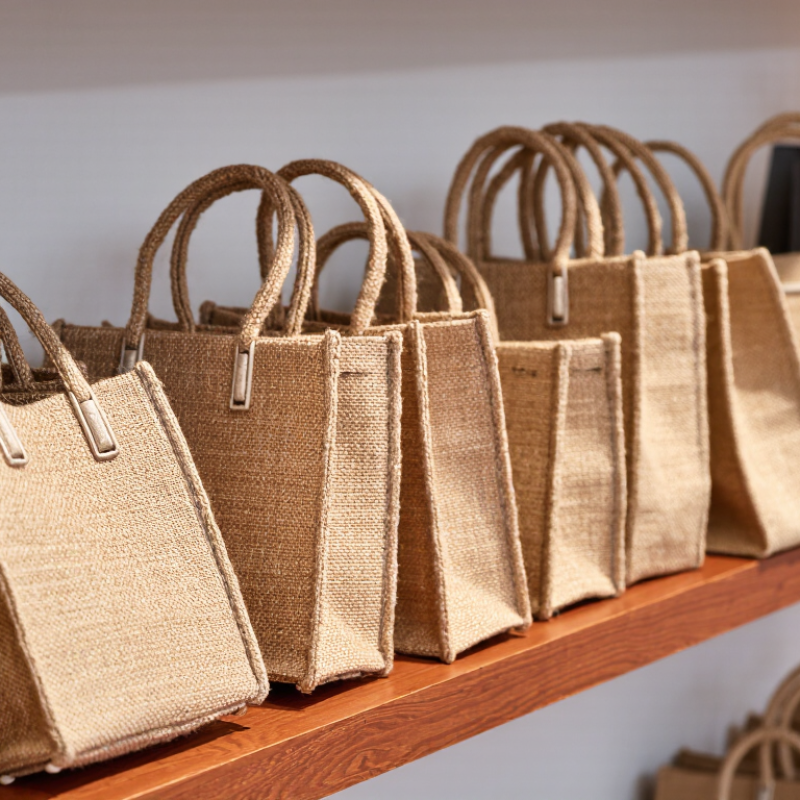
How Jute Bag Suppliers Fit Into a Global Industry Producing Millions of Tonnes Annually
Jute is not a niche material. Worldwide, jute and related bast fibers are produced in millions of tonnes each year. A reliable supplier helps connect this large agricultural supply with bag makers that need usable, consistent material. The work starts well before shipment: fibers are graded, spun into yarn, woven, and checked for weight and texture. Small details matter. A slightly uneven weave can affect stitching, printing, and how a finished bag holds its shape.
Suppliers also manage practical issues between harvest and production. They track batches, coordinate lead times, and protect fiber and finished bags from excess moisture during storage and transport. Buyers can ask for sample specifications, production records, and clear updates when a shipment changes. These checks do not remove every variation. Batches differ. Natural fibers can vary in shade or feel, even when they come from the same region, so honest communication matters as much as a price quote.
At global scale, steady sourcing depends on relationships with growers, mills, and manufacturers, not just warehouse capacity. An experienced supplier can explain which specifications are realistic and flag trade-offs, such as tighter weave versus cost. Still, no process is perfect; a sample may not capture every detail of a full production run. Comparing approved samples with delivered goods helps buyers spot differences early.
Why Choose a Reliable Jute Bag Supplier?
Jute bags are part of a global industry producing millions of tonnes of natural fibre each year.
India and Bangladesh together account for the large majority of global jute and allied-fibre production. A reliable supplier helps buyers manage sourcing consistency, quality, and delivery across this concentrated supply base.
Indicative rounded annual estimates, in million tonnes. Based on FAOSTAT crop-production statistics for jute, kenaf and allied fibres; totals vary by year and crop classification.
How to Verify Supplier Quality Systems Against ISO 9001:2015
A reliable jute bag supplier should be able to show how its quality system works on the factory floor. Ask for a current ISO 9001:2015 certificate, its scope, expiry date, and the site it covers. ISO’s 2022 Survey recorded about 1.27 million valid ISO 9001 certificates worldwide. That figure shows the standard’s reach, not whether a particular supplier consistently meets your specifications.
Check the records behind the certificate. For jute bags, traceability should connect incoming fabric rolls to finished batches. Look for documented checks on bag dimensions, seam strength, handle attachment, and print quality. Ask how staff record defects and verify corrective actions. Paperwork can look tidy. Compare a production sample with a finished batch, and ask to see inspection logs and equipment calibration records.
A useful supplier review includes a real conversation with production staff, not only a document exchange. Request recent nonconformance examples and how the team prevented repeat issues. A certificate alone cannot guarantee consistent stitching or accurate measurements. Small gaps happen. Note them, agree on evidence and deadlines, then check whether the promised changes appear in later batch records.
How to Check Chemical Compliance Against REACH’s 0.1% SVHC Threshold
A reliable jute bag supplier should explain how it checks materials against REACH’s 0.1% SVHC threshold. That limit equals 1,000 mg/kg by weight. It applies to an individual article or component, not automatically to the finished bag as a whole. A printed panel, coated handle, or separate trim may therefore need its own assessment. ECHA’s June 2024 Candidate List update recorded 241 SVHC entries, showing why suppliers must check the current list, not rely on an old declaration. The threshold is a communication trigger, not a blanket ban on every listed substance.
Ask for a dated material declaration, component-level traceability, and test reports linked to the actual fabric, ink, and accessories used. Reports should identify the tested sample and method; an accredited laboratory can make results easier to evaluate. Testing every batch may not be practical, but risk-based checks matter when dyes, coatings, or suppliers change. Paperwork can look tidy. It can still miss a changed recipe. Compare the report date with the production lot, and ask what happens when a result approaches 1,000 mg/kg. A credible supplier will explain uncertainty and provide updated evidence, rather than treating one old certificate as permanent proof.
How to Compare GSM, Dimensions, and Load Capacity With Standardized Tests
Why Choose a Reliable Jute Bag Supplier?
How to Compare GSM, Dimensions, and Load Capacity With Standardized Tests
A reliable comparison starts with a written specification, not a supplier’s “heavy-duty” claim. Check fabric mass in grams per square metre (GSM) using the weighing approach in ISO 3801. Test samples from the same production lot, since moisture and weave variation can affect results. A higher GSM alone does not guarantee a stronger bag. It can also mean extra material and cost.
Measure the empty bag flat, including body width, height, and gusset depth. Record the measurement points and agreed tolerances before production. For fabric strength, ISO 13934-1 describes a strip tensile test. But fabric strength is not the same as finished-bag capacity. Set a bag-specific load test: use a documented weight, lifting method, hold time, and pass criteria. ASTM D5276 covers free-fall testing for loaded packages; it can inform handling checks, but does not by itself certify a bag’s safe working load.
Tips: Ask for dated test records and results from multiple samples. Compare like with like. A 10 kg claim means little without a stated test method. Reflect on this: even a careful test may not mimic years of damp storage or rough handling. State those limits clearly in the purchase specification.
How to Evaluate Lead Times, Minimum Orders, and Defect-Rate Data
When comparing jute bag suppliers, ask for a dated production schedule, not a single delivery promise. A useful quote separates sample approval, material sourcing, printing, sewing, inspection, and transit. Ask how delays are reported and whether peak-season capacity changes the schedule. “About four weeks” is not a plan.
Minimum order quantities should match a realistic demand forecast. Request prices at several order levels, such as 500, 1,000, and 3,000 bags, and confirm whether setup charges change. Check whether the minimum applies per size, color, or print design; these details can leave you with excess stock. Trial orders can help, though each bag may cost more. That trade-off matters.
Defect-rate data needs context. Ask for recent inspection records showing sample size, defect categories, and inspection stage. A 2% rate means little if one report counts loose handles while another counts print shifts. Request photos or a sample inspection sheet, then agree on acceptable tolerances for stitching, dimensions, and color variation before production. Records are not perfect. Compare them with a pre-shipment sample and your own incoming checks.